The Radiance of Discovery: Unlocking the Science and Future of Light
Light is the fundamental fabric of our observable universe. It is the silent messenger that traverses the vast, frigid vacuum of space to bring us images of distant galaxies, the energy required for photosynthesis, and the very foundation of our visual experience. While we often take the simple flick of a light switch for granted, the physics governing light—or electromagnetic radiation—represents one of the most complex and fascinating fields in human inquiry.
Main Facts: The Physics of Luminosity
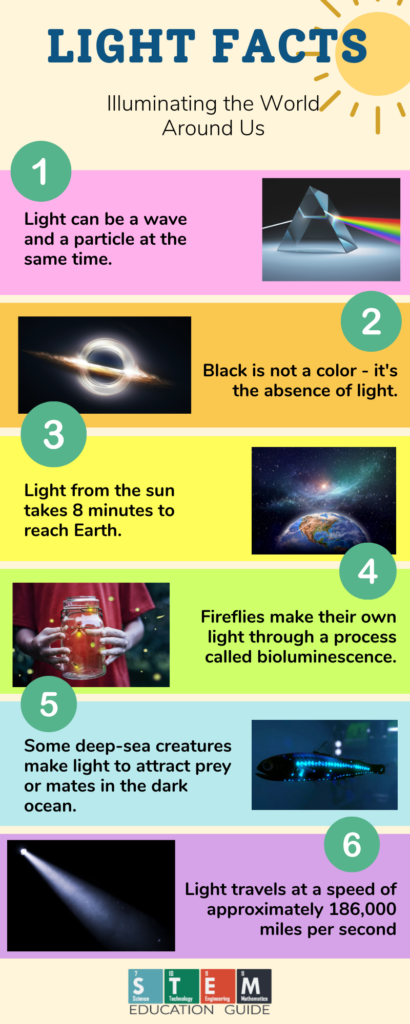
At its core, light is a dual entity. It behaves simultaneously as a wave and a stream of particles known as photons. This wave-particle duality is the cornerstone of quantum mechanics, a field that continues to challenge our understanding of reality.
Light travels at an unfathomable speed: approximately 186,000 miles per second (299,792 kilometers per second) in a vacuum. To put this into perspective, light from the Sun takes roughly eight minutes and 20 seconds to reach Earth. If the Sun were to suddenly blink out, we would not know for over eight minutes, as the final packets of light continued their journey across the solar system.
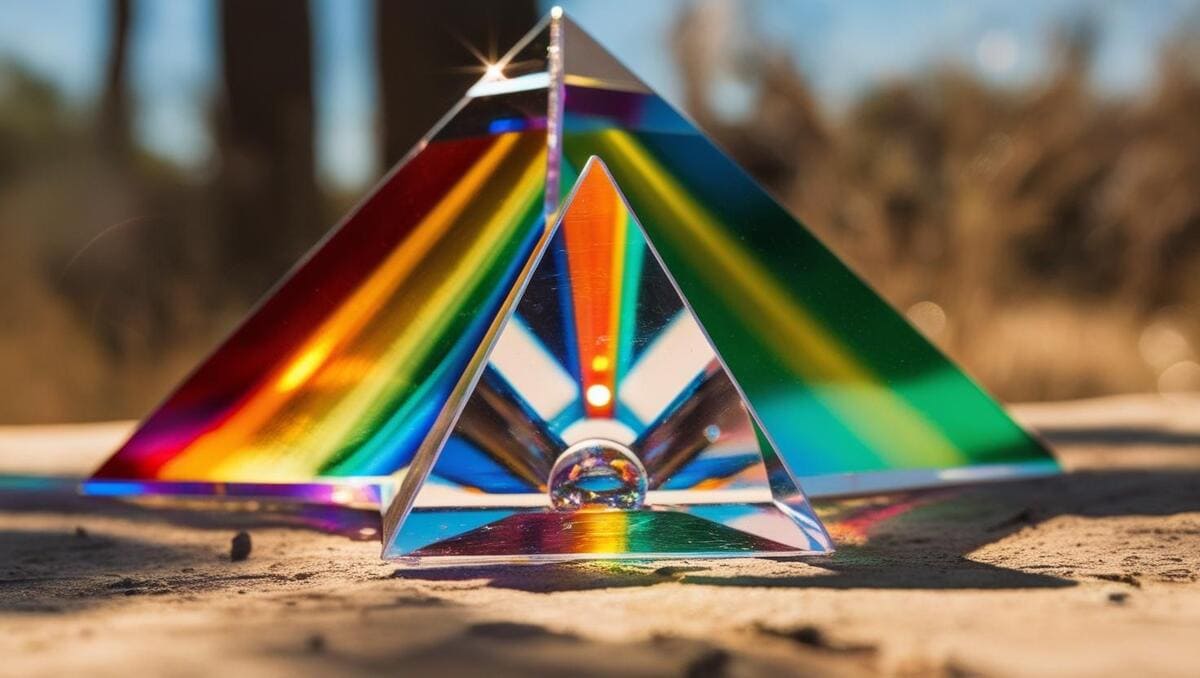
Visible light is merely a sliver of the broader electromagnetic spectrum, which includes everything from low-energy radio waves to high-energy gamma rays. When we see a color, we are observing specific wavelengths: red light possesses longer wavelengths, while blue and violet light have shorter, more energetic wavelengths. When these colors combine, they appear to our eyes as white light.
Chronology: A History of Illuminating Science
The human quest to understand light has evolved from philosophical conjecture to rigorous mathematical modeling.
- Ancient Period: Philosophers like Euclid and Ptolemy studied the laws of reflection, noting that light travels in straight lines.
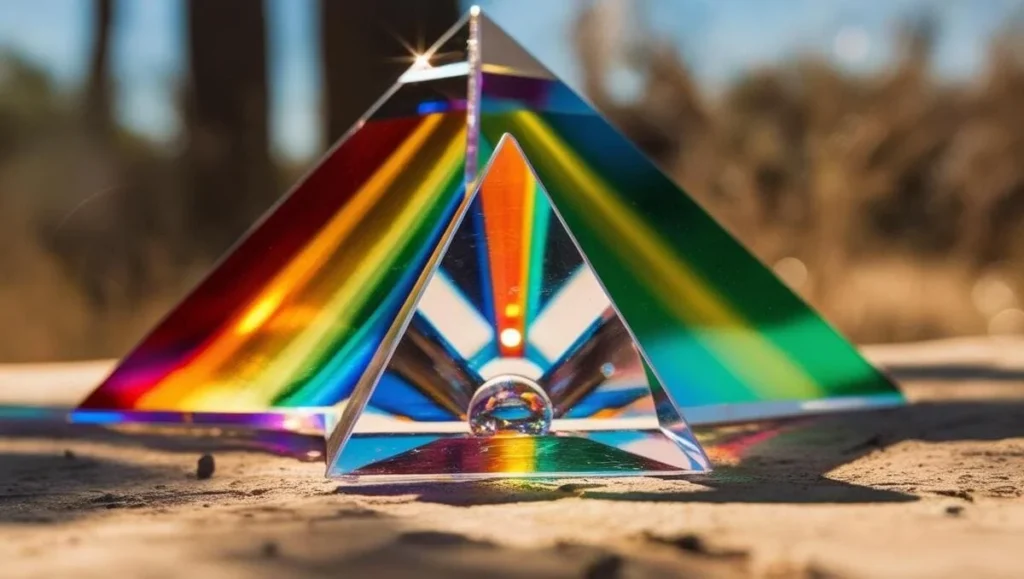
- 17th Century: Isaac Newton revolutionized the field by using a prism to demonstrate that white light is composed of the entire visible spectrum. Simultaneously, Christiaan Huygens proposed the "wave theory" of light.
- 19th Century: James Clerk Maxwell provided the mathematical proof that light is an electromagnetic wave, unifying electricity and magnetism into a single, cohesive theory.
- 20th Century: Albert Einstein further complicated and clarified the picture by proving the existence of photons, suggesting that light consists of discrete "packets" of energy. This discovery earned him the Nobel Prize and laid the groundwork for modern quantum physics.
Supporting Data: The Spectrum and Behavior
To understand how light behaves in our daily lives, scientists categorize its interactions into three primary phenomena: reflection, refraction, and diffraction.

The Mechanics of Light Interaction
- Reflection: When light strikes a surface and bounces back, we see an image. This is the principle behind mirrors and why the Moon is visible at night—it is reflecting the Sun’s light.
- Refraction: When light passes from one medium to another (such as air to water), it changes speed and bends. This is why a straw in a glass of water appears broken or "bent" at the surface.
- Diffraction: When light encounters an obstacle or passes through a narrow aperture, it spreads out, creating interference patterns.
The Visible Spectrum
| Color | Wavelength Range (nm) | Natural Phenomenon |
|---|---|---|
| Red | 620–750 | Sunsets |
| Orange | 590–620 | Autumn foliage |
| Yellow | 570–590 | Sunflowers |
| Green | 495–570 | Chlorophyll/Grass |
| Blue | 450–495 | The Sky |
| Violet | 380–450 | Lavender flowers |
Official Perspectives: The Role of Optics and Technology
Modern science, particularly the field of optics, has harnessed these natural properties to revolutionize medicine, communication, and exploration. Optical engineers design complex lens systems for telescopes, allowing us to peer back into the early history of the universe. Conversely, microscopes utilize the same principles to allow biologists to observe the microscopic mechanisms of life at the cellular level.
The telecommunications industry offers perhaps the most profound application of these principles: Fiber Optics. By transmitting data as pulses of light through thin, flexible glass threads, we have achieved global connectivity at speeds previously deemed impossible. According to leading industry researchers, the shift from copper wiring to light-based data transmission has reduced latency and increased bandwidth by several orders of magnitude, forming the backbone of the modern internet.

Implications for the Future: Innovation and Beyond
As we move deeper into the 21st century, our manipulation of light is becoming increasingly sophisticated. Researchers are currently investigating "quantum dots"—semiconductor particles that can be tuned to emit precise colors—which promise to make display technology more efficient and vibrant than current LED standards.
Furthermore, the study of bioluminescence—the natural light produced by creatures like fireflies and deep-sea organisms—is inspiring new advancements in sustainable lighting. By understanding the chemical reactions that allow these organisms to produce light without generating heat, engineers hope to create energy-efficient, biological alternatives to traditional lighting.

Perhaps most provocatively, the development of "invisibility cloaks" is no longer the sole domain of science fiction. Researchers are experimenting with "metamaterials"—structures engineered to bend light around an object, effectively rendering it invisible to the observer. While currently limited to specific wavelengths, the progress in this field suggests a future where light manipulation could fundamentally alter defense, medicine, and architecture.
Conclusion: A Bright Horizon
From the ancient curiosity of why the sky is blue to the cutting-edge development of quantum computing, light remains our most vital tool for discovery. It is the language of the universe, carrying the secrets of distant stars and the information that connects our world. As we continue to refine our ability to observe, measure, and manipulate this energy, we are not only learning more about the world around us—we are learning how to engineer a brighter, faster, and more transparent future.
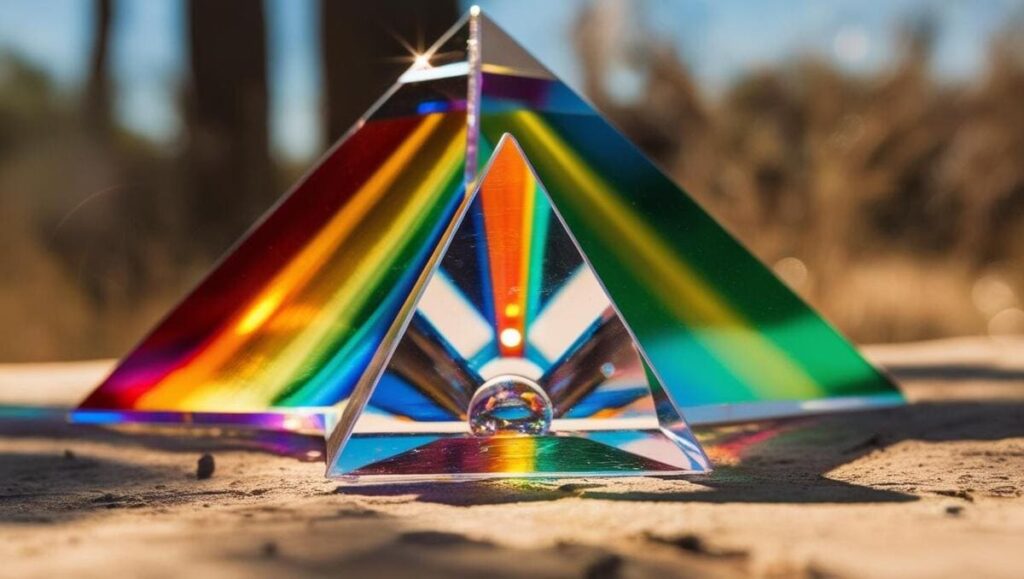
Whether it is through a child’s first experiment with a prism or a scientist’s work on high-speed laser communication, the study of light is a testament to the human spirit’s desire to illuminate the unknown. By fostering a deeper understanding of these photons that dance around us, we ensure that the future remains, quite literally, brilliant.