By Griffin White and Sanders Wiggins Special to Student Leadership Journal
TEXARKANA, Texas — Across the Unitedational educational landscape, a quiet post-pandemic crisis has persisted in the hallways, cafeterias, and classrooms of American schools. Educators and administrators frequently lament a noticeable dip in civic engagement. Post-COVID-19 participation rates in extracurriculars, student councils, and community service initiatives have routinely lagged behind historical benchmarks. Young people, critics claim, have become passive observers rather than active participants in their school ecosystems.
Yet, to characterize a generation by its disengagement is to overlook the relentless ingenuity bubbling beneath the surface. Students possess an abundance of brilliant ideas, but historically, the institutional pathways required to implement them have remained obscured, bureaucratic, or entirely absent.
When we—Griffin White, then serving as the student council vice president at Texas High School, and Sanders Wiggins, our president—first encountered this disconnect firsthand, we refused to accept it as the new normal. We wanted to build a bridge between youthful inspiration and tangible, community-wide action.
What began as a localized desire to revitalize student participation ultimately blossomed into "Leadership Day"—a regional catalyst that brought together 125 students and 40 volunteers from across Texas and Arkansas. Through meticulous planning, community resourcefulness, and a singular $1,000 national grant, our team proved that true leadership education is not bound by age, geography, or budget constraints.
Main Facts
The core of this initiative rests upon a powerful truth: young people do not have to wait until adulthood to enact meaningful change.
The Organizers: Griffin White and Sanders Wiggins, recent graduates of Texas High School in Texarkana, Texas, and current freshmen at the University of Texas at Austin.
The Catalyst: A $1,000 Student Service Grant awarded by the National Association of Student Councils (NASC).
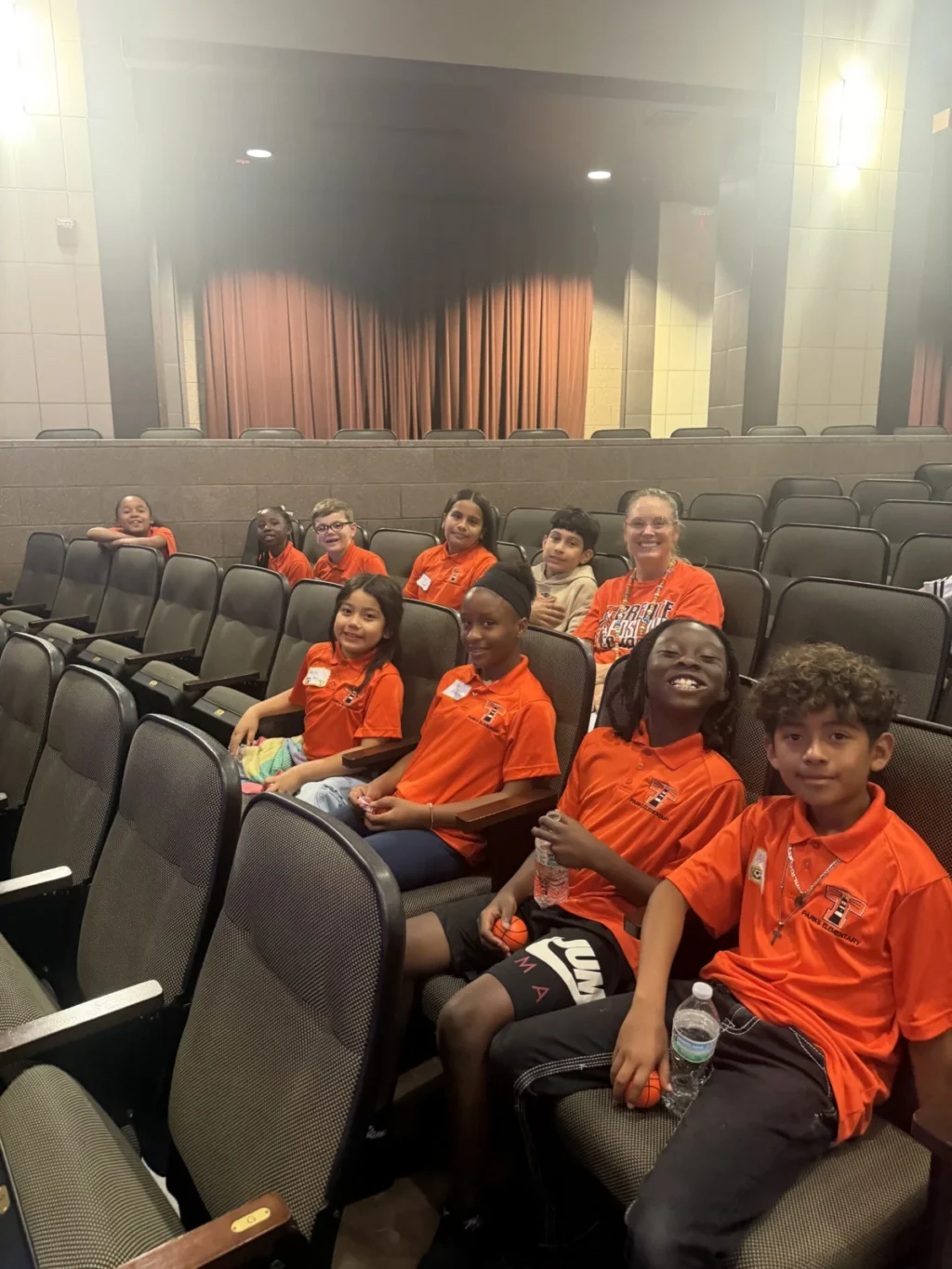
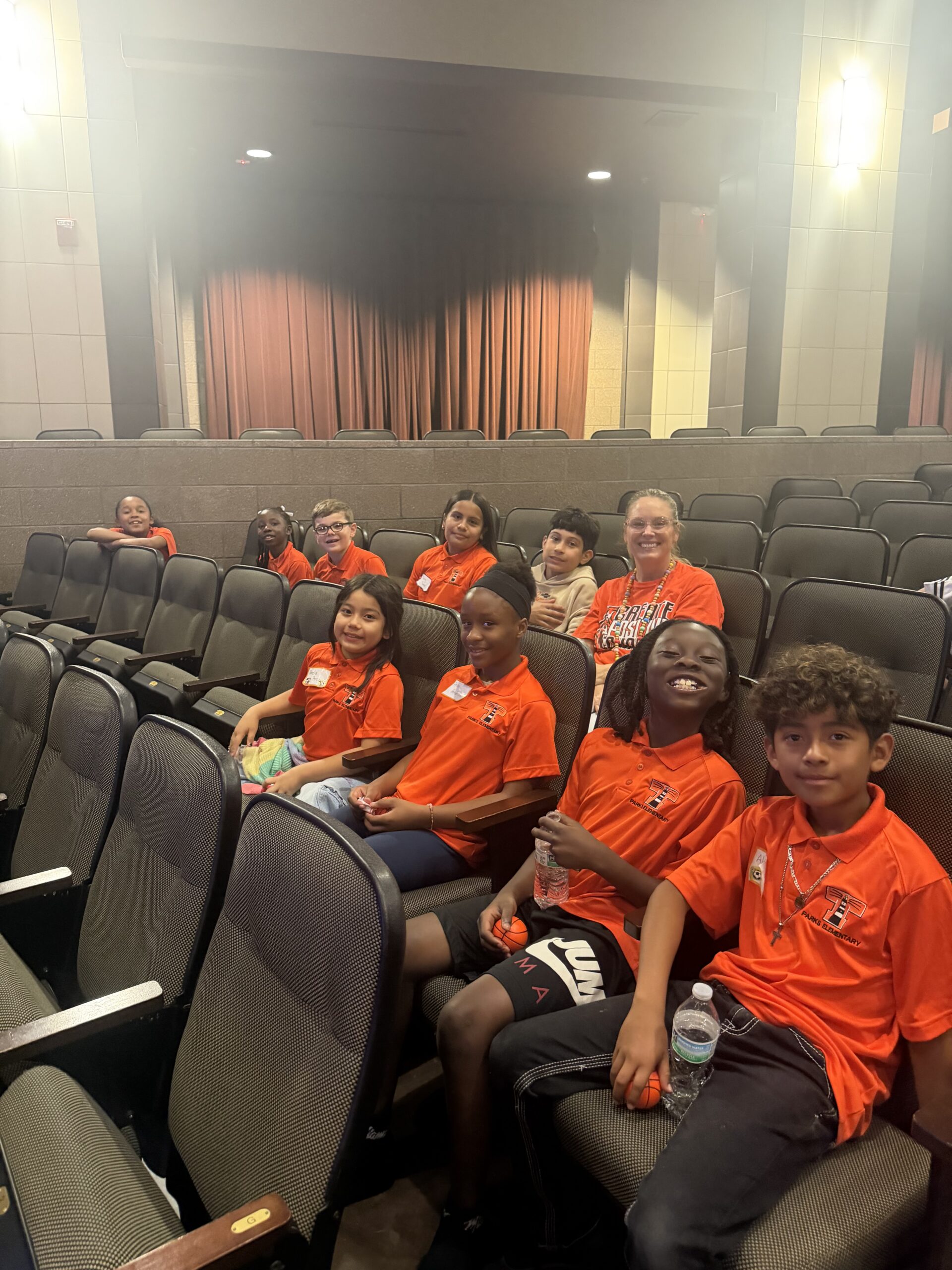
The Scope: The event drew 125 students spanning grades 3 through 8, alongside 40 high school student volunteers and numerous faculty advisers, representing schools located up to two hours away from Texarkana.
The Theme: "Get Your Head in the Game," an overarching concept designed to unify 12 distinct interactive workshops focusing on project management, civic responsibility, and community outreach.
The Venue: The state-of-the-art Performing Arts Center at Texas High School, bolstered by classrooms and communal spaces across the campus.
The Impact: Attendees were equipped with actionable frameworks to develop, fund, and execute service projects within their respective home schools and local neighborhoods.
Chronology of an Initiative: From Holiday Charity to Regional Conclave
The journey toward Leadership Day did not happen overnight. It was the product of steady escalation, built upon lessons learned from regional collaboration, grant acquisition, and months of exhaustive logistical planning.
Phase 1: Learning the Power of Collective Action (Winter)
During the holiday season preceding the event, the Texas High School chapter of the National Association of Student Councils joined forces with a vast network of student councils spanning the American South—stretching from Atlanta, Georgia, across Arkansas, and deep into Texas.
Our collective mission was straightforward yet ambitious: organize simultaneous food drives to supply regional homeless shelters. Working in tandem across state lines revealed a profound psychological and operational truth. We learned that when young people pool their resources and direct their best energies toward a common goal, their impact ripples far beyond school property lines. It establishes a footprint of compassion directly within the broader community.
Phase 2: Securing the Grant and Scaling Up (Early Spring)
Shortly after the holiday initiatives concluded, our student council adviser approached us with a compelling proposition: "Do you think you could get this Student Service Grant?"
Recognizing an opportunity to expand our vision, we applied for and successfully secured a $1,000 Student Service Grant from the NASC. While many student groups might have used such funds exclusively for internal campus improvements, we chose a more ambitious path. We wanted to ignite a passion for leadership in the next generation of students—specifically targeting younger children who are rarely given platforms for civic innovation.
Phase 3: Months of Rigorous Preparation (Spring to Event Day)
With a $1,000 financial foundation secured, we faced a stark fiscal reality: accommodating 125 young students, feeding dozens of volunteers, and providing hospitality for visiting advisers required a significantly larger budget.
We established a comprehensive operational budget that accounted for every foreseeable expense. To bridge the financial gap, we:
Sought Local Business Partnerships: We pitched our vision to local merchants and community businesses, securing monetary and in-kind donations.
Leveraged School Resources: We tapped into the institutional support of Texas High School, utilizing facilities like the Performing Arts Center at no cost.
Recycled Materials: To keep expenses lean, we creatively repurposed decorations and supplies from previous student council conventions and pep rallies.
Mobilized Campus Organizations: We collaborated with various popular high school clubs and organizations to design and run 12 unique breakout workshops.
Phase 4: Execution on the Day of the Event
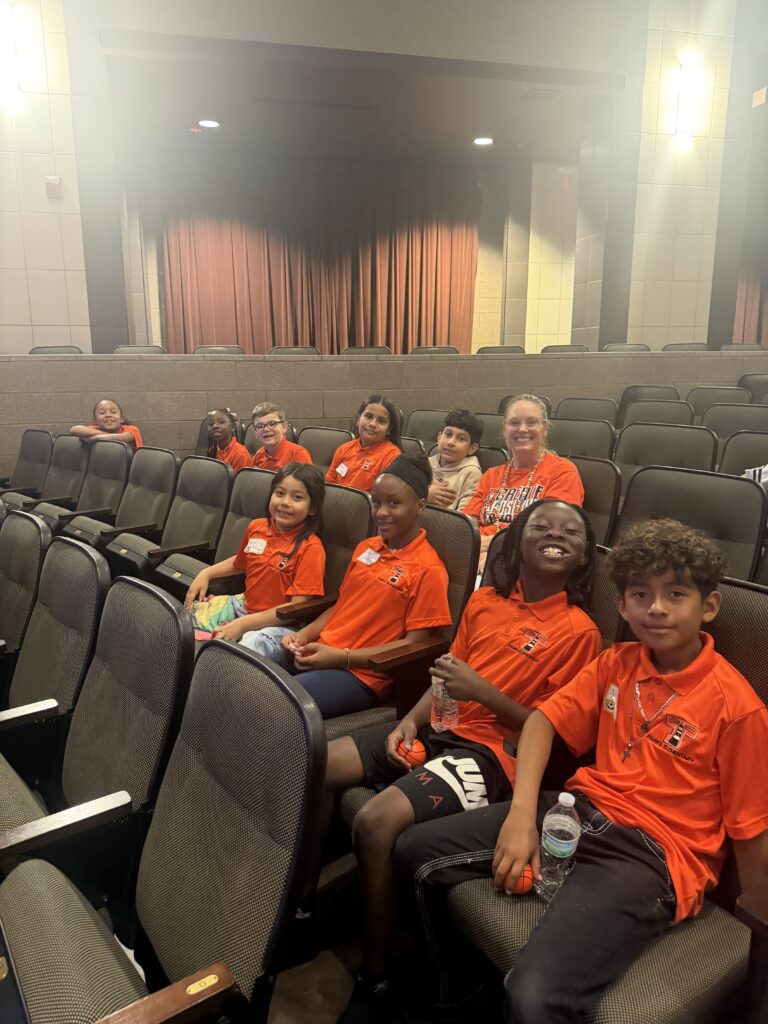
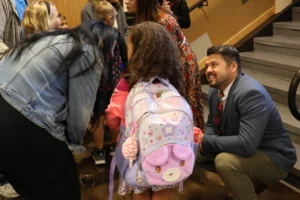
On the morning of the conference, the Texas High School campus buzzed with electricity. Student and faculty volunteers lined the entrances to greet arriving delegations from as far away as Parks Elementary School.
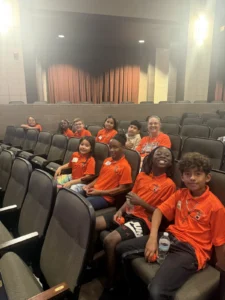
The morning kicked off with an energetic opening ceremony hosted inside the Performing Arts Center, where we set the tone for a day dedicated to empowerment. The schedule heavily prioritized active, hands-on breakout sessions rather than passive lectures. Attendees did not sit and listen to dry theory; instead, they engaged in brainstorming exercises tailored to solve real-world problems facing their respective schools.
Supporting Data and Resource Allocation
Executing a multi-school leadership conference involving nearly 170 total participants required precise financial and logistical balancing. While the $1,000 NASC grant served as the bedrock of the project, understanding the resource ecosystem highlights how community buy-in multiplies the value of seed funding.
Resource Category
Source / Contribution
Purpose
Seed Funding
National Association of Student Councils ($1,000 Grant)
Initial fiscal foundation for core supplies and logistics.
Supplementary Funding
Local Texarkana Businesses & Community Leaders
Covered remaining budgetary shortfalls, food, and materials.
Human Capital (Volunteers)
40 Texas High School Student Volunteers
Facilitated workshops, guided younger students, and managed event hospitality.
Infrastructure
Texas High School Facilities & Performing Arts Center
Provided professional-grade assembly spaces and breakout rooms at zero rental cost.
Curriculum Development
12 Campus Clubs & Organizations
Designed 12 interactive workshops focusing on project management and civic engagement.
Official Responses and Perspectives
The success of Leadership Day resonated deeply across generational lines, drawing high praise from student organizers, adult educators, and institutional observers alike.
"We wanted to include a wide range of ages, because no matter how old you are, we all have good ideas. And true innovation happens when you can bring all these good ideas together." — Griffin White, Co-Organizer and Former Student Council Vice President
Reflecting on the curriculum design, the organizers noted a distinct philosophy: the workshops were built to impart lessons that students could never simply Google on their smartphones. By studying past student council conventions and summer leadership camps, White and Wiggins realized that lasting inspiration stems from peers sharing genuine passions.
"When we looked back at previous student council conventions and summer workshops, we realized the biggest impacts came from group leaders inspiring others about their passions. With that in mind, we gave creative freedom to our student volunteers but asked them to collaborate on the theme, ‘Get Your Head in the Game’." — Sanders Wiggins, Co-Organizer and Former Student Council President
Local educators and visiting advisers also voiced immense appreciation for the structured mentorship. By opening direct lines of communication—distributing contact information to all visiting faculty advisers—the Texas High School leadership team ensured that the conference was not merely a one-day field trip, but the starting gun for ongoing mentorship.
Implications for the Future of Student Leadership
As White and Wiggins transition from their high school leadership roles to their freshman year at the University of Texas at Austin, the long-term implications of their initiative continue to unfold across the Texarkana region.
1. Decentralizing Leadership Education
Traditionally, formal leadership training has been sequestered in high school upperclassmen brackets or collegiate settings. By deliberately targeting students in grades 3 through 8, Leadership Day shatters the myth that civic responsibility is an advanced elective. Introducing project-management concepts, collaborative problem-solving, and empathetic listening to pre-teens fundamentally alters their developmental trajectory. It normalizes community involvement at an age when identity and civic values are actively taking root.
2. Redefining Post-Pandemic Engagement
The educational landscape post-COVID-19 has struggled with student apathy and institutional disconnection. Initiatives like Leadership Day demonstrate that the antidote to student disengagement is student empowerment. When young people are trusted with grant money, creative license, and administrative support, they do not squander the opportunity—they scale it.
3. Sustainable Community-School Partnerships
The event model forged in Texarkana offers a replicable blueprint for high schools nationwide. By combining small national grants with local merchant sponsorships, high school student councils can bypass chronic funding shortages. Furthermore, by recycling materials and mobilizing diverse campus clubs, organizers build an internal culture of cross-disciplinary collaboration.
4. The Ultimate Metric: Action
Ultimately, a leadership conference is only as effective as the actions it inspires. As White and Wiggins frequently noted following the event, the true test of Leadership Day will not be measured by the applause in the Performing Arts Center, nor by the number of lunches served. It will be measured in the months to come, as third-through-eighth-grade attendees return to their home campuses, pick up the torch, and transform their nascent ideas into functioning projects that permanently improve their schools and communities.
For the educators watching from the sidelines and the students waiting for permission to change the world, the message emanating from Texarkana is clear: the channels are yours to build. You just have to get your head in the game.