Beyond the Office Door: How One Administrator Sparked a Nationwide Movement of "Randomish Kindness"
CHATSWORTH, Ga. — The role of a modern school administrator is often defined by invisible labor. Long before the school buses arrive and long after the final student has boarded for home, principals and assistant principals navigate a labyrinth of crisis management, disciplinary hearings, operational logistics, and community relations. It is a position of immense responsibility that frequently comes hand-in-hand with profound professional isolation.
For Dusty Strickland, an assistant principal at North Murray High School in Chatsworth, Georgia, and the state’s 2025 High School Assistant Principal of the Year, the emotional toll of handling student discipline day in and day out could easily become overwhelming. Yet, a simple piece of cardstock changed his trajectory—and is now transforming school leadership culture far beyond his district’s borders.
Main Facts: The Anatomy of "Randomish Kindness"
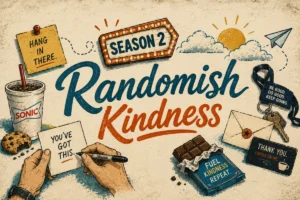
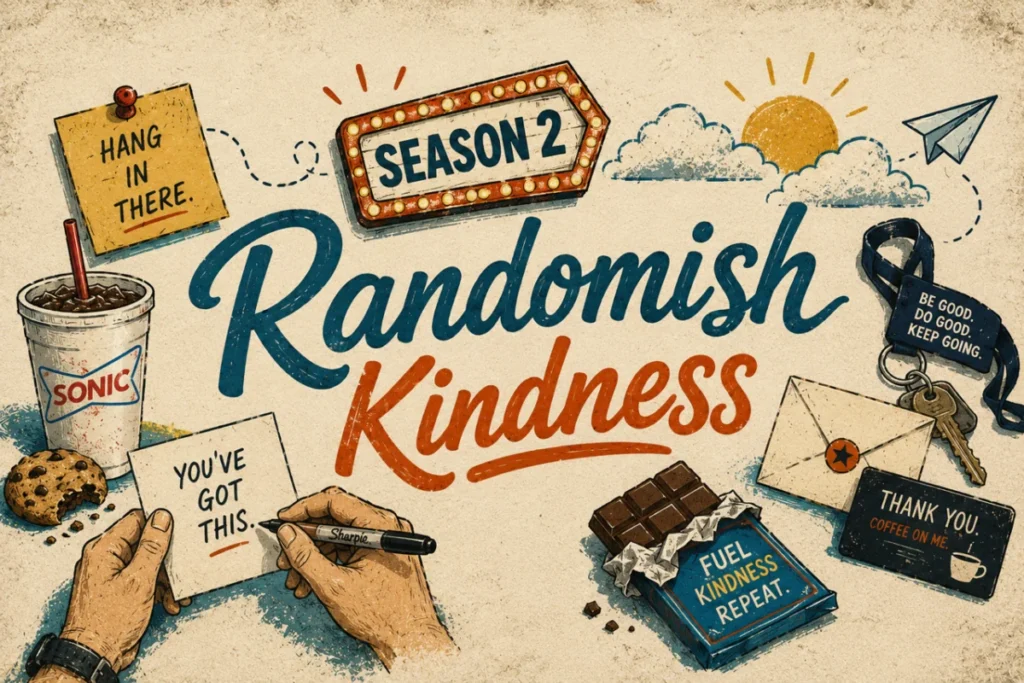
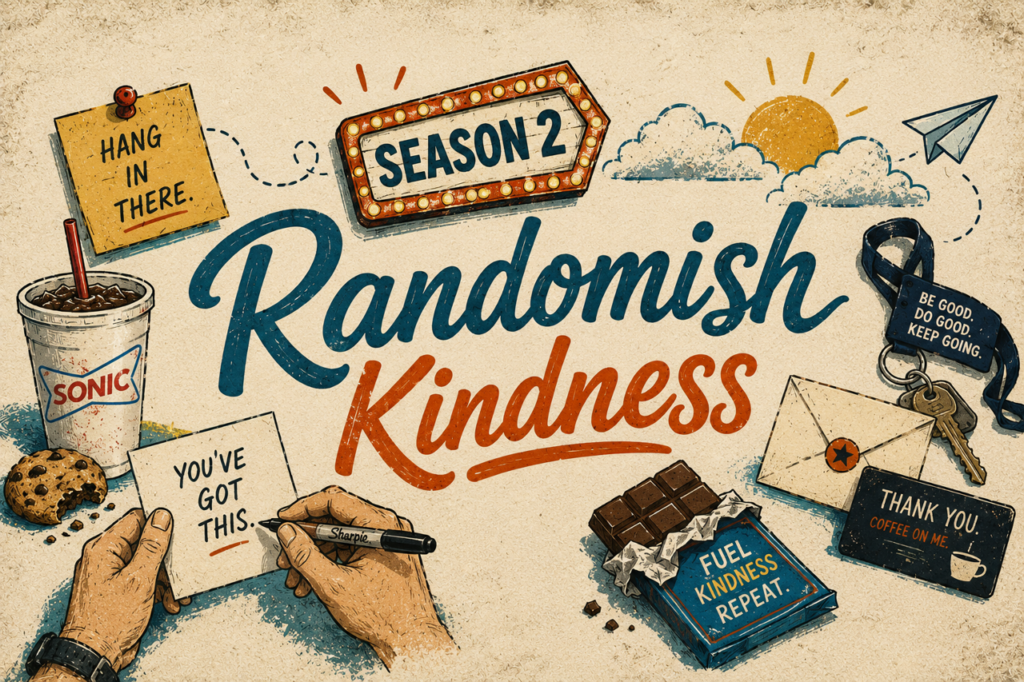
At its core, Randomish Kindness is a year-long, peer-to-peer support initiative designed specifically for school administrators and district leaders. Drawing inspiration from traditional holiday gift exchanges like Secret Santa, Strickland’s program strips away the commercialized pressure of gift-giving and replaces it with intentional, morale-boosting gestures aimed at making educators feel seen and valued.
Key elements of the initiative include:
- The Mission: To combat administrator burnout, foster authentic human connection, and build a localized safety net of empathy among educators who share the same unique workplace stressors.
- The Mechanics: Participants are paired anonymously. Instead of expensive presents, "buddies" perform small acts of kindness—such as leaving a favorite candy bar, tucking a handwritten note of encouragement onto a car’
s windshield, or coordinating a surprise lunch.
- The Personalization: Before pairings are finalized, participants complete a brief intake questionnaire answering targeted questions: What fills your cup? What do you want others to know about you? What makes you smile? What’s your favorite animal?
- The Evolution: Launched with 12 participants meeting their buddies twice a month, the program has evolved into a sustainable monthly cadence in its second year, prioritizing self-care alongside peer support.
Chronology: From a Tough Week to a District-Wide Movement
To understand how Randomish Kindness came to life, one must trace a timeline of professional vulnerability, serendipitous networking, and intentional community building.
Phase 1: The Catalyst (The Postcard)
The foundation of the project was laid during a particularly grueling week at North Murray High School. Strickland, whose primary duties include managing complex disciplinary cases, was wading through a heavy caseload that he describes as occasionally "dark." Amid the stress, a simple postcard arrived in the mail featuring a few printed words of encouragement. Though unassuming, the timing was immaculate. The gesture cut through the heavy atmosphere of the disciplinary office, offering a psychological lifeline that fed his soul and proved that external affirmation could alter an educator’s entire outlook.
Phase 2: The National Principals Association and "Table 12"
Following that experience, Strickland attended the National Principals Association annual conference, an event that challenged him to lean into professional vulnerability. Placed at a random table on the conference’s opening day, he bonded instantly with a group of fellow school leaders. Recognizing an immediate kindred spirit in one another, the group established a dedicated text thread christened "Table 12." To this day, members use the chat to vent safely, share administrative strategies, swap professional insights, and offer mutual encouragement across state lines.
Phase 3: Bringing the Concept Home
Returning from the holiday break, Strickland began brainstorming ways to replicate the supportive, low-stakes camaraderie of Table 12 within his own district. He realized that while districts excel at establishing safety nets and appreciation programs for teachers and students, administrators are routinely left to fend for themselves. This realization birthed Randomish Kindness.
Phase 4: Pilot Year and Refinement
In its inaugural year, Strickland gathered 12 willing participants from across his educational district and randomly assigned them anonymous buddies. Operating on a bi-weekly cadence of encouragement, the pilot proved successful in breaking down institutional silos. Entering its second year, the program underwent a thoughtful adjustment: participants are now asked to perform an act of kindness once a month rather than twice. This modification acknowledges a vital leadership truth—that in order to effectively care for others, administrators must also carve out time to practice self-kindness.
Supporting Data and the Psychology of Administrative Isolation
While comprehensive academic literature frequently explores burnout among classroom teachers, research focusing on building-level administrators reveals an equally alarming trend of professional isolation and emotional exhaustion.
According to data compiled by educational leadership organizations:
- The Loneliness Factor: More than 55% of principals and assistant principals report feeling isolated in their decision-making processes, often citing a lack of peers with whom they can safely discuss administrative pressures without risking professional vulnerability.
- High Turnover Rates: The cumulative weight of student mental health crises, staffing shortages, and heightened community polarization has contributed to a steady decline in administrator retention over the past five years.
- The Marine Parallelism: Strickland, a United States Marine Corps veteran, frequently draws parallels between military service and educational administration. Marines operate in tight-knit units where shared adversity forges unbreakable bonds because members inherently recognize they are weathering the same trials. Administrators, Strickland argues, occupy a remarkably similar psychological space—yet public education systems rarely build formal operational frameworks to harness that shared understanding.
Official Perspectives: Breaking Down Barriers
Strickland’s initiative highlights a long-standing structural flaw in public education: the invisible walls that separate central office personnel from campus-based administrators, and principals from their assistant principals.
"As administrators, it’s our responsibility to break down barriers," Strickland emphasizes. "We need to erase the divide between the central office and the schools, and between assistant principals and principals."
Educational experts and district stakeholders have increasingly rallied around this philosophy. Traditional administrative hierarchies often foster a culture of stoicism, where leaders feel compelled to project unyielding strength to their faculties and communities. Initiatives like Randomish Kindness disrupt this toxic narrative by institutionalizing vulnerability. When an assistant principal receives a handwritten note on their windshield or a surprise delivery of their favorite snack, the psychological barrier of the "boss" melts away, reminding them that they are part of a human community first and an organizational hierarchy second.
Furthermore, proponents of peer-support models point out that these micro-interactions cost virtually nothing in terms of financial capital, yet yield exponential returns in emotional well-being and institutional retention. By shifting the focus away from top-down performance metrics and toward bottom-up empathy, districts can fundamentally alter their organizational climate.
Implications: Scaling Kindness Nationwide
What began as a localized antidote to a stressful week in Chatsworth, Georgia, now begs a much larger question: Can Randomish Kindness scale nationally?
Strickland has begun exploring the broader horizons of the project. Imagine a nationwide network of educators utilizing modern logistics and digital communication tools to look out for one another across municipal, county, and state boundaries.
- Digital Bridges: School leaders separated by hundreds of miles could utilize platforms like DoorDash to send a sudden lunch to a stressed colleague during state testing week.
- Cross-Country Mentorship: Small tokens of appreciation shipped via Amazon could cross state lines, serving as unexpected reminders that someone in another time zone understands the exact weight of a difficult school board meeting.
- National Networks: Replicating the "Table 12" model on a macro scale could create a resilient digital infrastructure of mental health support for educational leaders nationwide.
The fundamental reality of public education is unlikely to shift overnight. Budgets will remain tight, public scrutiny will persist, and student behavioral challenges will continue to test the patience and resilience of those at the helm. The operational burden on school leaders is, as Strickland notes, not going away.
However, the manner in which administrators choose to navigate those challenges is within their control. By fostering cultures of intentional kindness, breaking down institutional silos, and ensuring that those standing in the professional gap know they are never truly walking alone, programs like Randomish Kindness offer a blueprint for a healthier, more connected future in education.
As World Kindness Day highlights the necessity of empathy in daily life, Strickland’s message to his colleagues across the country remains simple, urgent, and profoundly necessary:
“Hey, I see you. You’re doing great. Keep going.”