Beyond the Automated Warning: How One Washington Elementary Reimagined Student Attendance Through Empathy and Partnership
By Educational Leadership Reporting Desk
Published in Partnership with School Leadership Insights
Main Facts
Chronic absenteeism has emerged as one of the most stubborn crises facing American K-12 education in the wake of the COVID-19 pandemic. Traditional bureaucratic responses—such as automated warning letters, robocalls, and punitive attendance policies—have routinely proven ineffective at addressing the root causes of missed school.
At Irene Reither Elementary School in Everson, Washington, educators confronted a stark post-pandemic reality: only 57% of students met the state benchmark for regular attendance. However, through a fundamental shift in philosophy—moving away from compliance and toward holistic, empathetic
family support—the school dramatically reversed this trend. By the end of the recent academic year, regular attendance climbed to 84%.
The catalyst for this transformation was not a new software program or a stricter disciplinary handbook, but a realization best summarized by leadership writer Brené Brown: Accountability is an act of care. By replacing distant automation with multidisciplinary teamwork, targeted interventions, and personal connections—ranging from individualized attendance monitoring plans to staff picking up students in district vehicles—Irene Reither Elementary demonstrated that chronic absenteeism can be successfully mitigated when schools partner with families rather than police them.
Chronology: The Turning Point of a Fifth Grader
The turning point for Irene Reither Elementary’s cultural overhaul began in an ordinary administrative office with an extraordinary conversation.
The subject was Cam, a fifth-grade student who—unbeknownst to the administration until they looked at the macro-level data—had missed between 30 and 40 days of school every single year since kindergarten.
Principal Tyler Dockins sat across from the student, turned his computer monitor around, and asked a deceptively simple question: "Do you know how many days are in a school year?"
"180," Cam answered without hesitation.
Dockins pointed to the attendance history glowing on the screen. "So, what do you think this means?"
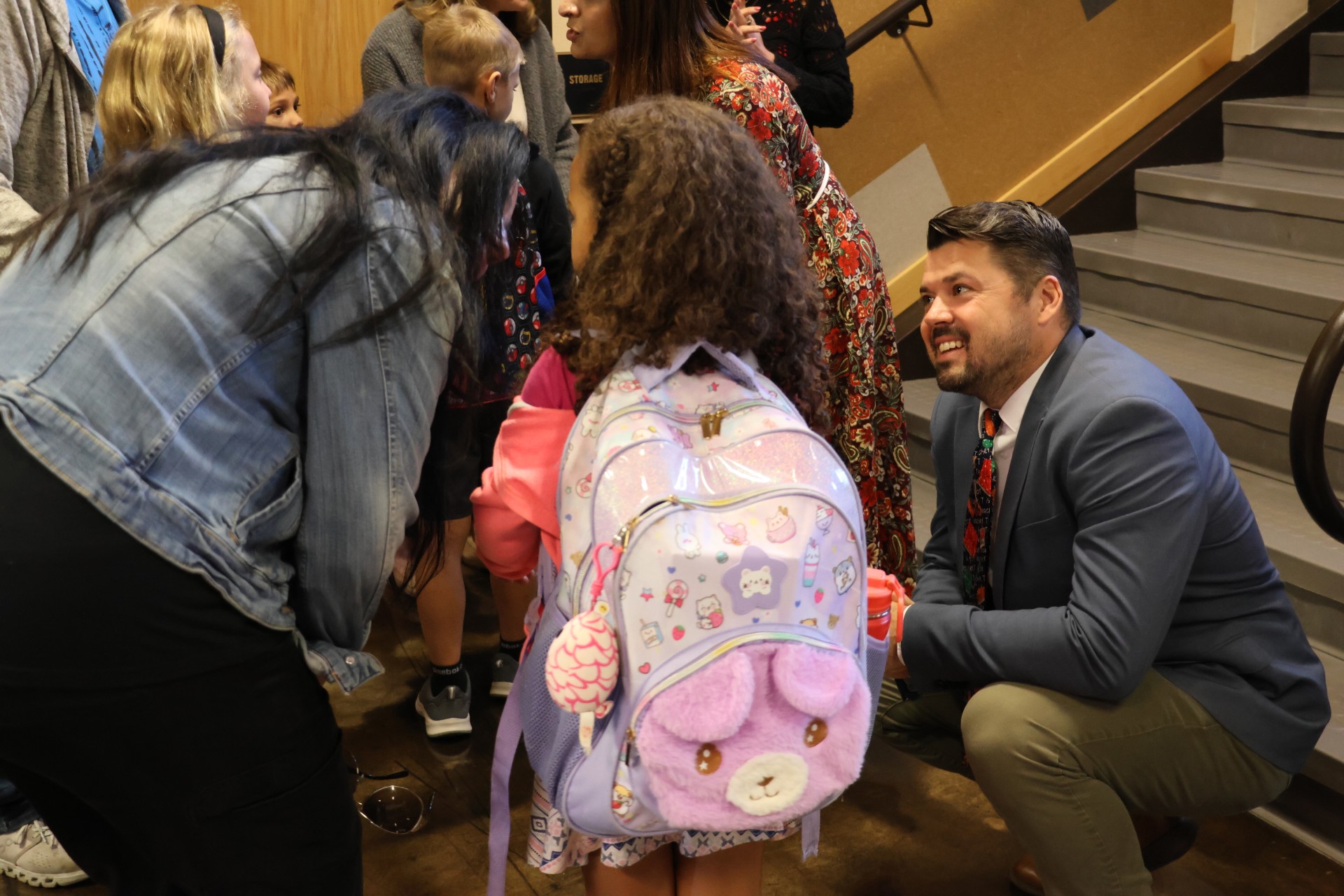
Cam studied the digital record, tracing the jagged lines of absent days from one grade level to the next. Looking up, he delivered a sobering assessment: "Basically, I’ve missed about a year of school."
Sitting across the table, Cam’s mother experienced a profound moment of clarity. She quietly admitted she had never looked at her son’s attendance cumulatively. Like many schools, Irene Reither had previously followed standard protocol: sending out automated warning letters, making robotic phone calls, and logging every absence. None of it had changed Cam’s behavior.
As the meeting unfolded, Cam’s mother offered context that completely reframed the issue. Growing up, her own mother had forced her to attend school even when she felt violently ill or deeply overwhelmed. Those memories left a lasting emotional scar.
"I don’t want to be that mom," she confessed to Dockins.
Because her work schedule afforded her flexibility, whenever Cam expressed reluctance about going to school, she allowed him to stay home. Her decision was not born of neglect, but of love. In trying fiercely to protect her son from the rigid, unsympathetic childhood experiences she endured, she had unintentionally erected a massive barrier to his education, quietly chipping away at his current and future academic opportunities.
Recognizing that punishment and shame would only drive the family further away, the school chose a path of collaborative accountability. They established a simple, student-led self-monitoring plan alongside regular check-ins. By the end of the year, Cam had completely reversed his trajectory, successfully meeting Washington state’s benchmark for regular attendance.
More importantly, Cam’s case served as a mirror for the entire administrative staff, exposing the glaring limitations of automated school policies and sparking a multi-year campaign to redesign how the school interacts with chronically absent families.
Supporting Data and Institutional Evolution
The transformation at Irene Reither Elementary did not happen overnight. It required a systemic dismantling of old methodologies and a rigorous, data-driven rebuilding process.
The Post-Pandemic Attendance Crisis
Like districts nationwide, Everson administrators found themselves battling a complex web of post-pandemic barriers: escalating youth mental health crises, chronic illness, housing instability, transportation bottlenecks, family caregiving responsibilities, and widespread student disengagement. Automated mass communications were wholly inadequate for addressing these multi-layered hardships.
Step-by-Step Statistical Recovery
- Baseline (Post-Pandemic): 57% of students meeting state benchmarks for regular attendance.
- Phase One: Climbing steadily into the low-to-mid 60s through early structural adjustments.
- Phase Two: Reaching the high 70s as multi-tiered systems of support (MTSS) took root.
- Current Status: Reaching an impressive 84% regular attendance rate last academic year.
To achieve these gains, the school restructured its operational approach around three core pillars:
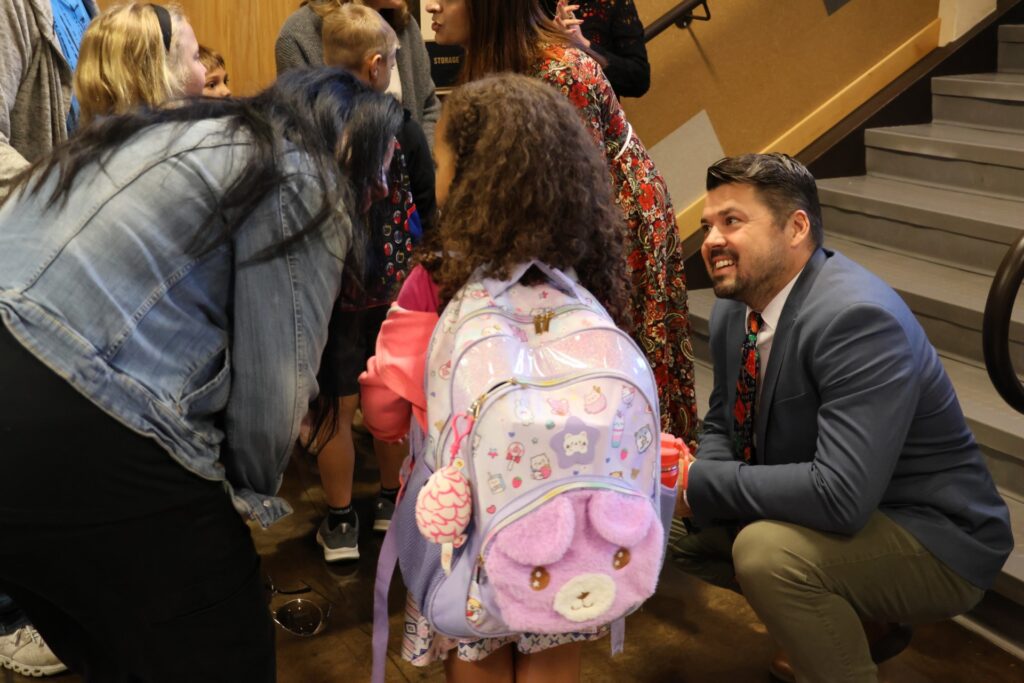
- Redefining the Question: Instead of asking compliance-driven questions like "How do we force families to comply?" the staff pivoted to developmental queries: "How do we build systems that help families succeed?" Every fortnight, an attendance team reviewed schoolwide trends rather than immediately finger-pointing at individual students. If a barrier could not be immediately eliminated, they strategized on how to minimize the academic cost of missed instruction.
- Multidisciplinary Intervention Teams: The school assembled a comprehensive attendance task force that pooled diverse institutional expertise. The team included school counselors, the campus nurse, a bilingual attendance secretary, a family services coordinator (who also serves as the district’s McKinney-Vento Homeless Assistance Act Liaison), a cultural liaison, the principal, and specialized student support staff. This diverse group ensured that medical vulnerabilities, housing challenges, and language barriers were caught long before a student fell hopelessly behind.
- District-Wide Alignment: Success was heavily bolstered by the Everson school district aligning its foundational definitions, shared data systems, districtwide goals, and MTSS practices. This consistency allowed families to experience a coherent support network while giving building principals a collaborative space to share effective strategies.
Official Responses and Strategic Implementation
The operational strategy at Irene Reither Elementary is broken down into a three-tiered framework designed to meet students at varying levels of risk before chronic absenteeism sets in.
Tier 1: Cultivating a Culture of Belonging (Missing 0%–5% of School)
For students exhibiting minimal absenteeism, the focus is entirely proactive—building a joyful, magnetic school culture where attendance naturally matters.
- Celebrations of attendance are woven into school newsletters, student assemblies, and prominent bulletin boards.
- Staff members produce personalized "We miss you" video messages sent directly to families on the rare days a student is absent.
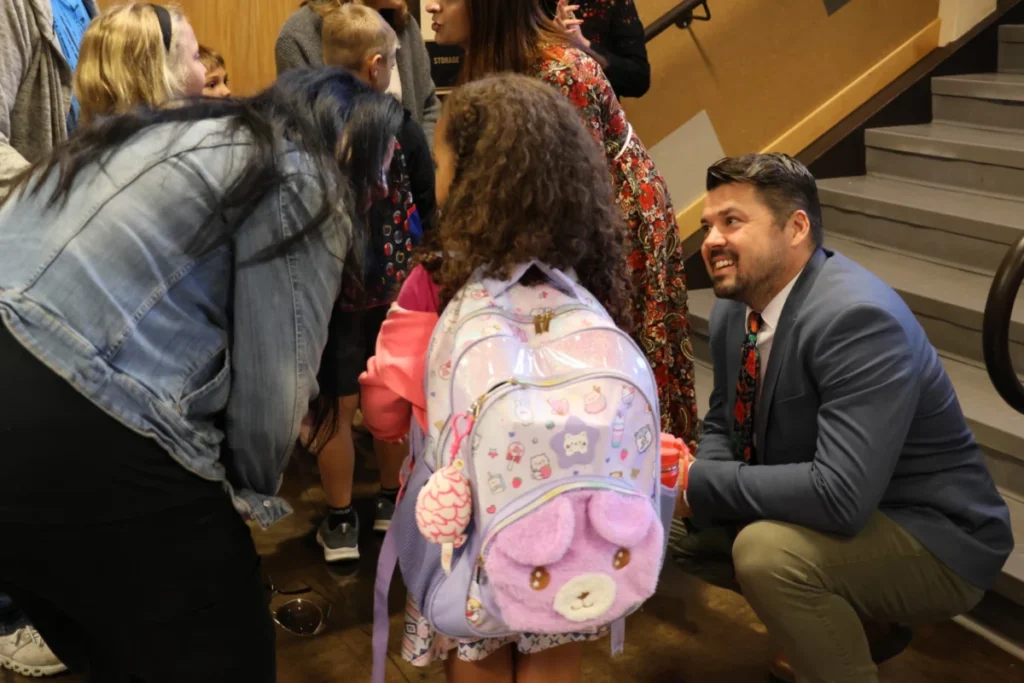
- Morning routines are heavily optimized to include welcome-back songs, daily name games, and individualized greetings at the school entrance to ensure children feel anticipated and valued.
Tier 2: Early Intervention and Case Management (Missing ~10% of School)
When a student begins drifting toward chronic absenteeism—often flagged within the very first week of the school year—the school deploys targeted human intervention rather than waiting for automated triggers.
- Every at-risk student is assigned a specific "case manager" from the support staff.
- Cold, automated messages are permanently replaced by direct phone calls and personalized messaging applications.
- Self-monitored attendance plans are co-created with the student, fostering a sense of personal agency and ownership, much like the plan that saved Cam’s academic trajectory.
Tier 3: Persistence and Radical Outreach (Missing >15% of School)
For severely chronically absent students, the approach shifts from management to relentless persistence, tackling systemic barriers such as chronic health issues, housing instability, severe anxiety, and transportation breakdowns.
- Every single morning at 9:30 a.m.—immediately following the finalization of daily attendance—the support team reviews every Tier 3 absence and initiates direct personal phone calls.
- Radical Logistics: When transportation logistics or deeply overwhelming mornings prevent a child from getting to school, staff members do not simply mark them absent. A team member physically drives out in a district vehicle to pick up the student and bring them to class.
As Principal Tyler Dockins notes, these aggressive outreach efforts carry profound symbolic weight: "One home visit says more than 10 attendance letters. One ride to school tells a child, ‘You matter enough that we came looking for you.’"
Implications for Modern Educational Leadership
The experiences at Irene Reither Elementary offer a blueprint for educational leaders navigating the post-pandemic landscape. The overarching implication is clear: compliance is not a substitute for connection.
While systems, tracking software, and statutory warning letters remain legal necessities within public education, they are fundamentally incapable of moving the human heart. When schools treat attendance as a purely administrative infraction to be managed through automated penalties, they often alienate the very families who need support the most. Conversely, when districts reframe accountability as an act of profound care—standing alongside parents as partners rather than adversaries—the cultural shift yields remarkable results.
Crucially, leadership at Everson emphasizes that proactive interventions like home visits and student transportation are never intended to function as permanent enabling systems or to permanently absorb responsibilities that rightfully belong to families. Instead, these intensive measures serve as bridge-builders. They communicate an unmistakable, reassuring message to both children and caregivers facing overwhelming life circumstances: "We see your struggle, and we are not giving up on you."
In an era where school districts nationwide continue to grapple with historic attendance deficits, the Everson model proves that the path back to the classroom does not run through stricter punitive measures, but through radical empathy, cross-disciplinary collaboration, and the restoration of human dignity in school administration.