Beyond the Initiative Treadmill: Why School Improvement Fails and How Educators Can Finally Solve Their Own Problems

By Educational Insights Staff
Published: September 2026
Main Facts
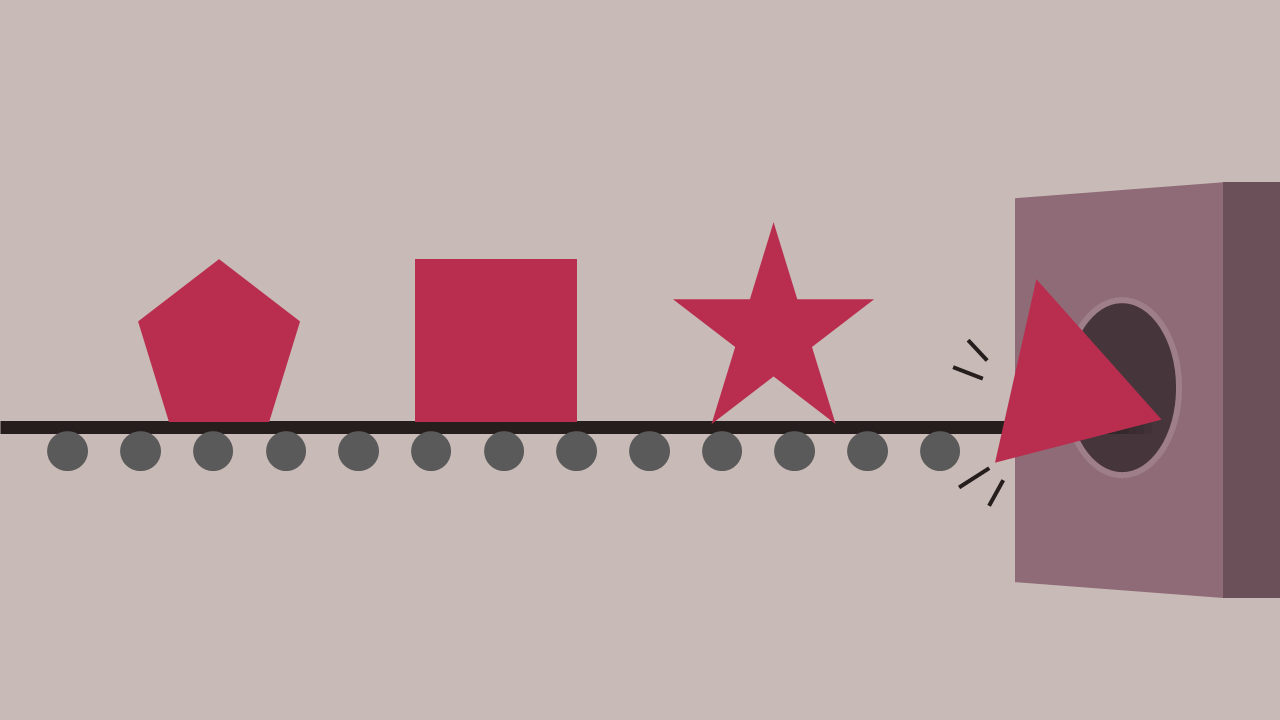
For decades, the standard operating procedure of American K-12 education has been defined by a relentless cycle of reform. Every few years—sometimes every few months—schools and districts roll out glossy new curricula, branded leadership programs, or sweeping pedagogical frameworks. Teachers are expected to implement these changes with meticulous fidelity, only to watch them quietly fade away when the next wave of leadership or funding arrives. This "initiative churn" has left educators exhausted and disillusioned, while yielding frustratingly stagnant results.
Now, a sweeping new study by researchers Jal Mehta and Max Yurkofsky, detailed in their forthcoming book A Chance to Solve Their Own Problems, challenges the foundational mechanics of how schools attempt to get better. According to Mehta and Yurkofsky, traditional school improvement efforts repeatedly fail because they bypass the educators closest to the ground, obsess over individual performance instead of systemic flaws, prioritize rigid program compliance over iterative learning, and rush to implement solutions before fully understanding the problems they are trying to solve.
Drawing from extensive field research across real schools and districts, the authors argue that true educational improvement requires an alignment of three core components: mindsets, routines, and practices. Furthermore, these elements cannot flourish without a deliberate institutional environment that protects educators’ time, fosters psychological safety, and embeds problem-solving into a cohesive long-term strategy. Rather than treating improvement as a top-down mandate to be enforced, Mehta and Yurkofsky argue that schools must become ecosystems where educators are trusted and equipped to diagnose and repair their own institutional challenges.
Chronology
The trajectory of school reform over the past half-century provides crucial context for understanding the current crisis in educational improvement:
- The Era of Top-Down Standardization (Late 20th Century): Federal and state accountability movements placed heavy emphasis on standardized testing, top-down directives, and compliance. Schools were treated as manufacturing lines where standardized inputs were expected to produce standardized outputs.
- The Rise of Prepackaged Frameworks (Early 2000s–2010s): Recognizing the limits of purely punitive accountability, districts began importing branded pedagogical programs, continuous improvement models (such as PDSA—Plan, Do, Study, Act cycles), and rigid scripted curricula. While well-intentioned, these programs were frequently handed down as turnkey solutions.
- The "Improvement Fatigue" Tipping Point (Late 2010s–Pandemic Era): As teacher burnout soared and post-pandemic learning gaps widened, the exhaustion of constantly pivoting between disconnected initiatives reached a breaking point. Educators grew increasingly vocal about the futility of programs that failed to address their daily classroom realities.
- The Empirical Turn (2020–Present): Researchers like Jal Mehta and Max Yurkofsky began systematically investigating why certain schools managed to break free from this cycle while others floundered. Their multi-year studies culminated in the insights published in A Chance to Solve Their Own Problems, shifting the discourse from what programs to buy to how authentic problem-solving cultures are built.
Supporting Data and Common Pitfalls
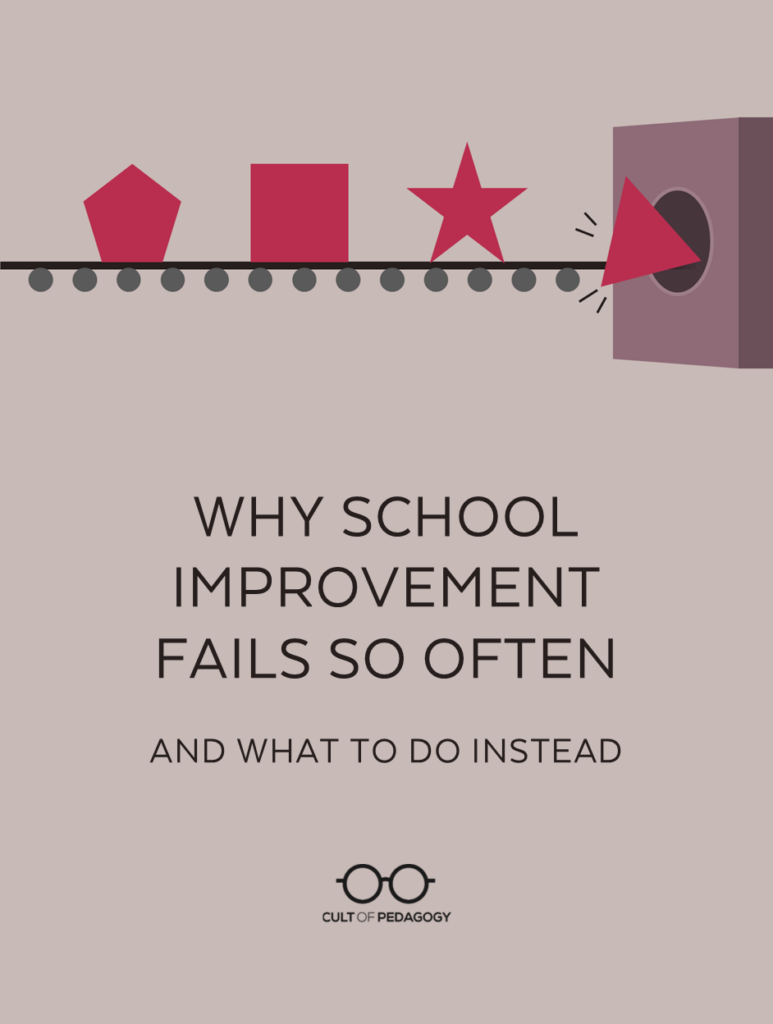
To understand why billions of dollars in school improvement funding frequently fail to move the needle, Mehta and Yurkofsky’s research isolates four primary structural failure points that plague contemporary reform efforts:
- Excluding the Frontline: In typical district models, problems are identified at the central office or by external consultants. Teachers—the individuals best positioned to spot institutional friction—are cast as passive implementers rather than active inquirers. Research shows that teachers invest deeply only when working on problems they personally experience and validate.
- Scaping Individuals over Systems: When student achievement flags or instructional standards are missed, traditional evaluations often isolate individual teachers or students as the locus of failure. Conversely, effective improvement asks a deeper systemic question: Why is our curriculum, coaching model, or onboarding process consistently producing this outcome? Shifting the lens to the system removes the paralyzing fear of blame and invites honest critique.
- The Cult of Fidelity: School leaders often measure success by how strictly a purchased program is implemented. However, because no external program is natively designed for a specific school’s unique context, absolute fidelity often equals zero learning. The authors advocate for "adaptive integration"—treating programs as raw materials that must be iteratively adjusted based on real-time classroom feedback.
- Premature Solutions: Educational leaders frequently fall in love with a solution—such as purchasing a new software suite or building a new facility space—before clearly defining the underlying problem. This leads to shoehorning complex human challenges into prepackaged boxes that rarely fit.
Official Responses and Expert Perspectives
The release of A Chance to Solve Their Own Problems has triggered robust discussions across academic institutions, teachers’ unions, and administrative associations.
In recent podcast interviews, Jal Mehta emphasized the fundamental issue of institutional trust: "We’re not actually trusting the people who are closest to the ground to sort of say, ‘Hey, I have an inquiry question.’ Are you addressing a problem that teachers think that they have, or are you addressing a problem that you think teachers have?"
Max Yurkofsky has strongly challenged the education sector’s obsession with program compliance, noting that true pedagogical evolution cannot happen in an environment hostile to trial and error. "Fidelity is never the point," Yurkofsky asserts. "Fidelity means we’re not learning." Instead, he introduces the concept of viewing teacher-raised problems not as administrative headaches, but as valuable institutional data: "We can’t learn if we’re not raising problems… view problems as a gift."

Educational leadership organizations have begun responding to these findings by re-evaluating professional development structures. Rather than hosting one-off workshops on new instructional tools, progressive districts are experimenting with protected collaborative time, peer classroom observations, and inquiry teams focused on localized data rather than compliance metrics.
Implications for the Future of K-12 Education
The implications of Mehta and Yurkofsky’s work extend far beyond academic theory; they offer a practical roadmap for transforming the daily experience of schooling for both educators and students.
Building the Three Pillars: Mindsets, Routines, and Practices
For school improvement to move from an ephemeral "initiative" to a permanent cultural shift, three distinct elements must interlock:

- Mindsets: Educators must hold shared beliefs about their collective efficacy and agency. If secondary teachers maintain the mindset that literacy instruction belongs exclusively in elementary school, no amount of coaching will fix reading deficits.
- Routines: Institutional habits—such as regularly examining student work collectively, observing peer classrooms, and structured debriefs—must be woven into the fabric of the school week to prevent innovative teachers from feeling isolated "on an island."
- Practices: Process-oriented frameworks alone cannot transform teaching. Schools must actively infuse disciplinary expertise and high-quality instructional materials into their problem-solving loops. As Mehta notes, teachers cannot "PDSA cycle" their way into entirely new pedagogical expertise without access to deep subject-matter knowledge.
Creating an Enabling Environment
Ultimately, these pillars cannot survive in a hostile institutional climate. District and school leaders carry the profound responsibility of establishing three critical environmental safeguards:
- Protecting Time: Recognizing that time is the single greatest scarcity in education, leaders must fiercely guard collaborative planning and inquiry periods from administrative encroachment.
- Cultivating Psychological Safety: Leaders must actively dismantle cultures of perfectionism, making it safe for educators to admit failure, experiment openly, and iterate without fear of professional reprisal.
- Aligning Strategy: Improvement methodologies must serve a cohesive, overarching vision rather than serving as standalone fads.
By shifting away from the exhausting treadmill of top-down mandates and embracing a culture where educators are given the time, safety, and tools to solve their own problems, schools can finally turn the page on reform fatigue—paving the way for authentic, sustainable student growth.