Beyond the ABCs of Reading: New

Brain-Based Pedagogies Seek to Revolutionize Writing Instruction
WASHINGTON — While the national discourse on educational equity and foundational literacy has dominated headlines for years, an intense focus has remained narrowly fixed on phonics, reading fluency, and comprehension. In the current educational zeitgeist, reading is routinely dissected and debated by policymakers, administrators, and parents alike. Yet, writing instruction remains a glaring omission—a silent partner in the literacy equation that is rarely addressed, despite being inextricably linked to reading success.
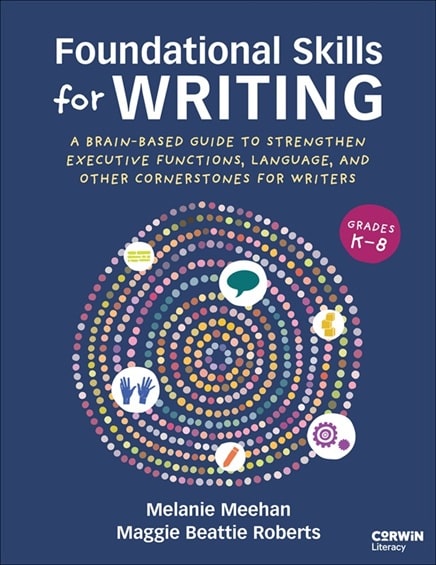
This oversight has long frustrated educators who understand that reading and writing are two sides of the same coin. To bridge this critical gap, two veteran literacy experts have released a groundbreaking pedagogical text: Foundational Skills for Writing: A Brain-Based Guide to Strengthen Executive Functions, Language, and Other Cornerstones for Writers. Authored by Melanie Meehan, a former curriculum coordinator and writing center founder, and Maggie Roberts, a literacy consultant and veteran middle school teacher, the book aims to shift how educators approach the complex cognitive demands of teaching children how to write.

Main Facts: The Missing Piece in the Literacy Crisis
The publication of Foundational Skills for Writing arrives at a pivotal moment in American education. As schools grapple with post-pandemic learning recovery and shifting literacy paradigms, reading instruction has undergone massive structural overhauls. However, writing instruction has largely stagnated, often relegated to an isolated "writing time" where students are expected to produce finished pieces without being explicitly taught the underlying cognitive mechanics required to do so.
Meehan and Roberts argue that writing is not merely a method of communicating or assessing what a student has read; it is a profoundly complex cognitive act. When educators ask a child to write, they are demanding the simultaneous activation of multiple brain systems.
The authors categorize these demands into three distinct pillars:
- Transcription Skills: Mechanics such as handwriting, keyboarding, spelling, and fine-and-gross motor development.
- Oral Language: Speaking and listening foundations, including sentence construction and vocabulary acquisition.
- Executive Functioning: Higher-order cognitive processes like working memory, cognitive flexibility, and inhibitory control.
When these foundational skills are underdeveloped, they consume a student’s limited cognitive energy, leaving little bandwidth for the higher-order work of crafting compelling arguments, organizing narratives, or developing complex ideas.
Chronology: From Classroom Realities to Brain-Based Solutions
The journey toward Foundational Skills for Writing spans decades of combined classroom experience, tutoring, and curriculum design.
- The Early Decades: Maggie Roberts spent nearly 20 years inside middle school classrooms and working alongside teachers as a literacy consultant, observing firsthand how students stalled when confronted with blank pages. Meanwhile, Melanie Meehan navigated roles as a classroom teacher and district curriculum coordinator, eventually opening an in-person writing center to work directly with struggling writers outside the traditional school ecosystem.
- The Convergence: Both educators noticed a recurring pattern: students were frequently blamed for being "lazy" or "unmotivated" when they struggled to write, when in reality, their brains were buckling under the cognitive weight of unmanaged transcription demands and weak executive functioning.
- Early 2026: Meehan and Roberts synthesized their observations, borrowing from cognitive science, linguistics, and developmental psychology.
- March 2026: The authors published Foundational Skills for Writing, accompanied by a high-profile media rollout, including an in-depth appearance on the Cult of Pedagogy podcast to introduce educators to their practical, bite-sized instructional framework known as "Minute Moves."
Supporting Data: The Mechanics of "Minute Moves"
To make cognitive science accessible for busy classrooms, Meehan and Roberts developed collections of "Minute Moves"—short, highly flexible activities lasting just 60 to 90 seconds. Designed to fit seamlessly into transitions, morning warm-ups, or brief interludes during the school day, these exercises are engineered to automatize foundational writing skills.

The authors divide these interventions into three core domains: spelling, sentence construction, and executive functioning.
1. Spelling and Morphological Awareness
Drawing on spelling research from figures like Rebecca Treiman, the authors emphasize that spelling instruction must move away from rote memorization and toward word curiosity.
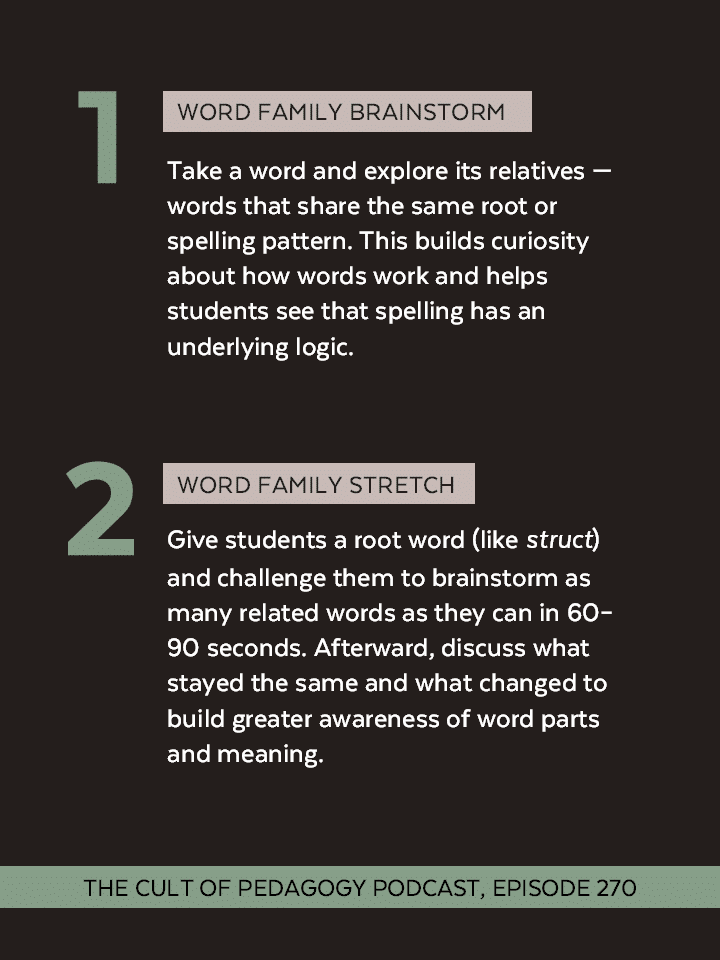
- Word Family Brainstorm: Instead of teaching homophones like two, to, and too in isolation, educators connect two to morphological relatives like twin, twine, and twenty, revealing a shared conceptual root of "twoness." Similarly, connecting decision to decide, incision, and scissors uncovers a shared Latin root meaning "to cut."
- Word Family Stretch: Students are given a bound root—such as struct (meaning "to build")—and a 60-second timer to brainstorm derivatives like structure, construction, and instruction. A mandatory debrief explores how prefixes and suffixes alter word meaning.
- Prefix Swap: Students manipulate base words (e.g., form becoming reform, transform, or inform). This strategy proves particularly powerful for multilingual learners, who often recognize familiar roots and prefixes (such as bene or mal) from their primary languages.
2. Sentence Construction
Rather than burdening young students with overly abstract grammatical terms, the authors advocate for intuitive, manipulative sentence-building strategies.

- Sentence Scramble: Words from a sentence are written on individual index cards. Students physically manipulate the cards to reconstruct the sentence, discussing word order clues, punctuation, and structural constraints.
- Sentence Expander: Starting with a kernel sentence like The cat purrs, students use conceptual terms like "doer" and "doing" (in place of traditional subject-predicate labels) to progressively expand the sentence by asking Which cat?, What color?, and Where?.
- Sentence Combining: A high-impact strategy where students merge bare-bones sentences (e.g., My cat is orange and My cat is big into My big orange cat…), naturally transferring this syntactic complexity into their independent writing.
3. Executive Functioning and Cognitive Flexibility
Cognitive flexibility—the ability to shift perspectives, alter approaches, and revise thinking—is vital for sophisticated writing.
- What’s Another Way?: Students take a drafted sentence and rewrite it through various structural constraints, such as shifting the dependent clause or shortening a verbose thought. Meehan emphasizes teaching students that powerful writing relies on an intentional rhythm between long, complex sentences and punchy, short ones.
- New Angle: Zooming out to the narrative level, students retell a familiar literary scene or a short Pixar film (such as Snack Attack) from an alternate character’s perspective. This challenges students to hold multiple viewpoints in their minds simultaneously.
Official Responses and Pedagogical Expert Commentary
The pedagogical community has responded with enthusiastic endorsement for a resource that treats writing as a trainable cognitive architecture rather than an innate talent.
Literacy advocates have pointed out that traditional writing instruction often relies on the "assign and hope" method—where teachers assign an essay, grade the final product, and wonder why students failed to improve. Meehan and Roberts’ framework flips this model on its head by front-loading micro-interventions that build neurological pathways before students ever face a blank page.
"The whole art and the craft of writing is varying sentence structures and having that skill set to be able to intentionally go from long and complex sentences when they’re impactful to short sentences when they’re impactful," Meehan noted during her recent podcast interview.
Furthermore, educators have praised the socio-emotional and civic implications of exercises like the "New Angle" strategy. By teaching students to inhabit alternate perspectives—such as reimagining a classroom conflict through the eyes of an opposing peer or a stressed teacher—writing instruction crosses the boundary from academic skill-building to empathy cultivation. "It’s not just about writing," Meehan observed. "It’s also about democracy and thinking about how other people think and what their perspectives are."
Implications for the Future of Literacy Education
The release of Foundational Skills for Writing signals a potential turning point in how literacy is conceptualized across K-12 education. As school districts nationwide re-evaluate their curricula in the wake of the "Science of Reading" movement, experts argue that a parallel "Science of Writing" must follow.
The implications of this shift are profound:
- Curricular Integration: Teacher preparation programs may face renewed pressure to include explicit instruction in morphology, syntax, and cognitive load theory, ensuring that new educators understand how the brain processes written expression.
- Equitable Access for Multilingual Learners: By leaning into morphological awareness and roots shared across Romance languages, educators can better support English language learners, validating their linguistic assets rather than treating differences as deficits.
- Redefining Remediation: Rather than forcing struggling writers to repeatedly draft failing essays, interventionists can utilize targeted "Minute Moves" to pinpoint specific bottlenecks—whether in transcription, working memory, or oral language syntax—providing precise, low-stress remediation.
Ultimately, Meehan and Roberts remind educators that writing does not have to be an agonizing chore for students. By breaking down the process into manageable, brain-friendly components, classrooms can transform writing from a source of anxiety into an empowering tool for self-expression, critical thinking, and civic engagement.