Bridging the Digital Divide: The Two-Decade Evolution of Net Literacy
In the landscape of American non-profit organizations, few stories are as compelling as that of Net Literacy. What began as a humble initiative funded by a teenager’s car savings has transformed into a national force for digital equity. Over the past twenty years, this all-volunteer organization has fundamentally reshaped how underserved communities interact with the digital world, influencing national broadband policy and earning recognition from the highest levels of government. Today, as the organization pivots toward the challenges of the Artificial Intelligence era, it stands as a testament to the power of youth leadership and grassroots advocacy.
The Genesis of an Idea: From Car Savings to Digital Literacy
The story of Net Literacy—originally launched under the name "Senior Connects"—is rooted in a singular, altruistic impulse. In 2003, a middle school student, observing the growing technological gap between the younger generation and the elderly, made a life-altering decision. He diverted the funds he had been diligently saving to purchase his first car, instead funneling that money into the formation of a nonprofit organization.
His mission was clear: bridge the digital divide for senior citizens who were increasingly finding themselves isolated in an internet-dependent society. He began by authoring four comprehensive lesson guides, designed to standardize the training process and make technology accessible to those who had never touched a keyboard. Armed with these materials, he rallied a group of friends, and together, they began teaching seniors the fundamentals of computing, email, and nascent social media. This early "students teaching students" model became the bedrock of the organization’s philosophy, proving that young people were uniquely positioned to serve as technological mentors for older generations.
Chronology: Two Decades of Impact
The evolution of Net Literacy can be categorized into several distinct phases, each marked by exponential growth and an expanding scope of influence.
2003–2004: The Foundation and Early Expansion
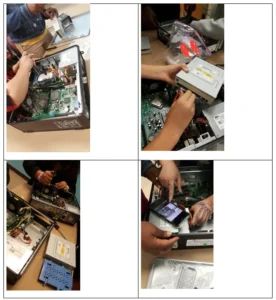
The organization’s inception was characterized by rapid mobilization. By 2004, the success of the senior training programs necessitated a strategic expansion. The leadership team rebranded the initiative as Net Literacy and broadened its mission to include the repurposing of hardware. By collecting, refurbishing, and distributing computers, the organization ensured that training was not just a theoretical exercise, but a practical reality for community members.
2005–2015: The Peak of Hardware Distribution
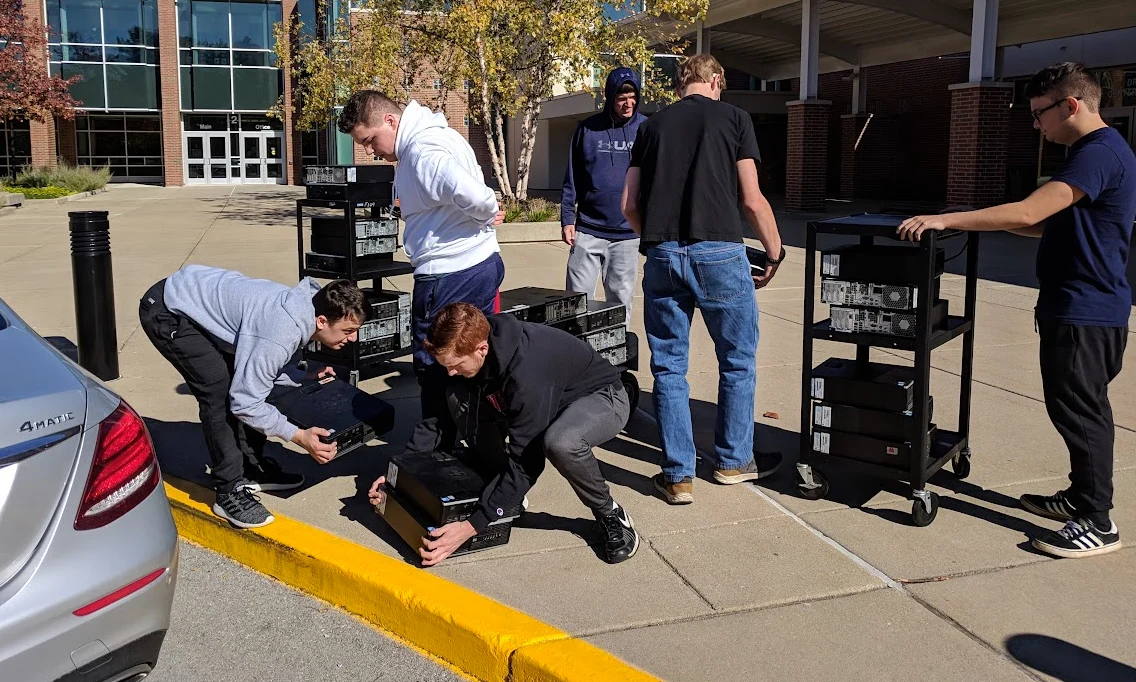
During this decade, Net Literacy became a powerhouse of hardware distribution. Recognizing that access to devices was the primary barrier to digital inclusion, the organization established a robust pipeline for donated computers. By engaging thousands of student volunteers, they cleaned, updated, and distributed tens of thousands of machines to families, nonprofits, and community centers across the country.
2016–2023: Policy Advocacy and National Recognition
As the organization matured, its focus shifted toward systemic change. Net Literacy began working with government agencies and educational institutions to influence broadband policy. This era saw the organization being highlighted by the Federal Communications Commission (FCC) in the National Broadband Plan, marking a transition from local service provider to national advocate.
2024 and Beyond: The AI Pivot
Today, Net Literacy has announced a major strategic pivot. Having repurposed over 46,000 computers and observing the rise of 1:1 student-to-laptop programs in public schools, the organization recognizes that the hardware gap is closing. Consequently, they are shifting their resources toward AI Literacy. By rebuilding their digital infrastructure and developing new pedagogical frameworks for Artificial Intelligence, they aim to ensure that the underserved are not left behind in the next technological revolution.
Supporting Data: The Magnitude of the Mission
The impact of Net Literacy is best quantified through its extraordinary operational record. Over its twenty-year tenure, the organization has generated over $16,500,000 in services and equipment value. This is not merely a financial figure; it represents a tangible improvement in the quality of life for hundreds of thousands of individuals who were granted broadband access through the organization’s efforts.
Key performance indicators include:

- Hardware Impact: 46,000+ computers repurposed and donated.
- Education: Over 1,000,000 individuals reached through internet safety and digital literacy training.
- Volunteer Engagement: 4,900 student volunteers mobilized, primarily from inner-city school districts.
- Advocacy: Co-hosting national technology summits in partnership with global leaders like Google and Harvard University.
Perhaps most notably, the organization’s work was honored by two American Presidents. One such honor included a private, commemorative ceremony at the White House, underscoring the significance of their contribution to the national digital infrastructure.
Official Responses and Industry Recognition
The professional community has lauded Net Literacy for its unique operational model—specifically its commitment to being an all-volunteer organization. For most of its history, the Board of Directors was composed of 50% students, ensuring that the organization’s decision-making process was always aligned with the perspective of the youth it served.
Intel nominated the organization for the prestigious Computerworld 21st Century Award, which they subsequently won. The award recognized Net Literacy for creating "the most innovative application of IT to extend the distribution of digital information and access to Web-Based programs and services to previously underserved populations."
Industry experts often cite Net Literacy’s success as a case study in "youth-led empowerment." By rejecting the traditional top-down nonprofit model in favor of a student-led structure, the organization demonstrated that young people are not merely beneficiaries of social programs, but effective architects of change. As the leadership team often remarks, "Our student volunteers were not tomorrow’s leaders; they are today’s leaders."
Implications for the Future: The AI Frontier
The shift toward AI Literacy comes at a critical juncture in global history. As Artificial Intelligence begins to permeate education, the workforce, and daily social interaction, the risk of a new, more profound digital divide has emerged.
Bridging the AI Knowledge Gap
Just as the organization once provided lesson guides to help seniors navigate the early internet, they are now developing curricula to help citizens understand, utilize, and critically evaluate AI tools. The implication is clear: access to hardware is no longer enough. To be truly digitally literate in the 21st century, one must understand how to interact with intelligent systems, identify misinformation, and leverage AI for personal and economic growth.
The Changing Landscape of Digital Equity
The rise of Chromebooks and inexpensive tablets has largely democratized access to hardware, rendering the massive computer-repurposing efforts of the early 2000s less vital. However, the "soft" infrastructure—the knowledge and ability to use technology safely and effectively—remains a persistent challenge. By pivoting to AI literacy, Net Literacy is proactively addressing the next phase of the digital divide before it becomes an insurmountable chasm.
Conclusion: A Legacy of Leadership
Net Literacy’s journey from a teenager’s car fund to a globally recognized institution is a powerful narrative of resilience and foresight. By constantly re-evaluating the needs of the community and being willing to abandon legacy programs in favor of emerging necessities, the organization has remained relevant for two decades.
As they move into their third decade, their mission remains unchanged in spirit, even if its methods have evolved. Whether through the installation of broadband, the distribution of refurbished hardware, or the demystification of artificial intelligence, Net Literacy continues to prove that the most effective solutions are often those built by the community, for the community. Their legacy is not just in the millions of dollars of hardware donated, but in the thousands of young lives they have empowered to lead with purpose, empathy, and technical expertise. As the digital landscape continues to shift beneath our feet, organizations like Net Literacy provide the necessary scaffolding for a more inclusive and technologically capable society.