The Austerity Trap: University of Nebraska System Faces Breaking Point Amid Deepening Fiscal Crisis
By Ben Unglesbee
Published July 13, 2026
The University of Nebraska (NU) System, a cornerstone of the state’s intellectual and economic infrastructure, is currently navigating a period of profound uncertainty. Following a shortfall in state tax revenue projections for fiscal year 2026, the institution faces the daunting prospect of yet another round of painful austerity measures. As administrators grapple with the directive from the governor’s office to tighten belts further, the system’s leadership has issued a stark warning: the era of "cutting to greatness" has reached its functional limit.
The Main Facts: A System Under Siege
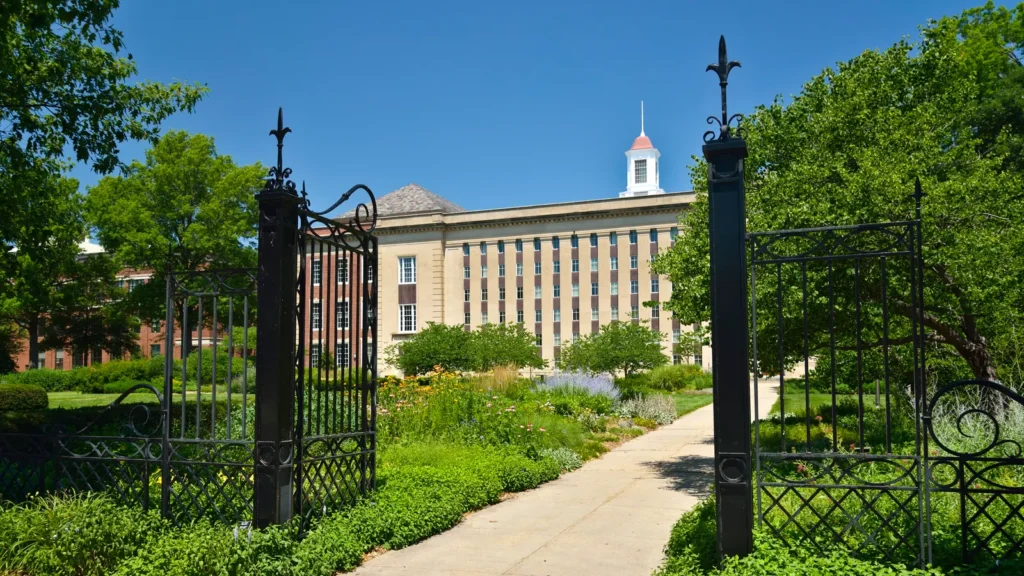
The NU System, which encompasses the University of Nebraska-Lincoln (UNL), the University of Nebraska at Omaha (UNO), the University of Nebraska at Kearney (UNK), and the University of Nebraska Medical Center (UNMC), is no stranger to budget constraints. However, the current climate is uniquely volatile.
State revenue figures for the 2026 fiscal year have failed to meet expectations, triggering a requirement for state agencies and public institutions to identify further cost-saving measures. For the NU System, this mandate arrives on the heels of an $8 million reduction already implemented for the current fiscal year.
University President Chris Gold addressed the board and the public on Friday, acknowledging the gravity of the situation. "I want to be clear: What the governor’s office is asking of us is significant," Gold stated. His remarks signal a fundamental shift in the university’s narrative—moving from a posture of manageable budget optimization to one of existential concern regarding the long-term viability of the system’s mission.
A Chronology of Financial Contraction
To understand the current crisis, one must look at the recent history of the NU System, which has been defined by a cycle of shrinking resources and internal friction.
2025: The Year of Programmatic Erosion
The seeds of the current discontent were sown throughout 2025. As the university sought to address structural deficits, leadership at the flagship Lincoln campus (UNL) turned to the controversial strategy of program elimination. This decision sparked immediate backlash from faculty and students alike, who argued that cutting academic offerings damaged the university’s reputation and eroded its land-grant mission.
November 2025: The No-Confidence Crisis
The tensions boiled over in late 2025 when the UNL faculty senate held a formal vote of no confidence in then-Chancellor Rodney Bennett. The vote was a direct rebuke of the administration’s handling of budget cuts and a perceived lack of transparency. Shortly thereafter, Chancellor Bennett departed the university, leaving behind a campus morale crisis that has yet to fully heal.
Early 2026: Patchwork Solutions
While UNL faced the brunt of the academic cuts, other campuses adopted different strategies. The University of Nebraska at Kearney (UNK) followed a similar path, eliminating four degree programs to absorb a $4.5 million budget shortfall. Conversely, the Omaha campus (UNO) managed to find $1.9 million in savings through administrative efficiencies and restructuring, avoiding the elimination of academic programs—a feat that has now set an informal, yet difficult, standard for the rest of the system.
Supporting Data: The Cost of Perpetual Austerity
The financial strain on the NU System is not merely a matter of balance sheets; it is a matter of human capital and academic output. Data suggests that constant budget cycling creates a "productivity tax" on institutions.
- Cumulative Reductions: Over the last three years, the system has navigated over $20 million in direct budget cuts, in addition to rising tuition costs designed to offset the loss of state appropriations.
- Administrative vs. Academic Spend: Critics of the recent cuts point to the rising costs of administrative overhead, while supporters of the cuts argue that the system remains bloated compared to peer institutions in the Big Ten.
- Enrollment Pressures: The uncertainty surrounding program stability has created a "recruitment headwind," with prospective students and faculty expressing concerns about the long-term stability of departments under threat.
The university’s fiscal reality is further complicated by inflation and the rising costs of research infrastructure, which often require consistent capital investment that is currently being diverted to cover operational deficits.
Official Responses and the Limits of Efficiency
President Gold’s recent comments represent a marked departure from the more diplomatic tone previously employed by university leadership. His assertion that "there are limits to what can be achieved through continued reductions" is a direct challenge to the political expectation that the university can absorb any level of funding decrease without sacrificing quality.

"We cannot cut our way to extraordinary," Gold stated, emphasizing that the mission of exceptional teaching, research, and statewide engagement requires a baseline of predictability. "We cannot fully realize our mission if we are operating in a constant cycle of cuts and related restrictions, without the ability to predict even a single year of stability."
This sentiment is echoed by many within the faculty ranks, who argue that the university is being hollowed out. Supporters of the governor’s fiscal policies, however, maintain that the university must demonstrate the same level of fiscal discipline as the private sector, particularly when state coffers are constrained.
Implications: The Future of the NU System
The road ahead for the University of Nebraska is fraught with strategic hazards. As the system prepares to release further guidance on hiring restrictions and departmental budget targets, several key implications emerge for the future of higher education in the state.
1. The "Brain Drain" Risk
Continued austerity is not merely a budgetary issue; it is a talent acquisition issue. If faculty perceive that the system is in a state of permanent decline, the most productive researchers and the most effective educators will seek opportunities in more stable environments. The loss of high-caliber staff could diminish the university’s ability to secure federal grants, further exacerbating the revenue shortfall.
2. Diminishing Returns on Consolidation
There is a growing concern that the system has already harvested the "low-hanging fruit." Future cuts will likely necessitate the consolidation of departments, the centralization of services across campuses, or the elimination of entire research centers. These moves are rarely popular and often carry long-term costs in terms of institutional identity and campus culture.
3. The Tug-of-War Between State and University
The tension between the governor’s office and the university leadership highlights a broader debate about the role of public higher education. Is the university a state agency that must fluctuate with the tax revenue cycle, or is it an essential public good that requires a "protected" budget to ensure long-term stability?

As of July 2026, the answer to that question remains in flux. The university is currently bracing for new hiring freezes—a measure designed to save money in the short term but one that threatens to stall vital projects and academic growth in the long term.
4. A Call for Strategic Redefinition
In the coming months, the Board of Regents will face pressure to redefine what the "Essential University" looks like in Nebraska. If the state is unable or unwilling to increase its commitment to higher education, the system may be forced to downsize its footprint, focusing its resources on a smaller number of high-performing hubs while potentially offloading peripheral programs.
For the students currently enrolled in the University of Nebraska, the immediate future is one of anxiety. However, for the leadership, the task is to navigate a path that prevents the "death by a thousand cuts." President Gold’s warning serves as a final plea for a shift in strategy: from managing decline to, potentially, negotiating a new compact with the state that prioritizes stability over the current, unsustainable, cycle of austerity.
As the NU System prepares to issue its upcoming budget guidance, the academic community will be watching closely—not just for the numbers, but for a sign that the university has a coherent, sustainable plan for a future beyond the current fiscal cliff.