
The Missing Link in Literacy: New Brain-Based Research Reframes Writing Instruction

By [Your Name/Agency]
In the ongoing national discourse surrounding the "Science of Reading," a critical component of literacy has remained largely in the shadows: writing. While policymakers and educators engage in heated debates over phonics, fluency, and comprehension, the mechanics and cognitive demands of writing instruction have often been overlooked.
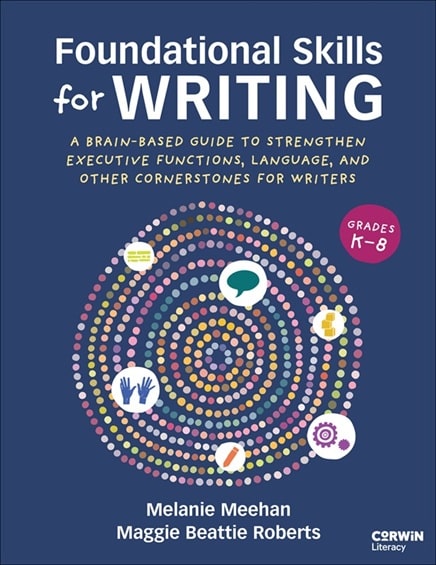
This month, literacy experts Melanie Meehan and Maggie Roberts released a groundbreaking framework aimed at closing this gap. Their new book, Foundational Skills for Writing: A Brain-Based Guide to Strengthen Executive Functions, Language, and Other Cornerstones for Writers, argues that writing is not merely a byproduct of reading, but a complex neurological feat requiring its own dedicated, evidence-based instructional set. By focusing on "Minute Moves"—short, high-impact instructional bursts—Meehan and Roberts propose a shift in how schools approach the development of young authors.

Main Facts: Addressing the Cognitive Load of Writing
The central thesis of the Meehan-Roberts framework is rooted in cognitive science. Writing is one of the most taxing tasks the human brain can perform, requiring the simultaneous coordination of motor skills, linguistic knowledge, and executive functions. When foundational skills—such as spelling, handwriting, or sentence construction—are not "automatized," they consume a student’s limited working memory. This leaves little cognitive "bandwidth" for higher-level tasks like critical thinking, organization, and voice.
Meehan, a former curriculum coordinator and founder of a dedicated writing center, and Roberts, a veteran literacy consultant, identify three primary pillars of writing development:
- Transcription Skills: The physical act of writing, including handwriting, keyboarding, spelling, and motor development.
- Oral Language: The precursor to written expression, focusing on speaking, listening, and the internal logic of sentence construction.
- Executive Functioning: The "control center" of the brain, encompassing working memory, inhibitory control, and cognitive flexibility.
The authors argue that by neglecting these "micro-skills," traditional instruction often sets students up for frustration. Their solution involves "Minute Moves," activities designed to take sixty to ninety seconds that can be integrated into transitions, warm-ups, or even the walk to the cafeteria.
Chronology: From the Reading Wars to a Writing Revolution
The path to this new framework began with the observation of a significant imbalance in literacy reform. Over the past five years, the "Science of Reading" movement has swept across the United States, leading to legislative changes in over 30 states. However, as Meehan and Roberts noted in a recent interview with Cult of Pedagogy, writing was conspicuously absent from these high-level conversations.
- 2020–2023: As schools implemented new reading curricula focused on phonemic awareness, educators began reporting a "writing plateau." Students could decode words but struggled to encode thoughts onto paper.
- 2024: Meehan and Roberts began synthesizing research from neuropsychology and linguistics to identify why students were "stuck." They found that many students lacked the "neurological pathways" necessary for effortless retrieval of word structures and sentence patterns.
- March 2026: The publication of Foundational Skills for Writing marks a formal effort to bring writing into the "brain-based" instruction era. The book introduces the "Minute Moves" as a practical classroom application of complex cognitive theories.
Supporting Data: The Eight "Minute Moves"
The efficacy of the Meehan-Roberts approach lies in its granularity. The framework identifies eight specific strategies to build neurological automaticity.
The Spelling Pillar: Morphological Awareness
Meehan draws on the research of spelling expert Rebecca Treiman, emphasizing that spelling is not about rote memorization but about understanding the "coolness" and logic of words.

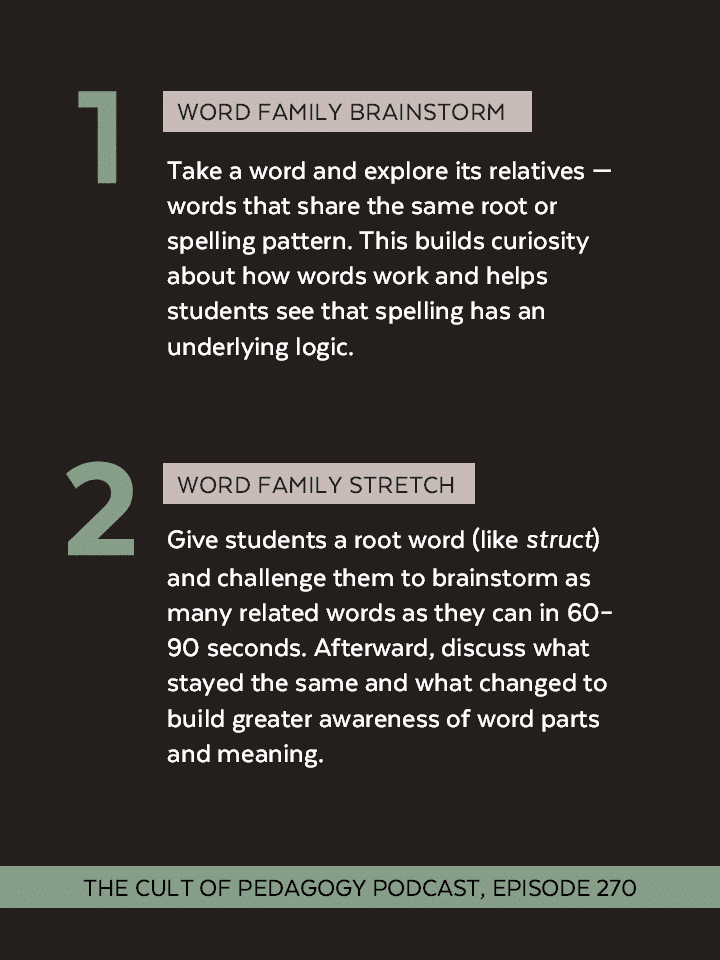
- Word Family Brainstorm: Students explore the "relatives" of a word. For instance, the silent "w" in two becomes logical when connected to twin, twine, and twenty. This builds a conceptual map of "twoness" in the brain.
- Word Family Stretch: A timed 90-second challenge where students brainstorm words from a single root (e.g., struct for "to build"). This teaches students that word parts carry consistent meaning across academic vocabulary.
- Prefix Swap: Focusing on how changing a prefix (e.g., reform, transform, deform) shifts meaning. This is particularly effective for multilingual learners who can leverage Latin or Greek roots shared across languages.
The Sentence Pillar: Syntactic Maturity
Roberts emphasizes that "sentence combining" and "scrambling" are high-impact ways for students to graduate from choppy, simple sentences to complex, sophisticated prose.
- Sentence Scramble: Using physical index cards to deconstruct a sentence. Moving words physically helps students internalize word order and the "clues" (like capitalization or prepositions) that dictate structure.
- Sentence Expander: Starting with a "kernel" (e.g., The cat purrs) and asking "Who? What? Where? Why?" to build complexity. Meehan uses the terms "doer" and "doing" to make the abstract concepts of subject and predicate more accessible.
- Sentence Combining: Taking two bare-bones sentences and merging them. This practice helps students learn to "harvest" key information and use conjunctions (because, but, although) to indicate relationships between ideas.
The Executive Function Pillar: Cognitive Flexibility
The final moves target the brain’s ability to pivot and see multiple perspectives—a skill essential for both writing and civic life.
- What’s Another Way?: Students are challenged to rewrite a single sentence in multiple ways (e.g., changing the starting clause or replacing nouns with pronouns). This reinforces the idea that writing is a series of intentional choices.
- New Angle: Retelling a scene from a different character’s perspective. Using short films or shared texts, students must hold multiple viewpoints in mind, practicing "Theory of Mind" alongside narrative craft.
Perspectives: Official Responses and Expert Insights
The reception of the "Minute Moves" concept among literacy experts suggests a growing appetite for "low-stakes, high-frequency" practice.

Melanie Meehan emphasizes that the goal is not to replace the writing workshop, but to supplement it. "The more that you can get kids curious and thinking words are cool, the better," Meehan stated. "These activities are really building the neurological pathways that help students lock words in rather than constantly struggling to retrieve them."
Maggie Roberts highlights the psychological impact on students who have historically struggled. "When you start naming skills like cognitive flexibility for kids, that’s exciting to them," Roberts explained. "There’s something genuinely empowering about being told you’re practicing a sophisticated cognitive skill."
Critics of traditional writing instruction have often argued that "writing will come if they just read enough." However, the Meehan-Roberts data suggests otherwise. Their work aligns with the "Simple View of Writing" (Berninger et al.), which posits that transcription and executive function are just as vital as ideas and language.
Implications: The Future of the Classroom
The introduction of Foundational Skills for Writing carries significant implications for the future of K-12 education:
1. Efficiency in the Daily Schedule:
Teachers are currently overwhelmed by packed curricula. The "Minute Moves" offer a way to address writing deficits without requiring a 60-minute block. By "slipping in" instruction during transitions, schools can achieve high-frequency practice that leads to long-term retention.
2. Support for Multilingual and Neurodivergent Learners:
The focus on morphology (word parts) and executive function provides a scaffold for students who may struggle with the "hidden rules" of English. For students with ADHD or dyslexia, the emphasis on building automaticity reduces the "bottleneck" effect that often leads to writing avoidance.
3. Bridging the Empathy Gap:
Perhaps the most profound implication of the framework is its focus on perspective-taking. Meehan notes that the "New Angle" move is about more than just writing; it is about democracy. By learning to think about how others think, students develop the empathy required for healthy discourse in a pluralistic society.
4. A Shift in Assessment:
If foundational skills are recognized as "cornerstones" of writing, assessment may shift from purely evaluating the final product to evaluating the fluency and flexibility of the writing process itself.
In conclusion, the work of Meehan and Roberts signals a necessary evolution in literacy instruction. By acknowledging the brain’s physical and cognitive limits, and providing teachers with "Minute Moves" to expand those limits, the educational community may finally be able to offer writing the same scientific rigor it has applied to reading. As Meehan aptly puts it, writing is not just an assignment—it is a neurological pathway to participation in the world.