The Regulatory Tightrope: Higher Education in the Crosshairs of the Trump Administration
Nearly eighteen months into President Donald Trump’s second administration, the landscape of American higher education has been fundamentally altered. Federal agencies, under a coordinated push from the White House, have aggressively leveraged their oversight powers to challenge the status quo on college campuses. From the dismantling of Diversity, Equity, and Inclusion (DEI) initiatives to strict interventions regarding pro-Palestinian encampments and policies governing transgender student participation in athletics, universities are finding themselves in a state of perpetual legal and regulatory conflict.
As federal officials intensify their scrutiny, college administrators are struggling to find a path forward. The challenge is twofold: they must demonstrate compliance with federal civil rights mandates while simultaneously defending the core tenets of academic freedom, institutional autonomy, and open inquiry. For many, this has resulted in a “dizzying” era of uncertainty, where the traditional boundaries of federal oversight have been pushed to their absolute limits.
The Regulatory Offensive: A New Era of Federal Oversight
The current tension represents a marked departure from the historical relationship between the federal government and higher education. Traditionally, federal oversight has functioned through a collaborative framework of guidance, reporting, and negotiated settlements. However, the Trump administration has shifted toward a more confrontational model, utilizing the threat of funding cuts—the "nuclear option" of federal-university relations—as a primary tool of enforcement.
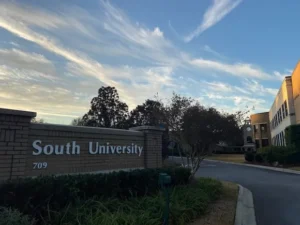
Peter Lake, a law professor at Stetson University and an expert in higher education law, describes the current environment as a "razor’s edge." According to Lake, the ambiguity regarding what is "permissible versus mandatory" has left university leadership in a state of crisis. "Campuses are trying to walk a line that may not even exist," Lake noted. "The reality is that institutions are grappling with a regulatory framework that is being rewritten in real-time through enforcement actions rather than through traditional administrative rulemaking."
Chronology of Confrontation
The administration’s strategy has been characterized by a swift, high-pressure approach that often bypasses traditional investigatory timelines.
- Early 2025: Following an executive order from the White House, the Department of Education initiated an exhaustive inventory of Title VI complaints, specifically targeting allegations of antisemitism. This coincided with the formation of a cross-agency Task Force to Combat Anti-Semitism, involving the Departments of Justice, Education, and Health and Human Services.
- Spring 2025: Several high-profile universities faced sudden threats of funding freezes. Unlike previous administrations, where Title VI investigations rarely resulted in the termination of funds, the current administration attempted to bypass the mandatory due process steps—including notice, hearings, and opportunities for voluntary compliance.
- Summer 2025: Columbia University entered into a landmark $221 million settlement to resolve civil rights probes. The agreement, which the university described as a necessary measure to protect its federal research funding and the visa status of its international students, set a precedent for the financial cost of federal non-compliance.
- Fall 2025: The University of Virginia reached an agreement to pause five civil rights investigations by adopting federal anti-DEI guidelines and submitting to quarterly compliance reporting to the Department of Justice.
- Late 2025: Northwestern University agreed to a $75 million settlement and a commitment to bar transgender women from participating in women’s sports, marking a significant intervention in internal campus policy.
Supporting Data and Financial Implications
The financial toll of these investigations has been staggering. While some institutions have successfully challenged the administration in court, others have calculated that the cost of legal warfare exceeds the cost of settlement.
The "ransom" model, as described by Risa Lieberwitz, a labor and employment law professor at Cornell University and former general counsel of the American Association of University Professors, has become a defining feature of the era. "Schools that reach these agreements end the investigations and regain access to their funding," Lieberwitz explained. "But the cost is essentially an institutional surrender of autonomy."
The legal pushback has been significant but sporadic. The University of California system and Harvard University successfully obtained federal court injunctions against the administration’s attempts to unilaterally freeze research grants. However, even these legal victories are temporary, as the Department of Justice has responded by filing new lawsuits against these institutions, seeking to recoup past grants and restrict future access.
Furthermore, the "compact" proposed by the administration last October—offering favored access to funding in exchange for the adoption of specific federal policy priorities—was largely rejected by the higher education community, with seven of nine invited institutions refusing to sign. This rejection underscores a growing consensus among university leaders that the current federal strategy poses an existential threat to their mission.
Official Responses and Justifications
The administration maintains that its actions are necessary to restore accountability and protect students from a climate of discrimination. Education Department spokesperson Amelia Joy, in an emailed statement, defended the agency’s stance: "The Trump Administration has been consistent in its efforts to hold colleges and universities that receive federal funds accountable for following federal law. We will continue to ensure campuses across the country prioritize merit and safety over discrimination and harassment."
However, legal scholars argue that the administration is operating outside the bounds of established law. Under Title VI of the Civil Rights Act, the government is strictly required to follow a multi-step process before withholding funds. This includes formal investigations, findings of non-compliance, documented efforts to obtain voluntary compliance, and the provision of a full administrative hearing. As Lieberwitz points out, "None of this has occurred in the most high-profile cases. They cannot cut funds without these steps, yet they have attempted to do so repeatedly."
Implications for Academic Freedom and Campus Climate
The long-term implications of this "centralized control" are profound. Experts warn of "anticipatory obedience," where universities preemptively restrict speech, alter curricula, or disband student organizations to avoid triggering federal attention.
The Chill of Over-Compliance
When institutions operate under the constant fear of federal intervention, the culture of open inquiry suffers. As Lake noted, "The question remains: is there a chill in the air, even after the government has reached some kind of resolution? That’s a conversation that will likely move into the courtroom as faculty and students begin to challenge these internal policy shifts."
A Call for Collective Action
In a sign of growing resistance, more than 660 college and university presidents have signed a "call for constructive engagement," an initiative coordinated by the American Association of Colleges and Universities and the American Academy of Arts and Sciences. The statement clarifies that while schools do not oppose "legitimate government oversight," they must reject "undue government intrusion in the lives of those who learn, live, and work on our campuses."
Navigating the Future
For university leaders, the path forward requires a delicate balance. Experts suggest that institutions can:
- Utilize Neutral Language: Replacing politically charged terminology with inclusive, non-partisan language that emphasizes "welcoming" environments without compromising student support services.
- Implement Content-Neutral Restrictions: Managing protests through "time, place, and manner" regulations that are applied equally, regardless of the viewpoint being expressed.
- Engage in Transparent Cooperation: While pushing back on unreasonable or broad data requests, universities should engage with investigators to demonstrate good faith, while maintaining a firm line on academic freedom.
Ultimately, the conflict between the federal government and higher education is far from resolved. As the administration continues to pursue aggressive tactics—including subpoenas for sensitive employee data, as seen in the ongoing dispute with the University of Pennsylvania—the role of the judiciary will become increasingly critical. The outcome of these legal battles will likely define the parameters of institutional autonomy for decades to come, determining whether the American university remains a space for independent inquiry or becomes a direct instrument of federal policy.