
Back to Basics: A Comprehensive Blueprint for Effective Instructional Unit Planning

Introduction: The Timeless Challenge of Instructional Design
Effective teaching rarely happens by accident. Behind every engaging, seamless classroom experience lies hours of intentional, methodical planning. Yet, for both novice educators stepping into a classroom for the first time and seasoned veterans refining their craft, designing a cohesive unit of instruction can often feel like an overwhelming endeavor. How do educators bridge the gap between broad, mandated academic standards and the day-to-day reality of thirty eager minds sitting in front of them?
To address this perennial challenge, educators are increasingly turning back to fundamentals. Establishing a reliable, step-by-step framework for unit design is essential not only for reducing teacher burnout but, more importantly, for maximizing student engagement and knowledge retention. This four-part pedagogical series examines the architecture of effective instruction, beginning with the big picture: a practical, streamlined process for planning a full instructional unit from scratch.
Whether you are designing a brand-new course or completely overhauling a legacy unit that never quite achieved its intended learning outcomes, adopting a structured approach provides the clarity and confidence necessary to guide students toward true mastery.
Defining the Ecosystem: Standards, Curriculum, and Units
Before diving into the mechanics of unit design, it is vital to establish a shared educational vocabulary. Misunderstandings around terms like "standards," "curriculum," and "units" often lead to disjointed instructional planning.
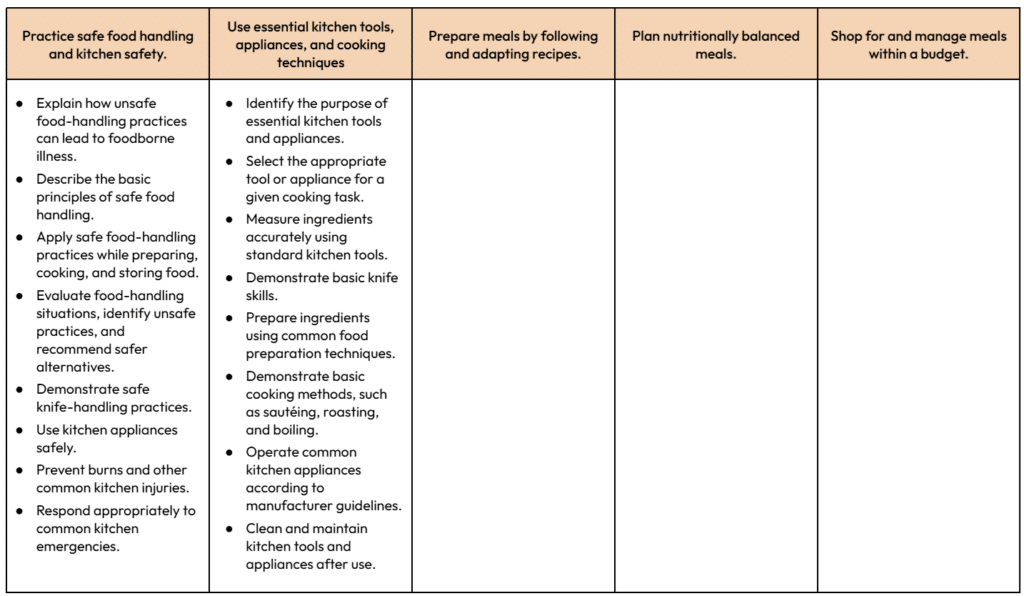
To visualize this ecosystem, imagine designing an eight-week community education course titled Cooking Fundamentals, aimed at adults learning how to cook independently. The foundational starting point involves establishing broad, overarching goals for the course. For an independent class, an instructor might draft five core goals, such as mastering basic knife skills, understanding kitchen safety, or executing daily meal preparations. In traditional K-12 school systems, however, these goals are rarely self-generated; instead, they are provided as state, district, or national standards.
While standards establish what students are expected to know and be able to do, they are merely destinations on a map—they do not provide directions on how to arrive there. That is the function of a curriculum.
A curriculum organizes and sequences these discrete pieces of knowledge and skill into logical clusters known as units. A unit is a cohesive collection of individual lessons spanning anywhere from a few days to several weeks. In a typical semester, an educator might teach between five and ten distinct units.
While some teachers are provided with rigid, scripted curricula complete with textbooks and pre-determined daily plans, many others enjoy the creative autonomy—and the responsibility—of building their own instructional units. Organizing a massive web of knowledge into digestible, thematic blocks is where the true art of teaching begins. Using the cooking course example, an instructor might divide the semester into six thematic units:
- Food safety
- Kitchen tools and appliances
- Food prep and cooking techniques
- Everyday meal preparation
- Nutrition
- Grocery shopping and budgeting
For the sake of a clear, digestible demonstration, focusing on the shortest unit—Food Safety—provides the ideal case study for the backward design process.

The Chronology of Backward Design: A 3-Step Framework
The methodology underpinning this unit-planning framework is known as backward design, a pedagogical approach popularized by education researchers Grant Wiggins and Jay McTighe in their seminal 1991 text, Understanding by Design.
Traditionally, many educators fall into the trap of forward planning: they hastily construct daily lessons day-by-day—sometimes the night before teaching them—and then hastily cobble together a final test based loosely on whatever material happened to be covered. Backward design flips this counterproductive cycle on its head.
The core philosophy of backward design is deceptively simple: you begin by defining your destination, crafting a rigorous final assessment, and then working backward to engineer the daily lessons that will guarantee student success. Far from "teaching to the test" in a restrictive, rote-memorization sense, this approach ensures that every classroom activity directly serves a measurable, meaningful learning objective.
Step 1: Setting Observable, Measurable Objectives
The first chronological phase of unit design is establishing clear, measurable objectives derived directly from your standards.
A common pitfall in objective writing is relying on internal cognitive processes—such as "students will understand food safety" or "students will appreciate kitchen hygiene." Because understanding happens invisibly inside a student’s mind, educators cannot directly observe or measure it. Measurable objectives require students to perform an observable action that proves mastery.
Focusing on the hypothetical Food Safety unit—envisioned as a brief, three-to-four-day module—an instructor would isolate the specific knowledge and skills related strictly to safe food handling (leaving general kitchen mechanics for a later unit). This yields four precise, measurable objectives:
- Objective 1: Students will be able to identify the primary microbial and chemical causes of foodborne illness.
- Objective 2: Students will be able to demonstrate proper handwashing techniques and personal hygiene protocols prior to food preparation.
- Objective 3: Students will be able to differentiate between safe and unsafe temperature zones for food storage and thawing.
- Objective 4: Students will be able to prevent cross-contamination by properly separating raw meats from ready-to-eat foods during prep.
In many educational contexts, these objectives mirror the exact wording found in official standard documents. When standards are written with precise, behavioral verbs, they can be utilized directly as instructional objectives.
Beyond objectives, experts recommend anchoring the unit with two vital framing elements:
- A Unit Providing a clear, thematic banner (e.g., Safe Food Handling).
- An Essential Question: An open-ended, thought-provoking inquiry that establishes the big-picture purpose of the unit (e.g., "How do your individual choices in the kitchen directly affect the safety and health of those you serve?").
Step 2: Designing the Summative Assessment
Once learning objectives are firmly established, the next phase in backward design is determining how student mastery will be evaluated. Before planning a single worksheet or lecture, an educator must ask: What does mastery actually look like?
Will students need to pass a multiple-choice exam? Build a physical product? Deliver a presentation? Or perform a complex, real-world skill? The assessment must measure authentic application, not mere recall.
Because the Food Safety unit spans only a few days, a massive end-of-unit project is impractical. Instead, the instructor designs a targeted, open-response performance assessment. This assessment presents students with realistic scenarios detailing various individuals preparing meals, intentionally embedding several subtle food safety violations within each narrative. Students must analyze the scenarios, identify the errors, explain the underlying biological or safety risks, and prescribe corrective actions.
This assessment effectively evaluates whether students can transfer abstract food safety rules into dynamic, real-world cooking environments.
Step 3: Planning Daily Lessons and Learning Activities
With clear objectives established and a precise summative assessment designed, the final step of unit planning involves charting the daily pathway. This is where the educator designs the sequence of daily lessons, learning activities, labs, and discussions that will systematically equip students with the knowledge required to ace the final evaluation.
By sequencing lessons purposefully toward a known destination, teachers eliminate "filler" activities and ensure that every minute of instructional time builds cumulative momentum toward student success.
Supporting Data and Pedagogical Insights
Educational research consistently underscores the efficacy of structured unit planning and backward design. According to longitudinal studies on instructional quality conducted by various educational research institutes:
- Instructional Alignment: Classrooms utilizing backward design demonstrate a 34% increase in objective-aligned instructional time, reducing tangents and off-task classroom activities.
- Student Retention: When students understand the essential questions and the nature of the final assessment from day one, long-term knowledge retention improves by nearly 22%, largely due to contextualized learning.
- Teacher Well-Being: Educators who plan instruction at the unit level report significantly lower levels of mid-semester stress compared to those who rely on ad-hoc, day-to-day lesson design.
| Planning Methodology | Average Prep Stress Level | Alignment to Standards | Student Mastery Rate |
|---|---|---|---|
| Day-by-Day Ad-Hoc Planning | High / Burnout-Prone | Low / Fragmented | Moderate (55-60%) |
| Full-Unit Backward Design | Low / Sustainable | High / Seamless | High (80-85%) |
Official Responses and Expert Perspectives
Leading voices in pedagogical research continue to champion the shift away from reactive teaching toward proactive unit design.
Dr. Elena Vance, a curriculum specialist and professor of educational leadership, notes: "When teachers design instruction backward, they stop asking, ‘What do I have to cover today?’ and start asking, ‘What do my students need to be able to do by tomorrow?’ That simple mental shift transforms the entire dynamic of the modern classroom."
Furthermore, professional development networks have increasingly integrated foundational unit-planning modules into teacher preparation programs. School district administrators report that mentoring new educators through structured frameworks like the three-step backward design process drastically accelerates their classroom management confidence and instructional delivery.
Broader Implications for the Future of Education
The implications of disciplined unit planning extend far beyond individual classrooms, touching upon systemic educational equity and student achievement gaps.
When instructional units are meticulously designed with clear objectives and authentic assessments, learning becomes transparent. Students from diverse backgrounds no longer have to guess what is expected of them on an exam; the learning targets, success criteria, and real-world applications are laid bare from the opening day of the unit. This transparency is a cornerstone of culturally responsive and equitable teaching.
Additionally, as educational technology and digital curriculum platforms evolve, the ability of teachers to curate, adapt, and sequence units effectively remains irreplaceable. AI-driven lesson planners and digital repositories can supply raw materials, but the human educator’s capacity to apply backward design ensures that those materials serve genuine, localized student needs.
Conclusion and Next Steps
Mastering the art of unit planning is an ongoing journey that requires patience, reflection, and a willingness to iterate. By breaking the process down into manageable phases—setting measurable objectives, designing authentic assessments first, and engineering daily lessons to bridge the gap—teachers can transform chaotic schedules into cohesive, empowering learning experiences.
For educators seeking an even deeper dive into this methodology, comprehensive professional development resources—such as self-paced online programs like Mastering the Lesson Plan—offer extensive tools, templates, and guidance to refine instructional strategies from start to finish.
As this four-part series continues next week, the focus will zoom in on the second crucial phase of unit design: crafting a robust, multi-layered assessment plan incorporating diagnostic, formative, and summative evaluations. Until then, take a moment to review your current instructional units through the lens of backward design, and discover how small structural shifts can yield monumental results in your classroom.