Beyond the Attendance Sheet: How Cumberland County Schools is Redefining the Fight Against Chronic Absenteeism
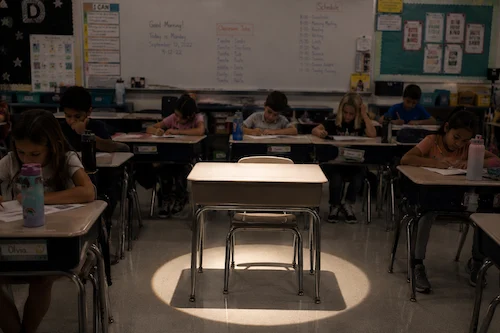
For decades, the standard administrative response to a student missing too many days of school has followed a predictable, bureaucratic script: a computerized warning letter is mailed home, followed by a formal phone call, a parent-teacher conference, and, if the behavior persists, a referral to truancy court or social services.
However, educational leaders across the country are realizing that this compliance-driven approach fails to address the complex, real-world crises that keep children out of the classroom.
In Cumberland County Schools (CCS)—the fifth-largest school district in North Carolina, serving a highly diverse population in and around Fayetteville—district leaders are pioneering a profound paradigm shift. Under the guidance of Dr. Natasha Scott, Executive Director of the Student Services Team, the district is abandoning the traditional punitive model of attendance enforcement. Instead, Cumberland County is embracing a relational, trauma-informed strategy that seeks to understand the root causes of chronic absenteeism.
The core philosophy of this shift is simple yet transformative: chronic absenteeism is not a discipline problem to be corrected with penalties; it is a symptom of systemic, familial, or psychological distress that must be met with empathy, coordination, and support.
Main Facts: The Shift from Compliance to Connection
At the heart of Cumberland County’s new strategy is a rejection of the idea that absenteeism is merely a matter of student or parent motivation. According to Dr. Scott, when educators look past the spreadsheet numbers and engage directly with families, they uncover stories of profound hardship. These stories range from sudden parental job loss and housing instability to severe bullying, immigration-related anxieties, and undiagnosed mental health crises.
+-------------------------------------------------------------------------+
|                  THE ATTENDANCE PARADIGM SHIFT                         |
+-------------------------------------------------------------------------+
|   OLD COMPLIANCE MODEL              |   NEW RELATIONAL MODEL            |
|   - Punitive warning letters        |   - Proactive outreach & visits   |
|   - Formal legal referrals          |   - Root-cause problem solving    |
|   - Focus on counting days missed   |   - Focus on removing barriers    |
|   - Siloed department actions       |   - Integrated support teams      |
+-------------------------------------------------------------------------+
To address these challenges, Cumberland County Schools has implemented several key initiatives:
- The Restructuring of Student Services: Breaking down administrative silos to ensure that school counselors, social workers, nurses, and community partners collaborate actively on individual student cases.
- A Multi-Tiered System of Supports (MTSS): A framework that pairs early identification of attendance issues with tailored, progressive interventions.
- The Concentric Educational Solutions Partnership: A strategic summer partnership designed to train staff in trust-based home visits, shifting the initial touchpoint with chronically absent families from a warning to an offer of assistance.
- A Focus on Mental Health: Recognizing that school avoidance is often a manifestation of anxiety and depression rather than defiance, and responding with clinical and emotional support rather than discipline.
Chronology: The Evolution of the Attendance Crisis
To understand why Cumberland County’s shift is so critical, it is necessary to examine how the relationship between students, families, and schools has evolved over the last decade.
   Pre-Pandemic (Before 2020)
   ├── Attendance viewed primarily as a compliance & legal issue
   └── Punitive truancy policies dominate school districts nationwide

   The COVID-19 Disruption (2020-2021)
   ├── Standard school models collapse; remote learning is normalized
   └── Students experience unprecedented flexibility & self-paced instruction

   The Post-Pandemic Hangover (2022-2023)
   ├── Chronic absenteeism rates spike nationwide
   └── Mental health struggles (anxiety, depression) emerge as primary drivers

   The Relational Pivot (Summer 2024 & Beyond)
   ├── Cumberland County partners with Concentric Educational Solutions
   └── Focus shifts to home visits, trust-building, and systemic integration
1. The Pre-Pandemic Baseline (Before 2020)
Prior to the COVID-19 pandemic, chronic absenteeism—defined generally as missing 10% or more of the school year—was treated largely as a localized administrative issue. Districts relied heavily on automated tracking systems. If a student crossed a certain threshold of unexcused absences, the system triggered legalistic interventions. While this succeeded in identifying when students were missing, it did little to address why.
2. The Pandemic Disruption (2020–2021)
The onset of the COVID-19 pandemic fundamentally fractured the traditional educational landscape. As schools transitioned to remote and hybrid learning environments, the physical boundaries of the classroom dissolved. This period normalized alternative learning modalities, including self-paced instruction, digital modules, and flexible schedules. Many students, particularly those who struggled in traditional social environments, found that these personalized settings suited them better. However, the period also isolated vulnerable students, severed their connection to school communities, and exacerbated domestic, financial, and emotional instabilities.
3. The Post-Pandemic Hangover (2022–2023)
When schools returned to compulsory in-person instruction, districts nationwide faced an unprecedented surge in chronic absenteeism. The pandemic had not only exposed pre-existing socio-economic divides but had also normalized the idea that school attendance could be flexible. Furthermore, educators observed a dramatic rise in school avoidance linked to clinical anxiety, depression, and trauma. The old punitive tools proved entirely ineffective against this new wave of mental health-driven absences.
4. The Summer 2024 Partnership and Beyond
Recognizing that traditional warning letters were failing to move the needle, Cumberland County Schools formalized a partnership with Concentric Educational Solutions in the summer of 2024. This partnership marked the launch of a concerted, district-wide effort to retrain staff, deploy home-visit teams, and build a unified, multi-tiered support system designed for long-term student retention.
Supporting Data: The Reality of Chronic Absenteeism
The shift in Cumberland County’s strategy is backed by a growing body of national and state-level educational research. Chronic absenteeism has emerged as one of the most significant post-pandemic challenges in American public education.
According to data compiled by the attendance advocacy organization Attendance Works and researchers at Stanford University:
- The National Surge: Chronic absenteeism rates in the United States nearly doubled post-pandemic, jumping from an average of 15% in the 2018–2019 school year to nearly 30% by 2021–2022.
- The Impact on Achievement: Chronically absent students are significantly less likely to read proficiently by the third grade, are more likely to fail key middle school courses, and face dramatically higher high school dropout rates.
- The Demographic Disparity: Students from low-income families, students of color, English language learners, and students with disabilities experience disproportionately higher rates of chronic absenteeism, pointing to systemic barriers rather than individual defiance.
+-------------------------------------------------------------------+
|            COMMON BARRIERS TO CONSISTENT ATTENDANCE               |
+-------------------------------------------------------------------+
|  Economic Pressures:       - Housing instability / homelessness   |
|                            - Lack of reliable transportation      |
|                            - Need to work or care for siblings    |
|                                                                   |
|  Socio-Emotional Issues:   - Chronic anxiety and depression       |
|                            - School avoidance / fear of bullying  |
|                            - Post-traumatic stress                |
|                                                                   |
|  Systemic Disconnect:      - Feeling unsafe or unwelcome          |
|                            - Lack of culturally responsive support|
+-------------------------------------------------------------------+
Dr. Scott emphasizes that when a district treats these underlying data points as compliance failures, they miss the opportunity to intervene productively. For example, sending a legal warning letter to a family experiencing homelessness does not secure stable housing; instead, it alienates the family from the very institution that could connect them with community resources.
Official Responses: Restructuring Student Support Services
The administrative response in Cumberland County, led by Dr. Natasha Scott, represents a deliberate departure from traditional siloed operations. By restructuring the district’s approach, CCS is proving that systemic challenges require integrated institutional answers.
Implementing a Multi-Tiered System of Supports (MTSS)
Cumberland County’s framework relies on a multi-tiered approach to identify and support students before their absences escalate into a crisis:
                  /
                 /
                / T3   <-- Tier 3: Intensive, individualized case management
               /------
              /  Tier    <-- Tier 2: Targeted interventions (group counseling,
             /    2           mentor pairing, family outreach)
            /------------
           /    Tier 1      <-- Tier 1: Universal strategies (positive school climate,
          /                      clear communication, engaging curriculum)
--------------------- Tier 1 (Universal Prevention): Building a positive, welcoming school culture where every student feels valued. This includes school-wide attendance campaigns, clear communication with families about the importance of attendance, and engaging, personalized instruction.
- Tier 2 (Targeted Intervention): When a student begins to show early signs of attendance struggle (missing 5% to 9% of school days), targeted intervention teams step in. This may involve assigning a school mentor, organizing group counseling, or initiating informal, supportive check-ins with the family.
- Tier 3 (Intensive Support): For students who are chronically absent (missing 10% or more of the school year), the district deploys intensive, individualized case management. This tier brings together counselors, social workers, nurses, and external community partners to address the specific, acute barriers preventing the student from attending school.
The Concentric Educational Solutions Model
A key pillar of Cumberland County’s enhanced Tier 3 strategy is its partnership with Concentric Educational Solutions. Concentric specializes in a student-centric re-engagement model that prioritizes professional home visits.
Rather than serving as truancy officers, home visitors act as advocates. When they knock on a door, their objective is not to hand out a penalty or document a violation, but to ask: "What is keeping your child from getting to school, and how can we help you solve it?"
This approach has already begun to transform the culture within Cumberland County Schools. Staff members are encouraged to view the first conversation with a struggling family not as an enforcement action, but as an opportunity to build trust.
Implications: The Future of Public Education
The ongoing work in Cumberland County Schools has profound implications for the broader field of public education, challenging districts nationwide to reconsider how they measure and encourage student engagement.
1. Moving from Accountability to Support
If school districts continue to treat chronic absenteeism as a metric to be managed through discipline and compliance, they will likely continue to see "compliance-sized results." Real improvement requires a willingness to invest in human capital—social workers, counselors, and community liaisons—who have the time and training to build authentic relationships with families.
2. Adapting to the Post-Pandemic Student
The pandemic fundamentally changed how students perceive learning. Today’s students expect more agency, personalization, and flexibility. Educational leaders must decide whether to resist this shift or learn from it. Districts that offer flexible pathways, blended learning options, and student-centered environments are finding it easier to re-engage students who feel alienated by traditional, rigid classroom structures.
3. De-stigmatizing School Avoidance
By recognizing that many absences are rooted in mental health struggles rather than defiance, school districts can begin to de-stigmatize school avoidance. This requires expanding access to mental health services within schools and ensuring that educators are trained to recognize the signs of anxiety and depression, treating these conditions with the clinical support they require.
4. A Call to Action for School Leaders
The message from Cumberland County to school districts across the United States is clear: attendance numbers will not improve simply because schools get better at tracking them.
"Our attendance numbers will not turn around because we got better at counting," Dr. Scott notes. "They’ll turn around when we get better at connecting, and when we build systems patient and coordinated enough to address what’s actually keeping kids away."
As school districts navigate the complexities of the post-pandemic era, Cumberland County’s relational, support-first model offers a promising blueprint. By listening to what students are saying through their absences, educators can build stronger, more resilient school communities that ensure no child is left invisible.