Navigating the Storm: Higher Education in an Era of Regulatory Volatility and Political Pressure
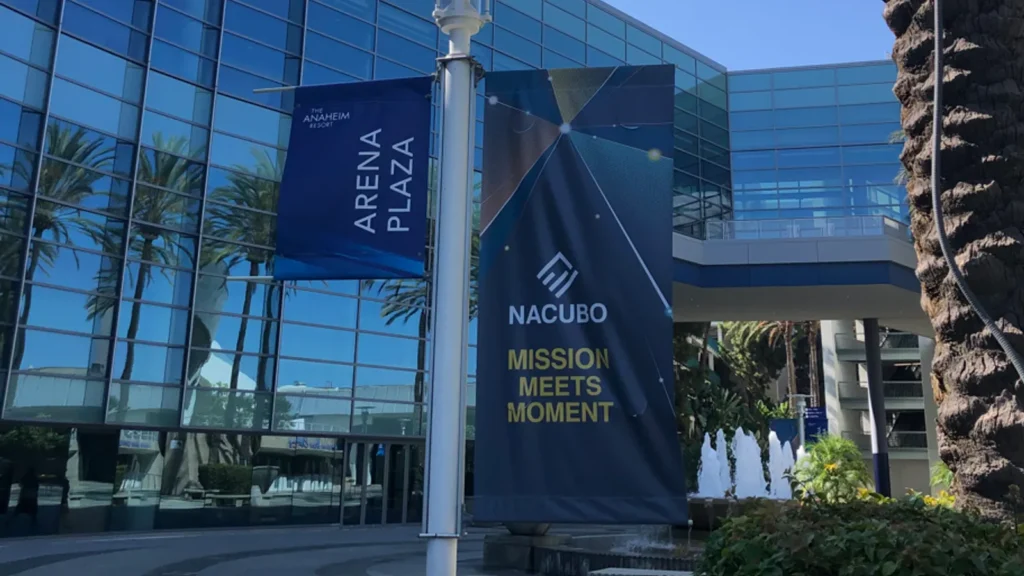
ANAHEIM, Calif. — For leaders in American higher education, the past eighteen months have felt less like a steady climb and more like a turbulent flight through a persistent atmospheric depression. As college and university business officers gathered in Anaheim for the National Association of College and University Business Officers (NACUBO) annual conference, the mood was one of cautious survival. The sector, once defined by its long-term stability and deliberate planning cycles, now finds itself in a reactive posture, forced to pivot rapidly in response to a federal landscape characterized by aggressive regulatory enforcement, ideological scrutiny, and significant financial restructuring.
The central question facing institutions today is no longer just how to manage tuition revenue or endowment growth, but how to maintain operational continuity in an environment where the "rules of the road" are being rewritten in real-time. Whether it is the chilling effect of administration-led investigations or the existential shock of federal lending reform, the current policy climate has fundamentally altered the calculus for college leadership teams across the country.
The Shift Toward a Defensive Posture
The sentiment among university administrators is perhaps best captured by Ted Mitchell, president of the American Council on Education (ACE). During a Monday panel, Mitchell revealed that his organization had essentially discarded its pre-2024 election policy agenda—a comprehensive roadmap developed with the assumption of a predictable governing environment.
"We have moved more into a defensive posture," Mitchell admitted. This shift is not merely symbolic; it represents a redirection of institutional resources from strategic innovation to risk management and legal compliance. Universities that once focused on campus expansion or academic program development are now dedicating significant personnel hours to analyzing executive orders, bracing for Department of Education enforcement actions, and reevaluating their institutional certifications to ensure they do not become the next target of a federal probe.
A Chronology of Disruption: From Spending Bills to Regulatory Overhaul
The current climate did not materialize overnight. The disruption began in earnest with the passage of a massive federal spending and tax bill last year, which fundamentally altered the relationship between the government and institutions of higher education.
- The Legislative Trigger: The initial spending bill introduced new, rigorous restrictions on student lending, signaling a broader legislative intent to curb the federal government’s role in funding higher education.
- The Regulatory Sprint: Following the legislative shifts, the U.S. Department of Education began a swift and aggressive campaign to write and enforce new regulations, often bypassing traditional consensus-building processes in favor of rapid implementation.
- The Judicial Pushback: As the administration’s directives reached the implementation stage, the courts became the primary battleground. In June, a federal court temporarily blocked the Department of Education’s narrow definition of "professional degrees"—a rule that would have drastically restricted the borrowing power of graduate students in fields ranging from nursing to education.
- The Current Budget Cycle: As Congress navigates the fiscal 2027 budget, the sector remains in a state of suspended animation, waiting to see whether lawmakers will push back against proposed cuts to research funding and student aid programs, or if the administration’s austerity measures will become the new baseline for federal support.
Financial Implications: The Grad PLUS Loan Crisis
At the heart of the sector’s financial anxiety is the sunsetting of the Grad PLUS loan program and the introduction of lifetime borrowing caps. NACUBO Education Policy Director Bryan Dickson identified these changes as "one of the most impactful" developments since the current administration took office.
The elimination of Grad PLUS loans, which historically provided graduate students with a reliable, government-backed source of funding regardless of credit history, has created a vacuum in the financial aid ecosystem. The anticipated surge in private lending has failed to materialize, leaving many students and institutions in a lurch.
"We certainly did not see any quick entry into this space," noted Liz Clark, NACUBO’s vice president of policy and research. The issue, experts suggest, is fundamentally one of risk. Private lenders, unlike the federal government, require strict creditworthiness assessments. As NACUBO President and CEO Kara Freeman noted, this creates an inherent barrier to entry for economically disadvantaged students, potentially restricting access to essential graduate professions.
The implications for universities are severe. While some hope that these loan caps will force tuition prices down, there is little evidence of this trend taking hold. Instead, as Freeman noted, institutions are being forced to explore alternative strategies—such as shortened degree programs and extended payment plans—to bridge the financing gap. However, as Melanie Storey, president and CEO of the National Association of Student Financial Aid Administrators, pointed out, most colleges simply lack the endowment resources to step in as "lender of last resort."
The "Shock and Awe" Campaign: Ideological Pressures
Beyond fiscal policy, institutions are grappling with a deliberate effort by the administration to reshape the cultural and ideological framework of higher education. Loretta Martinez, senior vice president and general counsel at Loyola Marymount University, described the administration’s approach as a "shock and awe" campaign.
This campaign has focused on the systematic dismantling or rebranding of Diversity, Equity, and Inclusion (DEI) initiatives. Through a combination of executive orders, public threats, and federal investigations, the administration has successfully incentivized a climate of self-censorship. "We all wanted to avoid being a target," Martinez explained. This fear has led to a widespread chilling effect, where even institutions that remain committed to inclusive excellence are reframing their efforts to avoid triggering federal scrutiny.
Looking ahead, the administration’s potential use of the False Claims Act—targeting university certifications of compliance with federal civil rights laws—represents a new and potent weapon. By scrutinizing the certifications signed by provosts and researchers, the administration can turn administrative compliance into a high-stakes legal risk, further complicating the daily operations of university leadership.
Official Responses and Strategic Pivot
Despite the pervasive anxiety, there is a growing consensus that the sector has managed to survive the worst of the anticipated shocks. Liz Clark offered a note of pragmatic optimism during the conference, suggesting that the "negativity bias" often seen in headlines masks the resilience of the higher education system.
"A year ago, we were all sitting here wringing our hands," Clark reminded the attendees. She credited the role of Congress and the judicial system in acting as a firewall against some of the more extreme executive proposals. Notably, the administration’s attempts to slash funding for the Pell Grant program, the TRIO program, and Federal Work-Study were rejected by Congress, signaling that the legislature remains a critical check on executive overreach.
Furthermore, recent data shows that enrollment has held steady, and the rollout of the revamped Free Application for Federal Student Aid (FAFSA) has, despite initial technical hurdles, achieved record completion rates. These successes provide a foundation for institutions to argue that, while policy volatility is high, the fundamental value and accessibility of higher education remain intact.
Implications for the Future: A Loss of Predictability
Perhaps the most damaging outcome of the current era is the erosion of institutional certainty. As Martinez poignantly observed, the sector is experiencing a "loss of predictability" regarding how the government and the courts function. When the rule of law becomes secondary to political expediency, the long-term planning required for universities—which operate on decade-long research and endowment cycles—becomes nearly impossible.
"The rug was pulled out from under us," Martinez said, characterizing the sentiment of many who feel that the established norms of governance have been abandoned.
As higher education moves forward, the strategy for colleges and universities appears to be shifting toward collective advocacy and diversified risk management. The ability of professional organizations like NACUBO and ACE to coalesce around shared legislative priorities will be tested as they seek to navigate the remainder of this administration’s term.
For now, the lesson for higher education leaders is clear: the era of "business as usual" is over. In its place is a landscape where agility, legal vigilance, and a robust defense of institutional autonomy are the only reliable tools for navigating the storm. While the sector has proven more resilient than many feared, the cost of this stability has been high, and the path forward remains fraught with both regulatory peril and the necessity for constant, proactive adaptation.