
Cultivating Classroom Culture: How One Educator’s "Octopus Wall" Revolutionizes Peer Affirmation in High Schools
By Education Desk Reporter
Published: Fall Term Insights
Introduction: The Power of the Octopus
When high school teacher Marcus Luther invites families into his classroom for annual fall conferences, he anticipates the standard cadence of academic check-ins, grade reviews, and behavioral updates. However, these parent-teacher conferences frequently veer into unexpected, heartwarming territory.
"Mr. Luther, wait!" a student exclaimed just as Luther prepared to wrap up a conference. "Can you tell my parents about the octopus?"
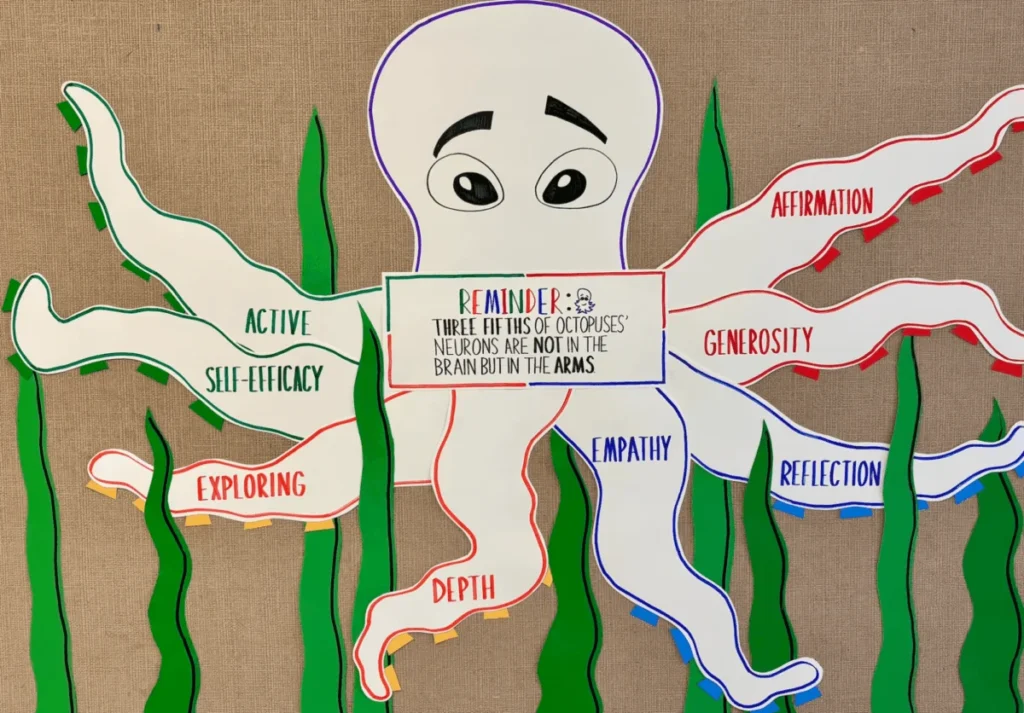
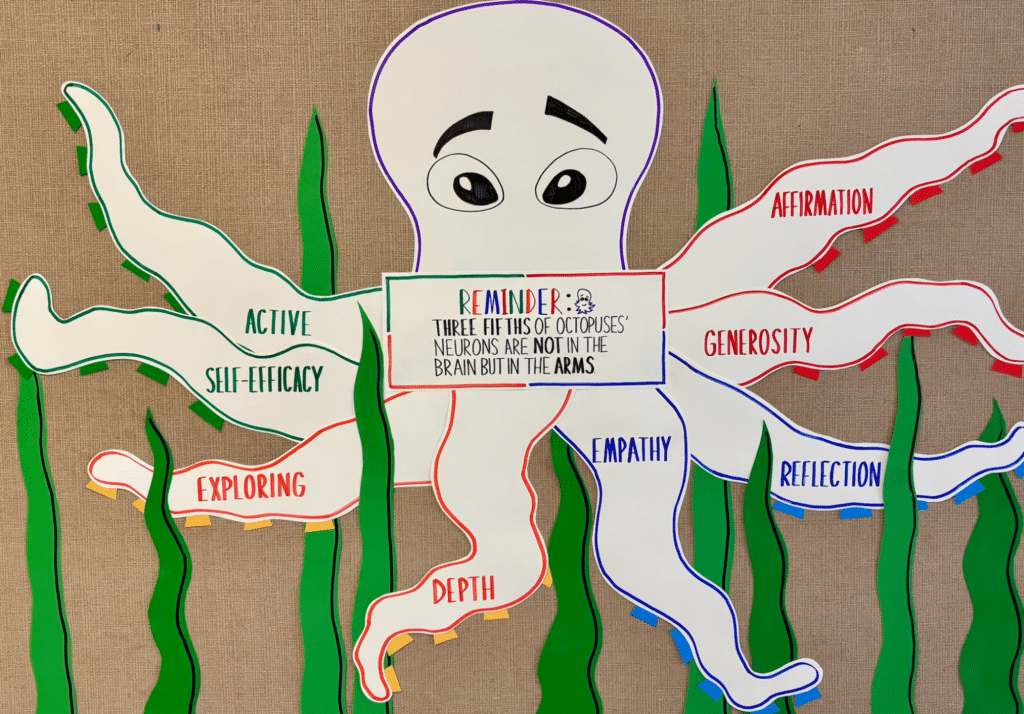
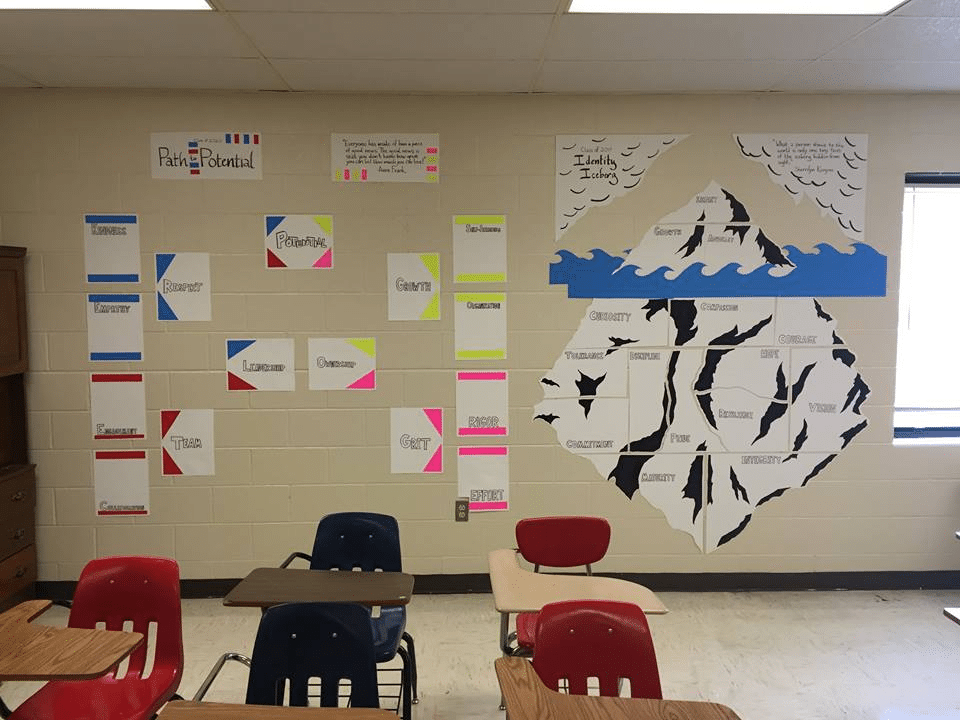
Luther smiles widely at the request. Stretching across a considerable portion of his classroom wall is "the octopus"—a sprawling visual installation consisting of custom posters assembled at the start of each school year. Each of the creature’s eight appendages represents a core classroom value.

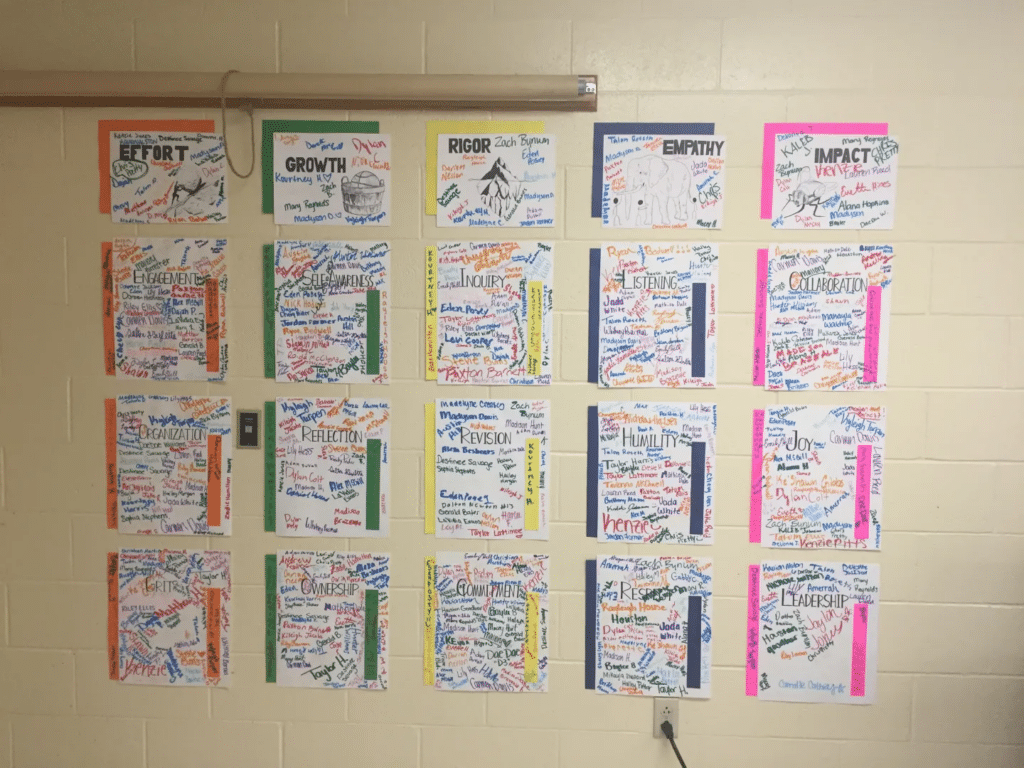
While the octopus begins the academic year entirely blank, it steadily transforms over the months. Week by week, the tentacles fill with student signatures. Each signature is the tangible result of a student being anonymously nominated by their peers for actively embodying a specific classroom value.
This innovative system of peer affirmation has become a cornerstone of Luther’s pedagogy, transforming abstract character traits into living, breathing community standards. As educators nationwide grapple with declining student engagement, social-emotional deficits, and classroom climate challenges, Luther’s model offers a replicable, high-impact blueprint for fostering genuine connection and mutual respect among adolescents.
Main Facts: Deconstructing the Peer Affirmation Model
At its core, Luther’s system is designed to combat isolation, lift up quiet leaders, and build a culture where students actively look for strengths in one another. Over a decade of iteration in high school environments—ranging from boisterous freshmen to hyper-focused Advanced Placement (AP) seniors—Luther has refined the system into three foundational pillars:
- Explicit Value Framing: Establishing clear, memorable classroom values that guide behavior and academic inquiry.
- Anonymous Peer Nomination: Empowering students to anonymously recognize their classmates through structured digital forms.
- The "Signing the Wall" Ritual: Transforming the accumulation of accolades into a celebratory weekly classroom event.
Rather than relying on generic praise or top-down teacher rewards, the model shifts the locus of validation to the student body. Adolescents are trained to observe critical thinking, empathy, resilience, and curiosity in their peers, bridging the gap between academic learning and social-emotional growth.
Chronology: The Evolution of "The Wall"
The genesis of the octopus wall dates back more than ten years, sparked by an observation in Luther’s wife’s fifth-grade classroom. Witnessing younger students regularly write brief, positive notes to one another inspired Luther to adapt the concept for high schoolers.
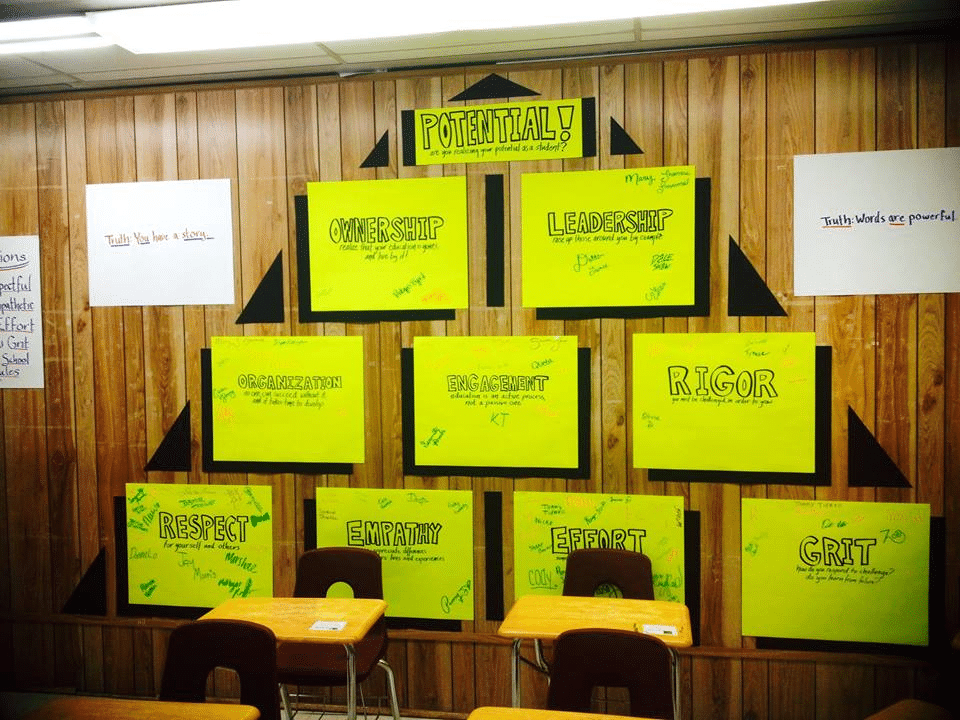
Initially, Luther drew inspiration from legendary basketball coach John Wooden’s "Pyramid of Success." In his early teaching days, Luther utilized a pyramid graphic on his classroom wall. Over subsequent years, the visual format underwent several iterations to better fit high school aesthetics and thematic units. Eventually, the layout evolved into an octopus—a whimsical, multi-limbed creature perfectly suited to accommodating eight distinct core values.
The timeline of a typical academic year utilizing this system follows a deliberate cadence:
- Pre-Term: Luther defines eight core values, often incorporating feedback and reflections gathered from students at the close of the previous school year.
- Weeks 1–3: The octopus posters hang entirely blank on the wall. This period builds anticipation and curiosity among incoming students.
- Week 3 Onward: The first round of peer nominations opens. From this point forward, weekly or bi-weekly nominations and wall-signing ceremonies become an entrenched classroom ritual.
- Year-Round Tracking: Luther meticulously logs nominations in a digital spreadsheet, creating a longitudinal record of student contributions that aids in writing college recommendation letters and communicating positive updates to parents.
Supporting Data and Implementation Mechanics
Implementing a culture-building initiative in a high school setting with 150 to 180 students across six distinct class periods requires meticulous organization. Luther notes that early versions of his system lacked structure, but the integration of digital tools has streamlined the process significantly.
1. Preparing the Values
While many modern educational frameworks emphasize co-creating classroom agreements with students during the first week of school, logistical constraints—such as managing high student loads—led Luther to a hybrid approach. He utilizes student exit surveys from the end of the prior school year to refine the core values, allowing cohorts to "pay forward" their feedback.
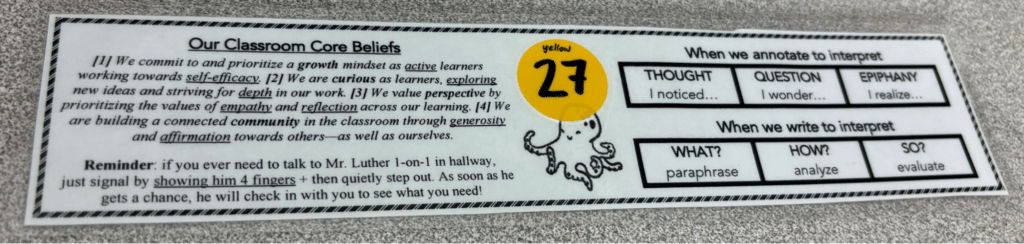
To ensure continuous visibility, these core beliefs and values are permanently printed on custom decals affixed to every student desk. Furthermore, limiting the core values to eight strikes an optimal balance: it provides enough behavioral "look-fors" to keep the nominations dynamic, while remaining small enough for students to fully internalize.
2. The Nomination Process
To avoid student intimidation or superficial submissions, the nomination process is introduced carefully two to three weeks into the term. Luther scaffolds the activity by sharing exemplar nominations from previous years or modeling submissions himself.
Students submit nominations via a dedicated Google Form. The form requires three fields:
- The name of the nominee.
- The specific core value being demonstrated.
- A qualitative explanation detailing how the student lived out that value.
Crucially, nominations are strictly anonymous. This anonymity removes social anxiety, encouraging students to highlight peers they might not normally interact with socially.
3. The Digital Backend
Behind the whimsical wall art lies a robust spreadsheet tracking system. Luther records every nomination, sorting entries by student, period, and value. This database serves multiple pragmatic functions:
- It ensures equitable recognition, allowing the teacher to spot overlooked students.
- It provides concrete data for parent-teacher conferences.
- It supplies rich, specific anecdotes when teachers sit down to draft college recommendation letters.
Official Responses and Classroom Dynamics
Introducing a public celebration ritual in high school classrooms naturally invites skepticism. Adolescents are notoriously sensitive to perceived "cringe" or forced positivity. However, Luther’s longitudinal experience shatters the myth that older students are too cool for affirmation.
Navigating Skepticism and Eye Rolls
"Do you get the occasional eye rolls? Yep," Luther acknowledges. "Just like all forms of celebration in a classroom or space, different students are going to respond differently. That’s okay!"
The secret to neutralizing adolescent cynicism, Luther asserts, is teacher buy-in. If the educator treats the ritual as a cornerstone of the classroom culture rather than an afterthought, students adapt. Playful competition between class periods—such as playfully challenging a period for having a quieter applause than the last—helps inject energy into the routine.
Over the years, Luther has observed a fascinating psychological shift among his most resistant students. Those who project indifference early in the term frequently become the system’s most protective guardians. It is common to see self-proclaimed "too cool" students counting their signatures during quiet moments in class or eagerly bringing friends into the room during lunch to point out where their names adorn the octopus tentacles.
One standout memory involves a sophomore who spent the entire year serving as a "champion eye-roller" during wall-signing sessions. On the final day of the term, a spirited end-of-year seminar caused class to run right up to the final bell. Just as Luther moved to dismiss the room for summer break, the skeptical sophomore interrupted:
"Mr. Luther, wait. You said we were going to sign the wall."
Every single student stayed for that final ceremony.
Implications for Modern Education
The implications of Marcus Luther’s peer affirmation model extend far beyond individual classroom walls. In an educational landscape increasingly dominated by standardized testing metrics, screen-based learning, and systemic burnout, the octopus wall highlights several vital truths about schooling:
1. Valuing What We Make Space For
Luther’s central philosophical tenet is starkly simple: You value what you make space for. When schools allocate instructional time exclusively to academic content while relegating social-emotional health to occasional assemblies, students internalize a transactional view of education. By dedicating routine, sacred time to peer affirmation, educators send an unequivocal message that human character, kindness, and intellectual curiosity matter deeply.
2. Amplifying the Quiet Voices
Traditional high school recognition systems often reward the loudest, most athletically gifted, or academically dominant students. Anonymous peer nomination models disrupt this hierarchy. Quiet, observant students who consistently demonstrate depth, active listening, and steady reliability are frequently the ones most deeply noticed and appreciated by their peers. Bringing these recognitions to light provides vulnerable adolescents with profound psychological safety and validation.
3. Strengthening Family-School Partnerships
Parent-teacher conferences are notoriously fraught with tension, often focusing exclusively on missing assignments or behavioral infractions. By integrating positive peer data into these conferences—reading aloud specific, anonymous compliments from classmates—educators fundamentally alter the dynamic. Conferences transform from punitive check-ins into celebrations of adolescent growth and community integration.
Conclusion
While the octopus imagery is specific to Luther’s classroom, the underlying framework is infinitely adaptable. Whether formatted as a tree, a pyramid, a constellation, or a simple bulletin board, a structured system of peer affirmation offers a powerful antidote to modern student alienation.
As educators search for sustainable ways to improve school climate and foster genuine empathy among students, Luther’s model proves that transformation does not require complex technological interventions or massive budgets. It requires consistency, intention, and the courage to create space for students to look for strengths in each other—and the willingness to name those strengths to each other.