Engineering the Everyday: Mastering the Design Process Through Practical Problem Solving
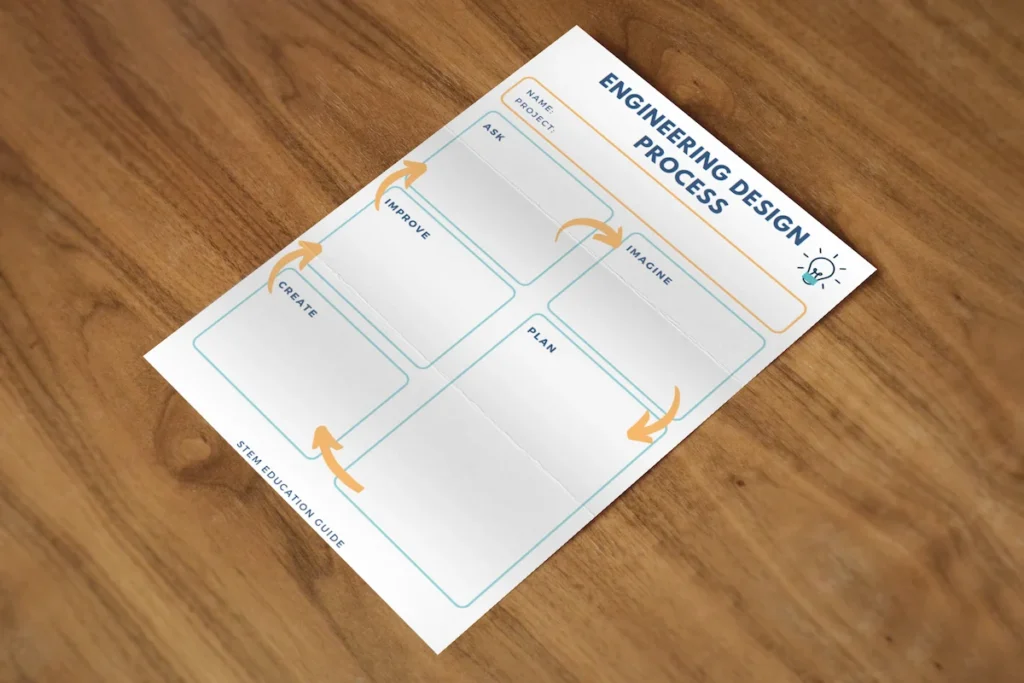
In the complex landscape of modern innovation, the "Engineering Design Process" (EDP) stands as the gold standard for turning abstract ideas into functional realities. While often associated with massive infrastructure projects or high-tech aerospace endeavors, the EDP is, at its core, a universal cognitive framework. It is a systematic, iterative methodology used by engineers to navigate challenges, optimize performance, and innovate within constraints. Whether one is refining a failing consumer gadget or designing a new solution from scratch, the process remains a bedrock of technical problem-solving.
By synthesizing principles of mathematics, physics, and material science, the engineering design process transforms the chaotic nature of "trial and error" into a disciplined, repeatable cycle. This article explores the architecture of this process, its distinction from the scientific method, and how its principles can be applied to even the most domestic of challenges.
The Five Pillars of the Engineering Design Process
While some academic curricula expand the engineering design process into eight or ten granular stages, the core logic is universally compressed into five foundational steps. These steps form a circular workflow: once a solution is implemented, it is evaluated, which inevitably leads to further iterations and refinements.
1. Ask: Defining the Problem
Every great engineering feat begins with a clear definition of the challenge. This is the stage of inquiry where the team identifies the constraints—such as time, budget, and materials—and the specific goals of the project. In a professional setting, this involves a "Needs Assessment." In a domestic setting, such as preparing a meal for a busy family, it is the moment the team recognizes a resource scarcity (e.g., an empty pantry or a lack of time) and defines the objective: a nutritious, efficient, and palatable dinner.
2. Imagine: The Brainstorming Phase
Once the objective is defined, the "Imagine" phase encourages divergent thinking. This is where research and creative brainstorming intersect. Engineers review existing literature, analyze previous designs, and generate potential solutions without the immediate pressure of judgment. By exploring multiple avenues, the team avoids the trap of settling for the first—and potentially suboptimal—idea.
3. Plan: Strategy and Resource Allocation
The "Plan" stage is where conceptual ideas are codified into a actionable blueprint. This involves creating detailed lists, technical drawings, and identifying necessary inputs. In our culinary example, this is the stage where the family selects the specific vegetable and protein components, ensuring that the "plan" accounts for the diverse dietary preferences of the stakeholders involved.
4. Create: Implementation
With a plan in place, the team transitions into the creation phase. This is the execution of the design. In engineering, this could be the construction of a prototype; in our kitchen model, it is the actual preparation of the meal. This stage requires coordination, delegation of tasks, and adherence to the plan established in the previous step.
![What is the Engineering Design Process? [Plus, a Free Worksheet] - STEM Education Guide](https://stemeducationguide.com/wp-content/uploads/2020/04/enginereering-design-process-worksheet.png)
5. Improve: The Iterative Cycle
The true hallmark of a successful engineering project is the willingness to iterate. During the "Improve" phase, the prototype is tested against the initial criteria. If, as in our culinary scenario, the tofu becomes mushy or the red beets compromise the aesthetic integrity of the dish, the engineer does not view these as failures. Instead, these are data points. The engineer adjusts, optimizes, and re-tests, ensuring the final output meets or exceeds the original requirements.
Case Study: The Culinary Engineering Project
To illustrate the agility of the engineering design process, consider a family of six attempting to solve a common "dinner crisis."
Chronology of the Project:
- 18:00 – Ask: The family identifies the hunger problem and the constraint of limited cooking time.
- 18:15 – Imagine: A brainstorming session rules out heavy roasting due to heat output and time constraints. A vegetable-based stew is identified as the optimal design.
- 18:30 – Plan: A inventory list of available vegetables (potatoes, carrots, zucchini, etc.) and protein sources (tofu, eggs, beans) is finalized. The team decides on a modular design: three separate pots to satisfy different tastes.
- 18:45 – Create: Labor is divided. The team begins the assembly of the three stew variations.
- 19:15 – Improve: During the quality control phase, the team identifies "design flaws": the beets bleed color, and the tofu lacks structural integrity. The team performs a "pivot," removing the beets and stir-frying the tofu separately to achieve a better texture.
This chronology demonstrates that the EDP is not a linear path but a series of informed adjustments. By the time the meal is served, the family has engaged in the same critical thinking as an automotive engineer refining a combustion engine.
Engineering Design vs. The Scientific Method: A Critical Distinction
A frequent point of confusion for students and professionals alike is the distinction between the Scientific Method and the Engineering Design Process. While both share a rigorous, evidence-based approach, their objectives are fundamentally different.
The Scientific Method: Understanding Nature
The Scientific Method is a tool for discovery. It is driven by curiosity about the natural world. Scientists begin with an observation, formulate a hypothesis, and conduct experiments to test that hypothesis. Their goal is to generate knowledge and publish findings that explain why something happens.
The Engineering Design Process: Shaping the Future
Conversely, engineering is driven by the desire to improve the human condition through technology. Engineers take the knowledge provided by scientists and apply it to create products, processes, and systems. If a scientist uses the Scientific Method to determine the health benefits of beet juice, the engineer uses the Engineering Design Process to determine how to best extract, process, and package that juice so it remains shelf-stable and appealing to the consumer.
![What is the Engineering Design Process? [Plus, a Free Worksheet] - STEM Education Guide](https://stemeducationguide.com/wp-content/uploads/2020/04/Engineering-Design-Process.png)
Supporting Data and Implications
Recent clinical studies regarding beet juice provide a perfect synthesis of these two worlds. Scientists have used the Scientific Method to prove that the nitrates in beet juice improve blood flow and lower blood pressure. Following this discovery, engineers (in the food technology sector) have been tasked with the design challenge of making this product palatable and accessible. The result is a consumer product that exists only because the scientific discovery was followed by an engineering design phase.
Official Responses and Industry Perspectives
Leading institutions in STEM education, such as the National Academy of Engineering, emphasize that the EDP is the most vital skill for the 21st-century workforce. The ability to pivot—to "Improve" in the face of failure—is what separates a stagnant project from a breakthrough.
When a team of engineers faces a design flaw, the standard protocol is not to abandon the project, but to perform a "Root Cause Analysis." By asking why the tofu became mushy or why the beets bled color, the engineers identify the variable that caused the deviation from the expected outcome. This disciplined response to failure is the defining characteristic of a professional engineer.
Implications for Future Innovation
The application of the Engineering Design Process extends far beyond the kitchen or the lab. It is a mindset that encourages:
- Iterative Thinking: Understanding that the first version of a solution is rarely the final one.
- Collaborative Problem Solving: Recognizing that complex problems are best solved by teams with diverse skill sets.
- Data-Driven Decision Making: Moving away from guessing and toward testing.
As we look toward the future of technology—be it sustainable energy, artificial intelligence, or space exploration—the Engineering Design Process remains our most reliable roadmap. By teaching these five steps to the next generation, we are not just teaching them how to build gadgets; we are teaching them how to approach the challenges of the world with the confidence, patience, and analytical rigor required to solve them.
Whether it is a simple bowl of soup or a complex global infrastructure project, the process remains the same. Ask, Imagine, Plan, Create, and—most importantly—Improve. In this cycle, we find the bridge between the world as it is and the world as we wish it to be.