The AI Frontier: How Washington Leadership Academy is Navigating the Future of Education
The rapid ascent of generative artificial intelligence has fundamentally altered the pedagogical landscape in America. In a timeframe that has caught many school districts off-guard, AI tools have shifted from academic curiosities to essential, everyday utilities for millions of students and educators. This technological earthquake has left administrators scrambling to establish policies that balance the benefits of innovation with the risks of academic integrity, data privacy, and the potential erosion of critical thinking skills.
A new report from FutureEd, titled Digital Trailblazers: Lessons from a School on the Frontier of Artificial Intelligence, offers a critical window into this transition. Authored by Policy Analyst Tara Moon, the report highlights the experiences of the Washington Leadership Academy (WLA), a public charter high school in the nation’s capital that serves a predominantly Black, Brown, and low-income student population. WLA has positioned itself as an experimental laboratory for AI integration, providing a blueprint—and a cautionary tale—for the rest of the country.
Main Facts: The New Reality of the Classroom
The core premise of the FutureEd report is that AI is no longer "coming"; it is already here, and its integration is deeply uneven. At Washington Leadership Academy, the integration of AI is not merely an extracurricular project but a structural shift in how curriculum is delivered and how students interact with information.
The school’s strategy centers on three pillars:
- AI-Enhanced Curricula: Teachers are utilizing generative models to create personalized learning paths, allowing students to receive immediate feedback on complex assignments.
- Operational Efficiency: Administrative tasks, once burdensome, are being streamlined through AI, allowing educators to reclaim time for direct student mentorship.
- Digital Literacy: WLA is prioritizing the teaching of "AI literacy"—the ability to prompt, interrogate, and fact-check machine-generated content—as a core competency for the 21st-century workforce.
However, the report notes that WLA’s proactive stance is the exception, not the rule. Most schools remain locked in a reactive state, often characterized by outright bans on AI tools, which experts argue only widens the digital divide.
Chronology: The Accelerated Integration of AI
To understand the urgency, one must look at the compressed timeline of AI’s adoption in the classroom:
- Late 2022: The public release of generative AI tools triggers immediate panic across K-12 education. Initial reactions are dominated by concerns over automated plagiarism and the potential end of the traditional essay.
- 2023: As schools scramble to draft "Acceptable Use" policies, a schism develops between affluent districts that embrace AI for supplemental learning and under-resourced districts that restrict access due to fear or lack of infrastructure.
- 2024: WLA begins its formal pilot programs, focusing on integrating Large Language Models (LLMs) into humanities and computer science courses. The focus shifts from "How do we stop cheating?" to "How do we teach with AI?"
- 2025: The first cohort of students exposed to systemic AI instruction begins to graduate. Early indicators suggest these students possess higher technical fluency but raise new questions about reliance on algorithmic assistance.
- May 2026: The release of the FutureEd report marks a transition from localized experimentation to a call for federal and state policy guidance.
Supporting Data: The AI Disparity
The data provided in the report paints a stark picture of the "AI Divide." While WLA has successfully leveraged technology to boost engagement among marginalized students, national trends remain concerning.
- Access Metrics: Studies cited in the report indicate that students in high-poverty schools are 40% less likely to have access to AI-integrated learning tools compared to their peers in wealthy suburban districts.
- Teacher Preparedness: Over 65% of educators surveyed nationally report that they have received no formal training on how to integrate AI tools into their teaching plans.
- Student Usage: Despite a lack of formal school policy, nearly 78% of high school students report using generative AI for school-related tasks at least once a week, highlighting a massive disconnect between "official" school policy and "actual" student practice.
These figures underscore the report’s central argument: The absence of a coherent policy framework is effectively leaving the most vulnerable students to navigate the complexities of AI—including bias, hallucination, and privacy risks—without adult guidance.
Official Responses and Perspectives
The FutureEd report draws on extensive interviews with the architects of the WLA model and policy experts.
The WLA Perspective
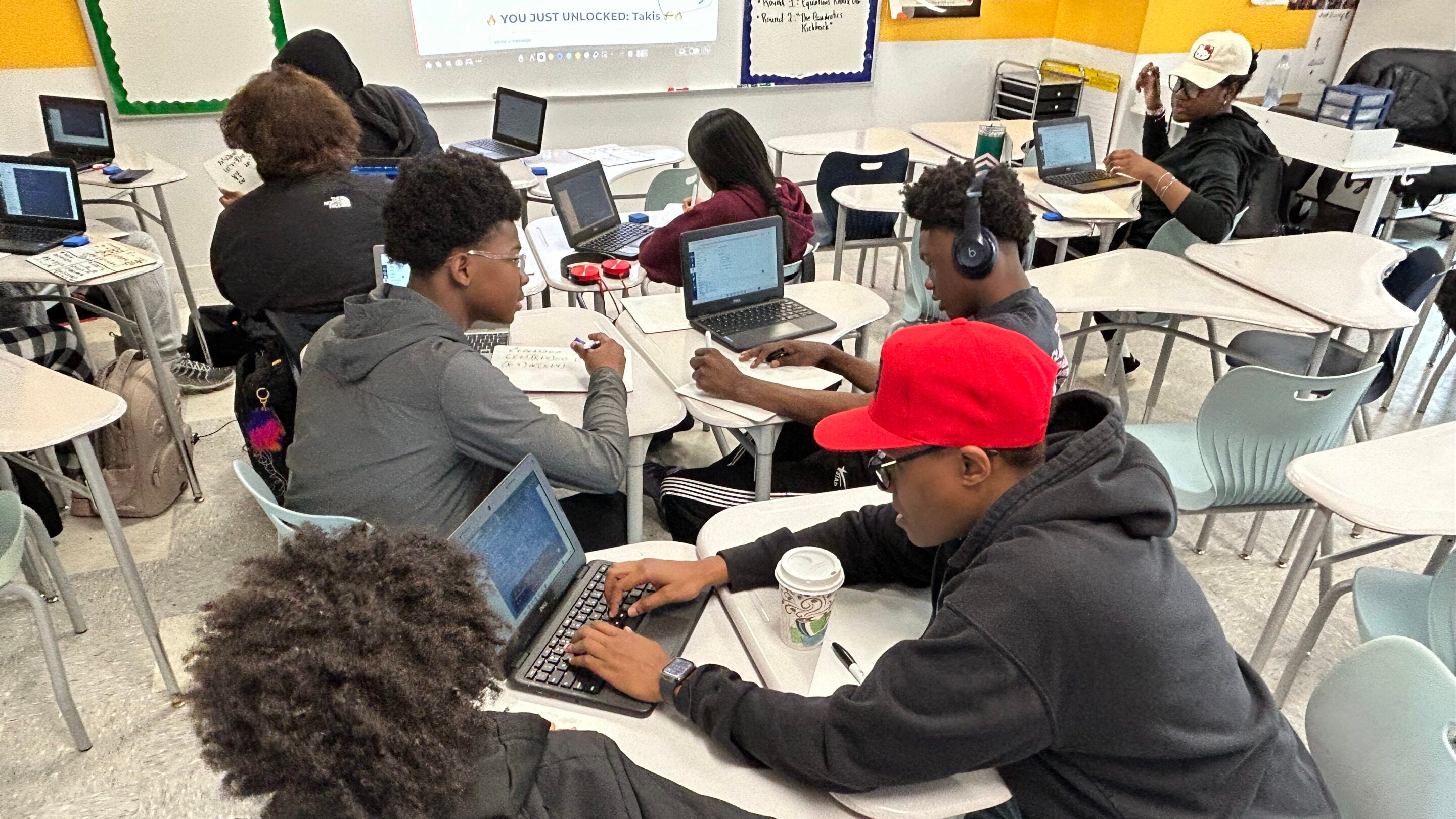
Administrators at Washington Leadership Academy argue that banning AI is a futile endeavor that mirrors the historical opposition to calculators and the internet. "Our goal is to prepare students for the world that exists, not the world we wish existed," one administrator noted in the report. By bringing AI into the classroom, the school can actively monitor how students use the tools, turning a potential cheating device into a collaborative partner.
The Policy Perspective
Tara Moon emphasizes that while WLA’s successes are notable, they are difficult to scale without systemic support. "Schools cannot do this alone," Moon writes. "We need state departments of education to provide clear guidelines on data privacy and the ethical use of AI. Without this, we are setting up a two-tier system where the wealthy get AI-tutored excellence and everyone else gets the status quo."
Implications: The Future of Teaching and Learning
The implications of the FutureEd report extend far beyond the classrooms of Washington, D.C. They force a fundamental re-evaluation of the American educational contract.
The Role of the Teacher
The traditional role of the teacher as the primary "fountain of knowledge" is becoming obsolete. As AI becomes a proficient deliverer of information, the teacher’s role is shifting toward that of a facilitator, mentor, and curator of critical thinking. The report suggests that teachers who successfully adapt will be those who can help students navigate the nuances of human-machine collaboration.
Academic Integrity in the Age of AI
The definition of "cheating" is in flux. If a student uses AI to outline an essay but writes the final draft themselves, is that a violation or an enhancement of the writing process? WLA is experimenting with new assessment models that focus on oral defenses, in-class writing, and project-based learning, which are harder to "outsource" to an algorithm.
The Equity Imperative
Perhaps the most sobering implication is the potential for AI to exacerbate existing inequalities. If AI is used only for rote automation in lower-performing schools, while being used for high-level creative and critical thinking in elite schools, the gap in educational outcomes will widen dramatically. The report warns that "AI-era equity" must be a top priority for any district looking to modernize.
Conclusion: Toward a National Framework
The Washington Leadership Academy’s experiment demonstrates that AI, when managed with intention and transparency, can be a powerful equalizer. By leaning into the technology rather than retreating from it, WLA has created an environment where students from diverse backgrounds are learning to command the tools that will define their professional futures.
However, the "frontier" status of WLA also serves as a warning. Relying on individual charter schools to navigate the ethical and pedagogical minefields of AI is not a long-term solution. As the FutureEd report concludes, the arrival of AI in schools is the most significant pedagogical shift in a century. It requires a coordinated, national effort—comprising teacher training, clear equity standards, and robust data protection—to ensure that the "AI era" is a period of empowerment for all students, rather than a period of increased disenfranchisement for the many.
The path forward is clear: We must move beyond the novelty of AI and toward a standardized, ethical, and ambitious integration of technology that puts the student at the center of the machine. The time for hesitation has passed; the time for policy, training, and equitable implementation has begun.