Navigating a Critical Crossroads: Disability Rights, Policy Shifts, and Community Advocacy in Mid-2026
As the United States approached its milestone 250th Independence Day in July 2026, the disability rights community found itself at a historic and fiercely contested crossroads. While advocates celebrated decades of progress toward true liberty, equality, and community integration, a wave of sudden federal policy shifts threatened to undo decades of landmark legal protections.

At the center of this national conversation is TASH, an international leader in advancing equity, opportunity, and inclusion for people with significant support needs. Through executive leadership updates, legal symposia, international diplomacy, and urgent policy alerts, TASH and its coalition partners have mobilized to safeguard the civil rights of millions of Americans with disabilities.

Main Facts
The current landscape of disability advocacy is defined by several high-stakes developments unfolding at the federal and international levels:

- The DOJ Office of Legal Counsel (OLC) Opinion: On June 18, 2026, the Department of Justice’s Office of Legal Counsel released a polarizing legal opinion asserting that federal laws—specifically the Rehabilitation Act, the Americans with Disabilities Act (ADA), and the foundational 1999 Supreme Court ruling Olmstead v. L.C.—do not legally obligate states to provide long-term care and services to individuals with disabilities in integrated community settings.
- Federal Interagency Realignments: The U.S. Department of Education announced sweeping interagency agreements designed to shift key administrative functions. Plans include moving the Office of Special Education and Rehabilitative Services (OSERS) to the Administration for Community Living, and transferring the Office for Civil Rights (OCR) to the U.S. Department of Justice.
- The Outstanding Leadership in Disability Law Symposium: Scheduled for July 21, 2026, in Washington, D.C., TASH’s flagship legal event will convene top attorneys, scholars, and policymakers to dissect these rapidly evolving legal structures, offering hybrid participation and Continuing Legal Education (CLE) credits.
- International Engagement: In early June 2026, TASH leadership participated in the 19th Annual Conference of States Parties (COSP19) to the Convention on the Rights of Persons with Disabilities (CRPD) at the United Nations headquarters in New York.
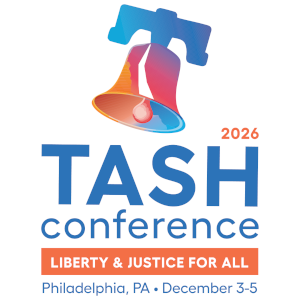
- Upcoming National Conference: TASH formally announced that its 2026 National Conference will take place from December 3–5, 2026, at the Loews Philadelphia Hotel under the guiding theme “Liberty and Justice for All.”
Chronology of Recent Events
To fully understand the urgency driving the disability advocacy community, it is vital to trace the rapid succession of events that shaped the late spring and early summer of 2026:

- Early June 2026 (New York City): TASH Executive Director Michael Brogioli attended the 19th Annual Conference of States Parties (COSP19) at the United Nations. During the multi-day summit, Brogioli conferred with global leaders, including Ambassador Luis Gallegos—a primary architect of the historic UN Convention on the Rights of Persons with Disabilities—to align domestic advocacy with international human rights standards.
- June 3, 2026: Pennsylvania TASH hosted a widely attended virtual webinar titled Community Life Engagement (Community Life Engagement in Action). Presented by researchers Jennifer Sulewski, Ph.D., and Kelly Doran, Ph.D., the session explored ways to expand meaningful day services, recreational access, and civic participation for individuals with significant support needs.
- June 9–11, 2026: Formal proceedings and strategic civil society briefings took place at the UN COP19 sessions, highlighting global accountability mechanisms for nations failing to uphold inclusive infrastructure.
- June 18, 2026: The Department of Justice’s Office of Legal Counsel dropped a bombshell legal memo. The opinion explicitly questioned decades of settled jurisprudence surrounding the Olmstead mandate, arguing that federal statutes do not mandate community-based service delivery over institutional care.
- Mid-June 2026: In response to the DOJ memo and impending structural shifts at the Department of Education, TASH released an urgent public statement expressing profound concern over the interagency agreements transferring OSERS and OCR, warning that accountability and student rights hang in the balance. Concurrently, TASH exhibited at the 150th Annual Meeting of the American Association on Intellectual and Developmental Disabilities (AAIDD), fostering cross-organizational solidarity.
- June 30, 2026: TASH published its comprehensive June Washington Update, breaking down complex regulatory changes including Medicaid work requirements, House funding bills, and emerging Home and Community-Based Services (HCBS) tracking tools.
Supporting Data and Institutional Initiatives
Behind the scenes of these policy battles, organizations like TASH and the Disability Employment Technical Assistance Center (DETAC) continue to push forward vital operational, educational, and research initiatives designed to empower individuals with disabilities.
Advancing Employment and Transportation
Recognizing that true community integration requires economic self-sufficiency, DETAC announced a major upcoming national webinar titled "Driving Independence: Integrating Transportation Supports into Workforce Development," scheduled for July 14, 2026. Led by national transportation expert Dr. Judy L. Shanley of Easterseals, alongside Ashley Gettys, Lukas Smith, and DETAC Strategic Advisor Dan Middleton, the session addresses a primary bottleneck for job seekers with disabilities: reliable transportation. The webinar equips providers, employers, and workforce developers with practical strategies to coordinate mobility management, travel training, and localized transit partnerships.

Academic Research and Scholarship
TASH continues to bridge the gap between empirical research and field practice through its peer-reviewed publication, Research and Practice for Persons with Severe Disabilities (RPSD). Ahead of the official release of Volume 50, Issue 3 in September 2026, SAGE has published two pioneering OnlineFirst articles. Members maintain direct access to these cutting-edge studies via their TASH portal accounts.

Professional Career Development
To support inclusive hiring ecosystems, TASH maintains an active Career Center. The platform serves as a specialized job board where values-based employers and job seekers with disabilities can connect, benefiting from targeted search optimization and member discounts.
Official Responses and Coalition Outcry
The June 18 DOJ Office of Legal Counsel opinion and the Department of Education’s interagency realignments triggered swift, unified condemnation from major civil rights organizations, legal defense funds, and disability advocacy networks across the United States.

- TASH Position: In his late-June address, Executive Director Michael Brogioli emphasized that the foundational promises of American independence—liberty, equality, and opportunity—remain inextricably tied to the right of people with disabilities to live, learn, work, and thrive in open communities. TASH formally urged its members to read its comprehensive policy statements opposing the dilution of federal civil rights enforcement.
- The American Civil Liberties Union (ACLU): Issued a stern press release characterizing the DOJ memo as a direct threat to bodily autonomy, personal liberty, and the fundamental right of Americans with disabilities to live outside of restrictive, institutional environments.
- The Arc of the United States: Published an analytical critique warning that undermining the Olmstead precedent threatens decades of hard-fought progress that successfully transitioned hundreds of thousands of Americans out of state institutions and into integrated neighborhoods.
- The Autistic Self Advocacy Network (ASAN): Strongly condemned the OLC memo, pointing out that rolling back community integration mandates disproportionately harms individuals with extensive support needs, effectively stripping them of visibility and equal citizenship.
- The Bazelon Center for Mental Health Law: Released a legal brief detailing the flawed statutory interpretation within the DOJ memo, reiterating that both the ADA and the Rehabilitation Act were explicitly designed by Congress to eradicate unnecessary institutionalization.
Implications for the Future of Disability Rights
The convergence of these events in mid-2026 creates a high-stakes environment for the disability community, educators, legal scholars, and families.
- Erosion of Legal Protections: If the DOJ’s OLC opinion is operationalized or heavily cited in future federal litigation, states may feel emboldened to scale back funding for Home and Community-Based Services (HCBS). This could lead to waiting lists ballooning and a resurgence of institutional placement models.
- Accountability Gaps in Education and Civil Rights: Moving OSERS from the Department of Education to the Administration for Community Living, and shifting OCR to the Department of Justice, risks fragmenting institutional oversight. Advocates worry that specialized educational protections for students with disabilities—such as those under the Individuals with Disabilities Education Act (IDEA)—will lose their centralized federal champions.
- The Role of Grassroots and Legal Mobilization: With federal policy facing severe headwinds, the upcoming Outstanding Leadership in Disability Law Symposium on July 21, 2026, takes on historic importance. Legal experts and advocates will use the platform to formulate coordinated defense strategies, craft state-level legislative safeguards, and prepare for protracted court battles.
- A Defining Moment in Philadelphia: As TASH prepares for its national conference in December 2026 under the banner “Liberty and Justice for All,” the organization stands at the vanguard of a renewed civil rights movement. The gathering will serve not only as a conference for professional development and research sharing, but as a crucial rally point to reaffirm that the rights of people with disabilities are non-negotiable elements of American democracy.