As the United States approached its historic 250th-anniversary celebrations and Independence Day in July 2026, the disability rights community found itself at a profound and challenging crossroads. While national milestones traditionally invite reflection on liberty, justice, and equality, the current socio-political landscape has placed the fundamental civil rights of individuals with disabilities under unprecedented scrutiny.
Organizations like TASH—a leading international authority dedicated to advancing equity, opportunity, and inclusion for people with significant support needs—have stepped to the forefront of this national dialogue. Amid sweeping federal policy realignments, legal battles over community integration, and transformative educational initiatives, advocates are mobilizing with renewed urgency. This comprehensive report examines the primary facts, chronological developments, supporting data, official responses, and long-term implications defining the disability rights movement in mid-2026.
Main Facts
The current landscape of disability advocacy and policy is defined by several major developments occurring across federal, international, and organizational sectors:
DOJ Office of Legal Counsel (OLC) Opinion: On June 18, 2026, the Department of Justice’s Office of Legal Counsel released a controversial legal opinion declaring that neither the Rehabilitation Act, the Americans with Disabilities Act (ADA), nor the landmark Olmstead v. L.C. Supreme Court decision mandates states to provide services to individuals with disabilities in community settings. This opinion has severely unsettled civil rights organizations nationwide.
Federal Interagency Restructuring: The U.S. Department of Education announced sweeping interagency agreements. These plans involve shifting the Office of Special Education and Rehabilitative Services (OSERS) to the Administration for Community Living, and moving the Office for Civil Rights (OCR) to the U.S. Department of Justice, raising serious questions about accountability and the protection of inclusive education.
Global Engagement at the UN: TASH leadership participated in the 19th Annual Conference of State Parties (COSP19) to the Convention on the Rights of Persons with Disabilities (CRPD) at United Nations headquarters in New York, reinforcing international alliances.
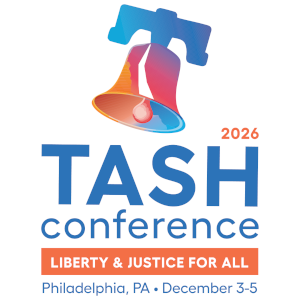
Upcoming Legal and Policy Symposia: The disability community is preparing for major educational and networking events, including the 2026 Outstanding Leadership in Disability Law Symposium on July 21 and the national TASH Conference scheduled for December 3–5, 2026, in Philadelphia, Pennsylvania, under the banner Liberty and Justice for All.
Chronology of Recent Events
To fully understand the velocity of policy and advocacy shifts leading into July 2026, it is essential to trace the timeline of key milestones:
June 3, 2026: Pennsylvania TASH hosted a live-streamed webinar titled Community Life Engagement (CLE) in Action, featuring Dr. Jennifer Sulewski and Dr. Kelly Doran. The session focused on expanding provider networks to offer meaningful community day activities, volunteer work, and civic engagement.
June 9–11, 2026: TASH Executive Director Michael Brogioli attended the 19th Annual Conference of State Parties (COSP19) at the United Nations, meeting with global leaders such as Ambassador Luis Gallegos, a primary architect of the CRPD.
June 18, 2026: The U.S. Department of Justice’s Office of Legal Counsel issued its controversial legal opinion challenging the scope of the Olmstead decision and community integration mandates under the ADA.
Late June 2026: In response to the DOJ memo and Department of Education restructuring plans, major civil rights groups—including the ACLU, The Arc, ASAN, and the Bazelon Center—issued fierce joint and independent statements condemning the erosion of decades-old protections.
July 1, 2026: TASH released its comprehensive monthly briefing, connecting national independence ideals with the urgent contemporary defense of disability rights, while highlighting upcoming professional development, research publications, and legal forums.
Supporting Data and Institutional Initiatives
Despite regulatory headwinds, the disability advocacy ecosystem continues to generate rigorous research, professional development frameworks, and community resources designed to bridge policy gaps.
Advancing Research and Workforce Development
The dissemination of empirical data remains a cornerstone of institutional advocacy. SAGE Publishing and Research and Practice for Persons with Severe Disabilities (RPSD) have made critical OnlineFirst articles available for Volume 50, Issue 3, ahead of its September print release. These studies focus on improving educational and vocational outcomes for individuals with high support needs.
Concurrently, workforce integration initiatives are scaling up nationwide. The Disability Employment Technical Assistance Center (DETAC) announced an upcoming national webinar scheduled for July 14, 2026, titled Driving Independence: Integrating Transportation Supports into Workforce Development. Led by national experts—including Dr. Judy L. Shanley of Easterseals, Ashley Gettys, Lukas Smith, and Dan Middleton of Catalight—the session addresses a fundamental barrier to employment: reliable transportation access. Participants are trained on mobility management, travel training, and employer partnerships to ensure competitive, integrated employment (CIE) remains viable.
Interagency Restructuring and Policy Tracking
TASH’s June Washington Update highlighted critical fiscal and regulatory shifts, tracking the Medicaid Work Requirements Interim Final Rule, funding changes within the House Fiscal Year 2027 Labor-HHS-Education Funding Bill, and the launch of new tracking applications for Home and Community Based Services (HCBS). These data tools are vital for families, advocates, and service providers navigating complex state-level implementation realities.
Official Responses to Policy Shifts
The release of the DOJ Office of Legal Counsel opinion and the Department of Education’s interagency realignment has triggered swift, unified pushback from the nation’s premier legal and advocacy organizations.
The Institutional Stance of TASH
In an official address, TASH Executive Director Michael Brogioli expressed deep concern over the federal government’s maneuvers. Emphasizing the timing around Independence Day, Brogioli noted:
"As we close out June and look ahead to Independence Day, TASH remains steadfast in our commitment to ensuring that the promise of liberty, equality, and opportunity extends to people with disabilities… These interagency agreements raise important questions about protecting students’ rights, maintaining accountability, and preserving strong federal leadership for inclusive education."
Coalition Condemnations
The legal opinion questioning states’ obligations under Olmstead v. L.C. drew immediate rebukes from the broader civil rights coalition:
The American Civil Liberties Union (ACLU): Released a sharp condemnation, framing the DOJ memo as a direct threat to the hard-fought right of institutionalized individuals to live integrated lives within their communities.
The Arc: Characterized the OLC opinion as an alarming regression that undermines decades of precedent securing independence, autonomy, and community placement for Americans with disabilities.
The Autistic Self Advocacy Network (ASAN): Strongly denounced the memo, pointing out that forcing individuals back into institutional settings violates basic human dignity and international human rights standards.
The Bazelon Center for Mental Health Law: Published a detailed legal analysis refuting the OLC’s interpretations and reaffirming that the ADA and Olmstead remain bedrock protections against unjustified segregation.
Implications for the Future of Disability Rights
The confluence of events in mid-2026 points toward a critical period of legal defense, public education, and strategic mobilization.
Litigation and Judicial Challenges: The DOJ’s OLC opinion is expected to face immediate challenges in federal courts. Civil rights attorneys are preparing arguments to defend the binding nature of the Olmstead ruling, ensuring that state governments cannot easily roll back community-based long-term care services without facing severe legal liability.
The Future of Inclusive Education: Moving oversight components of the Department of Education to other agencies risks fragmenting federal civil rights enforcement. Advocates fear that specialized expertise housed within OSERS and OCR could be diluted, making it harder for students with disabilities to secure necessary accommodations and equitable learning environments.
The Role of Professional Education: Events like the upcoming Outstanding Leadership in Disability Law Symposium (July 21, 2026) and the annual TASH Conference in Philadelphia (December 3–5, 2026) will serve as essential staging grounds for legal scholars, policymakers, and self-advocates to formulate counter-strategies. By offering Continuing Legal Education (CLE) credits and hybrid attendance options, these platforms ensure that legal professionals are equipped to fight incoming regulatory rollbacks.
As the nation reflects on its founding principles during this 250th-anniversary era, the disability rights movement is making it clear that true liberty is incomplete without full inclusion, community living, and uncompromising civil rights protections for all citizens.