
Navigating the Frontier: How School Districts Are Pioneering AI Adoption Without a Federal Roadmap
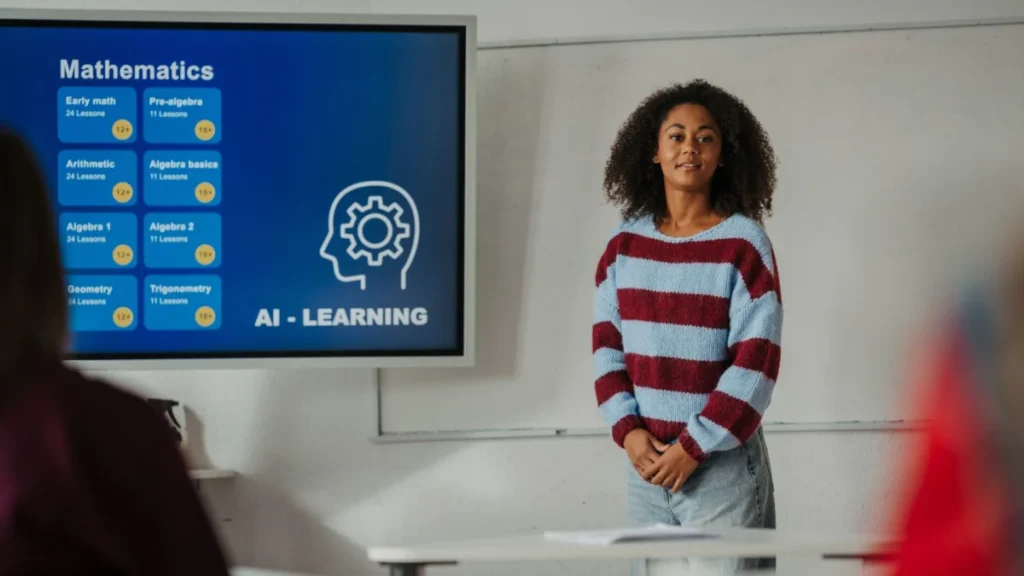
In the rapidly evolving landscape of 21st-century education, artificial intelligence (AI) has emerged as the most disruptive—and potentially transformative—force since the widespread adoption of the internet. Yet, as school districts across the United States scramble to integrate generative AI into their classrooms, they are doing so in an environment characterized by profound uncertainty. Without a cohesive national strategy or comprehensive federal guidance, local education leaders are essentially "flying blind," left to navigate the complex challenges of procurement, teacher training, and policy development on their own.
A recent, in-depth study conducted by the Center on Reinventing Public Education (CRPE) sheds light on this high-stakes experimentation. By analyzing the experiences of 45 "Early Adopter" districts across 20 states, researchers have uncovered a landscape of both immense promise and significant operational peril. As these districts attempt to align AI with their long-term instructional goals, the field is beginning to understand what true transformation requires: a synergy between clear vision, robust technical infrastructure, and a support system that transcends simple tool integration.
The Current State of AI in K-12 Education
The adoption of AI in schools has moved from a novelty to a necessity almost overnight. For district leaders, the primary challenge is no longer whether to use AI, but how to do so responsibly. The CRPE report highlights that these districts are currently engaged in a decentralized, trial-and-error process. They are balancing the need for innovation with the ethical imperatives of student data privacy, algorithmic bias, and the potential for academic dishonesty.
Districts are currently managing a four-pronged crisis:
- Procurement: How to evaluate the efficacy of thousands of new AI-powered educational tools entering the market.
- Professional Development: How to upskill teachers who are already overwhelmed by the demands of post-pandemic instruction.
- Policy Development: Crafting acceptable use policies that protect students without stifling creative exploration.
- Strategic Alignment: Ensuring that AI tools serve specific pedagogical objectives rather than serving as "shiny object" distractions.
A Chronology of the AI Shift in Schools
To understand the current urgency, one must look at the rapid timeline of AI’s integration into the educational sphere:
- Late 2022: The public release of ChatGPT marks a watershed moment. Districts respond with knee-jerk reactions, with many major urban school systems initially banning the technology entirely due to fears of plagiarism and safety concerns.
- Early 2023: As the genie refuses to go back into the bottle, the conversation shifts from prohibition to mitigation. Districts begin to recognize that banning AI is futile and that students need to be prepared for an AI-integrated workforce.
- Late 2023 – Early 2024: A period of "Pilot Mania." Districts begin purchasing subscriptions to AI platforms, experimenting with AI-assisted tutoring, and launching task forces to write policy. However, this is largely done in isolation.
- 2025 – Present: The "Early Adopter" phase matures. Districts that were once experimenting are now attempting to scale these tools. The focus has shifted from "How do we stop it?" to "How do we transform instruction with it?"
Supporting Data: Lessons from the Frontlines
The CRPE research draws on surveys and interviews from a diverse cohort of 45 districts. These districts, while geographically and demographically varied, share a common thread: they are the laboratories of the future of schooling.
Implementation Challenges
The data reveals that the primary obstacles to successful AI implementation are not technical, but cultural and organizational.
- Fragmented Infrastructure: Many districts lack the IT backbone to support the massive data processing requirements of modern AI tools.
- The "Compliance Trap": A significant portion of district energy is being diverted toward compliance—ensuring that AI vendors adhere to student privacy laws (like FERPA and COPPA)—at the expense of deeper pedagogical planning.
- Teacher Resistance vs. Fatigue: While many teachers are eager to use AI to reduce their administrative burden, there is a palpable sense of fatigue. Implementing yet another "transformative" technology is often met with skepticism, especially when support systems are thin.
The Success Metric
The most successful districts—those that have moved beyond basic pilot programs—tend to share one characteristic: they treat AI as a strategy for equity rather than just an efficiency tool. These districts prioritize AI-driven personalized learning paths for students with disabilities or those falling behind, rather than simply using AI to generate lesson plans for teachers.
Official Perspectives: The Need for Cohesion
The lack of federal guidance has created a vacuum. While the U.S. Department of Education has released broad guidelines and "dear colleague" letters, these documents often stop short of providing the granular, actionable advice that district superintendents crave.
"Districts are being asked to solve one of the most complex technological challenges in history with essentially zero central support," says one policy researcher involved in the study. "We see a disparity where wealthy districts can hire consultants to guide them through AI procurement, while smaller, rural, or underfunded districts are left to make decisions based on marketing brochures from vendors."

The implications are clear: without a more structured, state-led or federal-supported framework, we risk widening the "digital divide" into an "AI divide." The districts that can afford to experiment safely will surge ahead, while others may remain paralyzed by the risk of potential lawsuits or data breaches.
Implications for the Future of Schooling
The findings from the CRPE indicate that for AI to genuinely transform education, the focus must shift from the technology itself to the ecosystem around it.
1. Moving Beyond "Tooling"
Districts must stop viewing AI as a "plug-and-play" solution. A tool is only as effective as the instructional vision it supports. If a district does not have a clear strategy for student-centered learning, no amount of AI-assisted grading or automated tutoring will improve student outcomes.
2. The Role of Professional Capacity
The most significant barrier to AI adoption is human capital. Districts need to invest in "AI Fluency" for their educators. This doesn’t mean teaching every teacher how to code; it means teaching them how to interrogate AI outputs, how to use AI for differentiated instruction, and how to maintain the "human touch" in a digitized classroom.
3. Sustainability and Ethics
There is a growing concern regarding the sustainability of AI costs. As free pilots transition into enterprise-level contracts, many districts are finding the financial burden unsustainable. Furthermore, as AI begins to play a role in assessment and student evaluation, the ethical implications of "black box" algorithms—where even the designers don’t fully understand how the machine reached a conclusion—become a critical concern for school boards.
Recommendations for Moving Forward
The CRPE brief concludes with a call to action for districts, states, and federal policymakers:
- For Districts: Shift focus from individual tool adoption to a comprehensive, system-wide AI strategy. Ensure that every purchase is mapped to a specific student or teacher outcome.
- For States: Create regional cooperatives. By pooling resources and legal expertise, smaller districts can collectively negotiate with vendors, ensuring better privacy protections and more competitive pricing.
- For Federal Agencies: Move beyond "guidance" to "support." This could include creating national repositories of vetted, high-quality, and compliant AI educational tools, as well as establishing standardized frameworks for AI safety in the classroom.
Conclusion
The era of AI in education is no longer coming; it is here. The "Early Adopter" districts are the brave pioneers in a largely uncharted territory. Their successes provide a roadmap for what is possible—a future where AI can help teachers reclaim their time, provide students with unparalleled personalization, and streamline the administrative burden that currently chokes the school day.
However, the cautionary tales are just as important. Without a systemic, well-resourced, and thoughtful approach, we risk creating a fragmented system that leaves the most vulnerable students behind. The transformation of education through AI is not a technological challenge—it is a leadership challenge. It requires the courage to say "no" to tools that don’t serve the mission, and the foresight to invest in the human beings who will ultimately determine whether this new technology empowers our students or merely distracts them.
As we look toward the 2025-2026 school year and beyond, the message from these early pioneers is consistent: innovate, but do so with eyes wide open. The stakes for the future of the American classroom have never been higher.