Revitalizing the English Classroom: New Strategies for Total Student Engagement
In the modern high school classroom, the landscape of literacy instruction often faces a formidable adversary: student disengagement. Despite the inherent power of literature to provoke thought, challenge perspectives, and build empathy, many educators find that traditional methods of teaching—lectures, solitary reading, and formulaic worksheets—often fail to capture the imagination of a generation raised in an era of rapid-fire digital stimuli.
For high school English teachers Brian Sztabnik and Susan Barber, the solution to this pedagogical malaise lies not in abandoning the text, but in fundamentally changing how students interact with it. After a decade of fostering community among educators through their influential blog, Much Ado About Teaching, the duo has synthesized their findings into a new resource: 100% Engagement: 33 Lessons to Promote Participation, Beat Boredom, and Deepen Learning in the ELA Classroom.
This collection serves as a manifesto for the "active classroom," offering low-tech, high-impact strategies that demand physical and mental participation. By shifting the focus from passive consumption to tactile, collaborative construction, Sztabnik and Barber are providing a roadmap for teachers to reclaim the joy of literature instruction.
The Core Challenge: Moving Beyond the "Glazed Over" Student
The primary hurdle for many English Language Arts (ELA) teachers is the disconnect between the rigor of the curriculum and the interest level of the student body. As Sztabnik and Barber note, schools rely heavily on texts—books, poems, and articles—as the primary vehicles for information. When these texts are presented in a vacuum, without an entry point that invites student agency, the classroom experience often devolves into a dry, repetitive cycle.

"So much of the work we do in school involves reading and interacting with texts," the authors observe. "And sometimes, in some classes, with some students… it can get pretty boring."
This boredom is not merely a behavioral nuisance; it is a pedagogical barrier. When students are not actively engaged, their capacity for deep reading and critical analysis diminishes. The strategies presented in 100% Engagement are designed specifically to bypass these barriers by introducing gamified, kinesthetic, and social elements into the reading process. By forcing students to "do" something with the text—physically manipulate it, debate its structure, or synthesize its meaning—teachers can transform the act of reading from a passive assignment into an active performance.
A Chronology of Collaborative Innovation
The development of these strategies did not occur in a silo. For the past ten years, Sztabnik and Barber have acted as architects of a professional learning network. Through social media chats and their collaborative blog, they have been in constant dialogue with teachers across the globe. This long-term engagement with the "boots-on-the-ground" reality of the classroom allowed them to identify a recurring theme: teachers are desperate for practical, actionable, and replicable lesson plans.
The journey toward their book began with the recognition that while theory is important, execution is where teachers struggle. Many educators leave teacher-preparation programs with a solid grasp of literary criticism but lack the "teacher tricks" necessary to sustain engagement over a 50-minute block.
Earlier this year, the pair formalized their findings. The resulting book is not merely a collection of theory, but a curated toolkit. Each of the 33 lessons has been tested, refined, and vetted by their community of peers, ensuring that these strategies are not only academically sound but also logistically feasible in a typical public school setting.
Supporting Data: Three Pillars of Active Literacy
On a recent episode of the Cult of Pedagogy podcast, the authors highlighted three specific strategies that exemplify their philosophy of "low-tech, high-engagement."
1. The Tactical Close Read: Cutting Up Poems
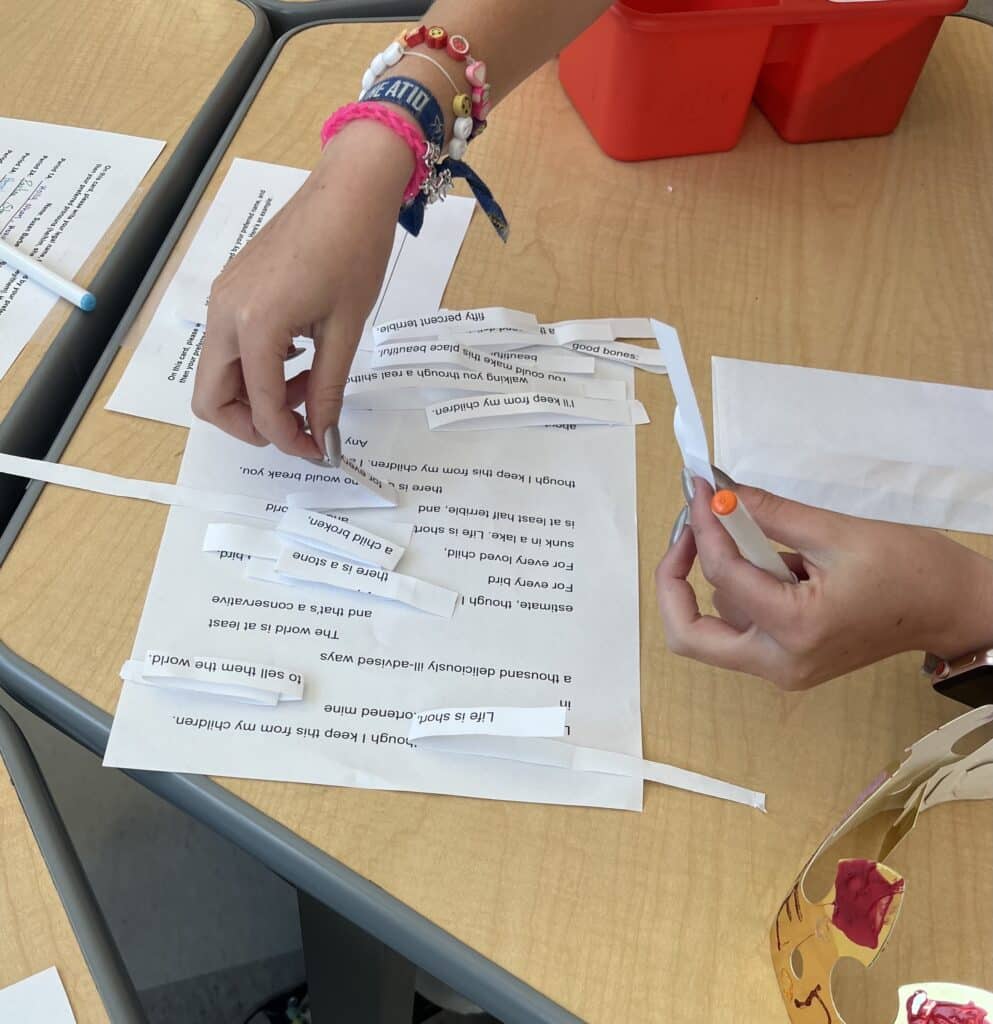
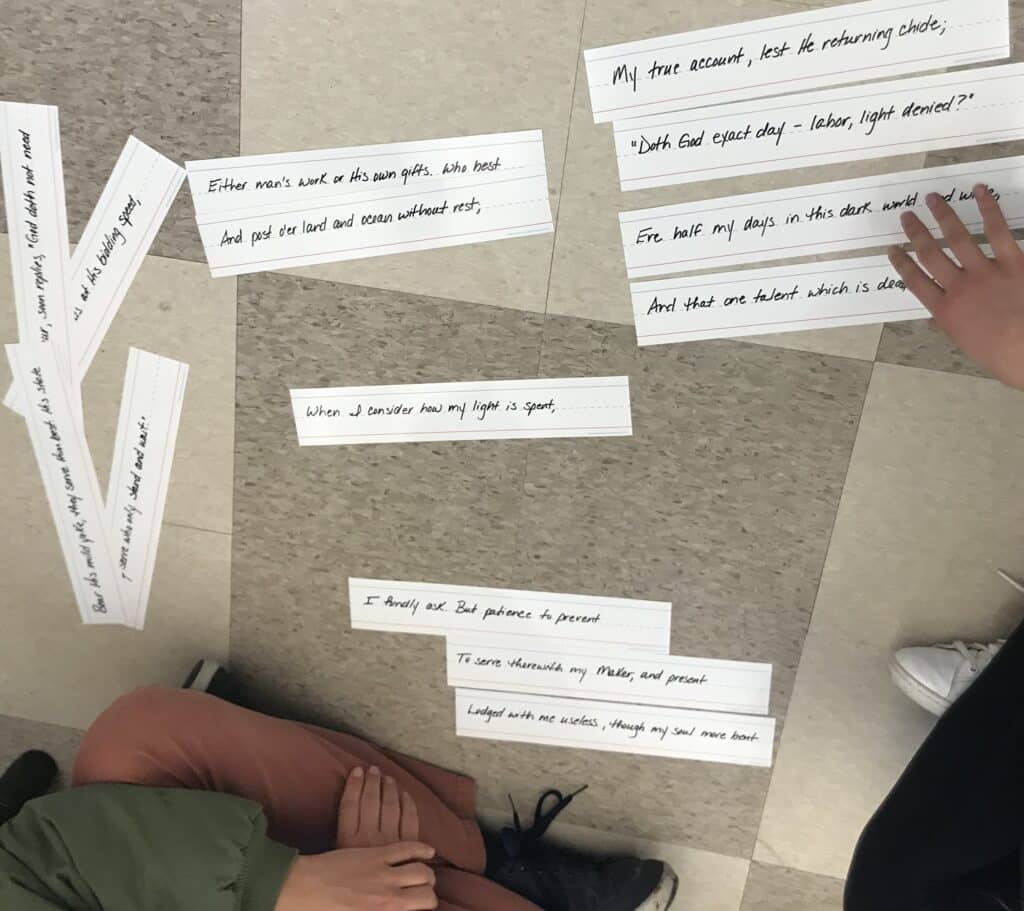
One of the most effective ways to force students into a deep, analytical reading is to literally strip the text of its structure. In this strategy, the teacher provides a poem that has been cut into individual words, phrases, or lines. Students must then work in groups to reconstruct the poem.
"It’s forcing the students to do a close reading," Barber explains. "If I would have passed out this poem and said, ‘I want you to do a close reading,’ their eyes would be glazed over."
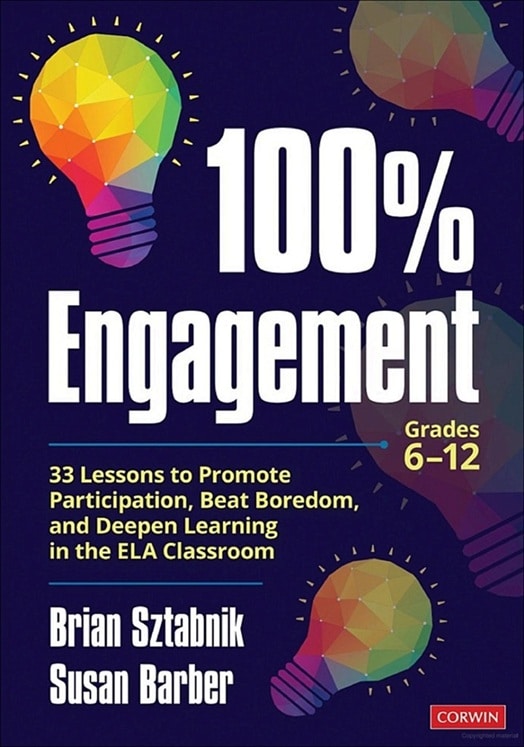
The physical act of manipulation requires students to consider syntax, punctuation, and rhythm. They must justify why a line belongs in a specific place, a process that inherently forces them to analyze the poet’s choices. It is, in Barber’s words, a "teacher trick"—a way to facilitate high-level cognitive work by masking it behind a puzzle-like activity.
2. The Collaborative Synthesis: The Inferential Timeline
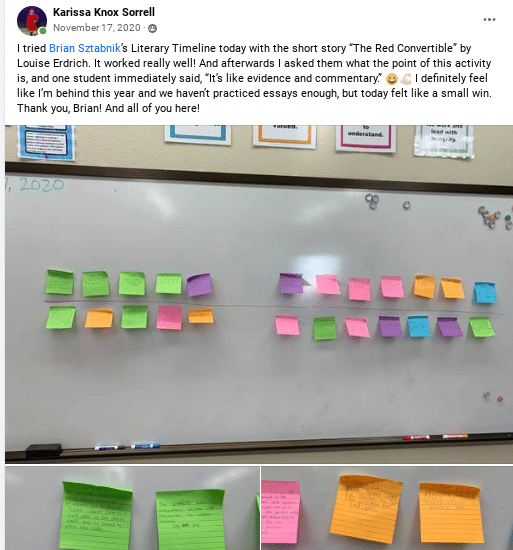
This strategy addresses the challenge of moving students from basic plot summary to higher-level inference. Students are tasked with creating a two-tiered timeline for a section of a novel. The first tier involves a summary and a supporting quote, while the second tier requires a peer to add an inference about the significance of that event.
"It’s collaborative without being collaborative physically," Sztabnik notes. "It’s collaborative mentally."
By forcing students to evaluate their classmates’ contributions and build upon them, the teacher creates a "gallery walk" environment. This not only encourages movement but also ensures that every student’s voice is represented on the classroom wall, transforming the room into a living map of the novel’s thematic trajectory.
3. The Precision Drill: Text Rendering
A common frustration for teachers is the "vague student answer"—the tendency for learners to speak in generalizations that lack textual evidence. Text Rendering forces students to distill a passage down to its most essential components: the most important sentence, the most important phrase, and finally, the single most important word.
This hierarchy of importance requires students to justify their selections, defending their choices to their peers. It is a lesson in economy of language and precise textual analysis. Barber notes that this strategy was born out of necessity: "I had to find some activity to get them to take the big ideas to the small."
Official Perspectives and Professional Implications
The release of 100% Engagement comes at a critical time for the American education system. With teacher burnout at an all-time high and the proliferation of digital distractions, the pedagogical shift toward active learning is being viewed as an essential survival skill for educators.
The authors argue that these strategies do more than just make the class "fun." They provide the scaffolding necessary for students to develop agency. When students are involved in the construction of the lesson—whether through cutting up a poem or curating a timeline—they are no longer merely recipients of information; they become co-creators of meaning.
Furthermore, the emphasis on peer-to-peer collaboration and community-building, as seen in their Facebook group, suggests that the future of pedagogy is horizontal. By sharing these strategies, Sztabnik and Barber are empowering teachers to move away from the "sage on the stage" model and toward a more collaborative, professional culture where pedagogical innovation is a shared endeavor.
Long-term Implications for the Classroom
The implications for student achievement are significant. By prioritizing engagement, teachers are effectively increasing the "time on task" without increasing the "time in seat." When students are physically and mentally active, they are more likely to retain information, develop critical thinking skills, and—perhaps most importantly—find value in the texts they are assigned to read.
As educators look toward the future, the work of Sztabnik and Barber provides a clear path forward: prioritize the student experience. By stripping away the unnecessary, focusing on the essential, and leveraging the power of collaboration, the English classroom can once again become a site of genuine discovery.
For those looking to integrate these strategies, the authors emphasize that the goal is not to overhaul an entire curriculum overnight, but to introduce small, effective changes. As the teaching profession continues to evolve, resources like 100% Engagement serve as a reminder that the most powerful tool in the classroom remains the ingenuity and connection between the teacher and their students.
Whether through the tactile process of "cutting up" a poem or the intellectual rigor of a text-rendering session, the message is clear: when we change how students interact with the world of words, we change their capacity to understand the world itself.