Rewriting the Conversation on Literacy: How Brain-Based "Minute Moves" Are Revolutionizing Writing Instruction

By Educational Insights Desk
Published March 2026
Main Facts
In contemporary educational debates, literacy is rarely out of the headlines. For years, the spotlight has been fiercely fixed on phonics, decoding, reading fluency, and comprehension. Yet, a critical companion piece to literacy remains glaringly absent from most mainstream discussions: writing instruction.

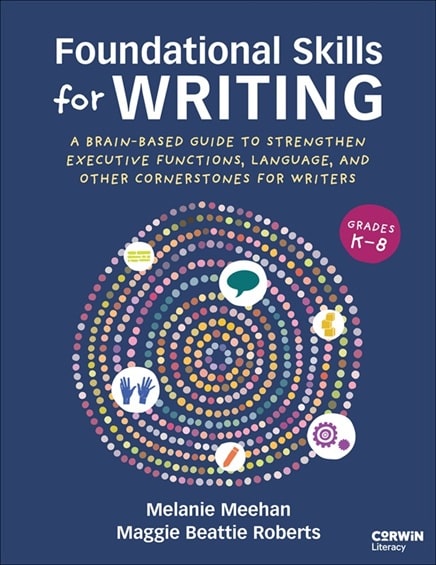
While reading and writing are deeply intertwined neurological processes—often described as two sides of the same coin—writing instruction is frequently pushed to the periphery. To bridge this critical gap, literacy experts Melanie Meehan and Maggie Roberts have released a groundbreaking new book, Foundational Skills for Writing: A Brain-Based Guide to Strengthen Executive Functions, Language, and Other Cornerstones for Writers.
The book tackles a fundamental question that many educators grapple with: What does the human brain actually have to do when a child is asked to write, and what physiological or cognitive hurdles get in the way? By breaking writing down into three core pillars—transcription skills (handwriting, spelling, keyboarding), oral language (sentence construction, speaking, listening), and executive functioning (working memory, cognitive flexibility)—Meehan and Roberts offer educators a practical roadmap to help students automatize foundational mechanics, freeing up essential cognitive energy for creative and analytical expression.
Chronology
The path to Foundational Skills for Writing spans decades of classroom experience, curriculum development, and one-on-one literacy intervention.
- The Classroom Foundation: Maggie Roberts spent nearly twenty years working directly inside middle school classrooms and supporting teachers as a literacy consultant. Meanwhile, Melanie Meehan served as a school curriculum coordinator before establishing her own in-person writing center.
- Identifying the Missing Link: Over their combined decades in education, both experts noticed a recurring trend: educational reforms heavily favored reading interventions while treating writing as a secondary byproduct rather than a taught, mechanical skill. Students were continually asked to produce complex essays without being explicitly taught how to manage the cognitive load required to do so.
- The Research and Writing Phase: Drawing on modern cognitive science, developmental psychology, and practical classroom trials, Meehan and Roberts synthesized their findings into a cohesive framework. They developed a collection of ultra-short, highly flexible instructional routines known as “Minute Moves.”
- Publication and Public Launch: Earlier this month, Foundational Skills for Writing officially hit shelves via Bookshop.org. Shortly after publication, Meehan and Roberts appeared on Cult of Pedagogy (Episode 270) to share eight tactical classroom strategies designed to transform how educators approach daily writing instruction.
Supporting Data & The Mechanics of Writing
To understand why traditional writing instruction often overwhelms students, educators must look closely at cognitive load theory. Writing is arguably one of the most complex tasks we ask young brains to perform. It simultaneously demands fine motor control, orthographic mapping, grammatical retrieval, semantic organization, and executive oversight. If a student has to consciously labor over how to spell a word or how to structure a basic sentence, their working memory becomes overloaded. Consequently, higher-order composition suffers.

Meehan and Roberts’ book categorizes these challenges and addresses them through targeted, bite-sized interventions called Minute Moves—activities lasting just one to two minutes that can be deployed during transitions, warm-ups, or moments of downtime like the walk to the cafeteria.
Spelling Minute Moves (Building Orthographic Pathways)
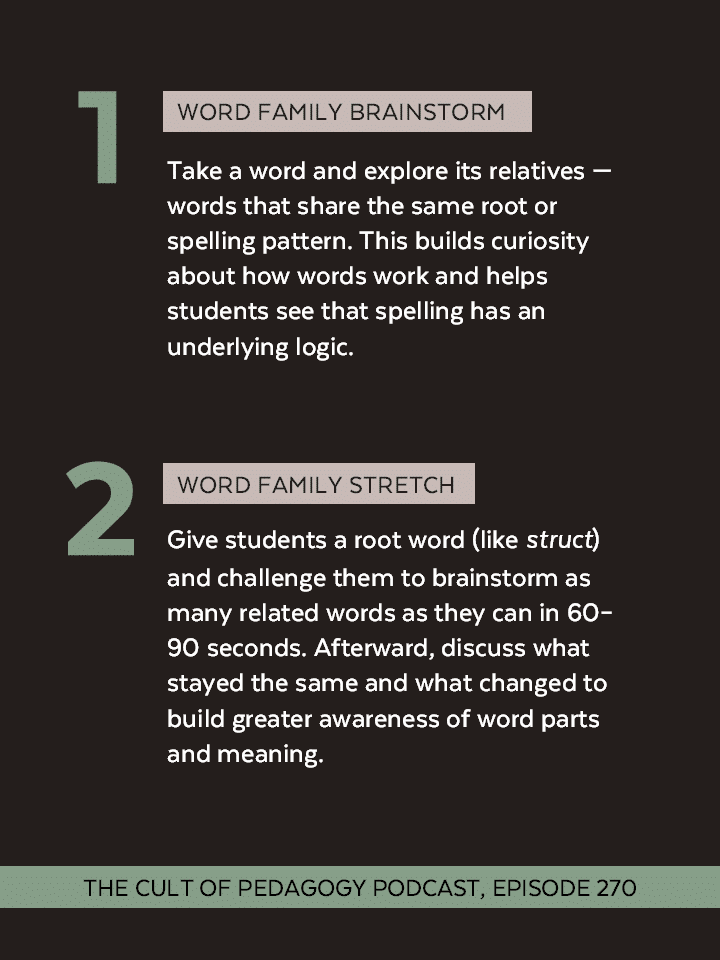
- Word Family Brainstorm: Championed by spelling researcher Rebecca Treiman, this strategy encourages students to look at word relatives rather than memorizing isolated terms in silos. For instance, rather than treating the homophones two, to, and too as arbitrary memory tasks, students connect two to words like twin, twine, and twenty, revealing a shared conceptual root of "twoness." Similarly, tracing complex words like decision back to decide, incision, concise, and scissors uncovers a Latin root meaning "to cut," making spelling patterns intuitive.
- Word Family Stretch: Utilizing a 60- to 90-second timer, students take a root word—such as the bound root struct (meaning "to build") or the free root form—and brainstorm as many derivatives as possible (structure, destruction, construct). A subsequent debrief helps students analyze prefix and suffix shifts, building deep structural awareness of academic vocabulary.
- Prefix Swap: Focusing specifically on how prefixes alter meaning, students take a base word like form and rapidly generate variations (reform, transform, inform, deform). This method proves especially potent for multilingual learners, who frequently recognize familiar morphemes (such as bene or mal) from other languages, accelerating their English vocabulary acquisition.
Sentence Construction Minute Moves (Developing Syntax)
- Sentence Scramble: Instructors write the individual words or phrases of a sentence onto physical index cards. Students physically manipulate the cards to reconstruct the sentence, engaging in metacognitive dialogue: How did you figure out the order? Which words had to stay together? Teachers can increase complexity by introducing punctuation-free cards, distractor words, or expansion prompts.
- Sentence Expander: Moving away from overly abstract grammatical terminology like "subject" and "predicate," Meehan utilizes terms like "doer" and "doing." Starting with a kernel sentence like The cat purrs, students iteratively answer questions (Which cat? What color? Where? When? Why?) to build rich, complex sentences before experimenting with word order.
- Sentence Combining: Described by Roberts as a high-impact, rapid intervention, this technique asks students to merge two bare-bones sentences (e.g., My cat is orange and My cat is big) into a single, cohesive unit (My big orange cat…). Over time, students naturally transfer this syntax-building habit into their independent essay writing.
Executive Functioning Minute Moves (Fostering Cognitive Flexibility)
- What’s Another Way?: Targeting cognitive flexibility—the executive function that allows writers to shift approaches and revise thinking—this move asks students to rewrite a single sentence in multiple ways. They might lead with a dependent clause, substitute pronouns, or condense a sprawling thought into a punchy, impactful short sentence. Giving students the explicit vocabulary to label this skill as "cognitive flexibility" fosters a profound sense of academic empowerment.
- New Angle: Zooming out from the sentence level to narrative perspective, this strategy tasks students with retelling a familiar scene from an alternative character’s point of view. Whether using literary texts or short three-minute Pixar films like Snack Attack, students practice holding dual perspectives simultaneously. This exercise not only sharpens creative writing choices regarding voice and tone, but also builds empathy and civic-minded perspective-taking.
Official Responses
While formal academic reviews of Foundational Skills for Writing are still rolling out, initial responses from the educational community and literacy podcasts highlight a desperate need for this type of resource.

Practicing educators have long voiced frustration over the disconnect between national reading mandates (often referred to broadly as the "Science of Reading") and the relative silence surrounding writing pedagogy. By aligning writing instruction with modern understandings of brain development and executive function, Meehan and Roberts have received praise for translating dense neurological research into accessible, low-friction classroom tools.
In their recent interview on Cult of Pedagogy, both authors emphasized that these strategies are not meant to add time to an already overstaturated school day. Instead, "Minute Moves" are designed to seamlessly embed structural practice into the margins of daily instruction, making literacy acquisition both efficient and engaging.
Implications for the Future of Literacy Education
The publication of Foundational Skills for Writing signals a potential turning point in how schools conceptualize literacy. For too long, reading and writing have been taught as sequential rather than simultaneous skills—children are often told they must learn to read completely before they can learn to write effectively.
Meehan and Roberts’ framework challenges this outdated paradigm. By demonstrating that oral language, transcription, and executive functioning can be cultivated concurrently through micro-interventions, the authors provide a blueprint for a more holistic approach to language arts.
For students who have historically struggled with writing—those who experience cognitive overload when faced with a blank page—these brain-based strategies offer a pathway from anxiety to fluency. More broadly, as schools nationwide continue to refine their literacy curricula, integrating explicit, low-barrier writing mechanics may well prove to be the missing puzzle piece in closing achievement gaps and fostering truly proficient, confident communicators.