Closing the Gap: How Community Resilience and Data-Driven Oversight are Revolutionizing Immunization in Mozambique
In the remote districts of Nampula Province, Mozambique, the journey to a child’s wellness is often measured in kilometers of dirt roads and the reliability of a supply chain. For Odete, a mother living in the Murrupula district, a routine trip to the Kazuzo Health Center recently turned into a moment of frustration. Upon arrival, she discovered that the vaccines her child desperately needed were out of stock. In public health terms, this was a "missed opportunity for vaccination" (MOV)—a critical juncture where a healthcare system fails to deliver, often resulting in a child becoming under-immunized and vulnerable to preventable diseases.
However, what happened next marks a paradigm shift in how Mozambique is addressing its immunization challenges. Rather than allowing this encounter to become a statistic of failure, the facility’s robust drop-out tracking system activated a vital link in the country’s health infrastructure: the Agentes Polivalentes de Saúde (APS), or community health workers.
This story is not merely about one mother and her child; it is a testament to an evolving, integrated healthcare model that prioritizes community trust and data-driven supervision to ensure that no child is left behind.
The Chronology of Care: From Frustration to Protection
The sequence of events at the Kazuzo Health Center illustrates the importance of follow-up mechanisms in resource-constrained environments.
The Initial Visit: Odete arrived at the clinic seeking standard immunizations for her child. Due to an unexpected disruption in the supply chain, the facility had no vaccines available. Historically, this is where the relationship between the health system and the caregiver would have fractured. Without a tracking mechanism, many parents simply lose confidence in the system and do not return.
The Mobilization: Recognizing the MOV, the health facility staff utilized their internal tracking system to flag the situation. They alerted the local APS—community health workers who serve as the bridge between formal medical institutions and rural households. These workers are embedded in the community, moving through markets, churches, and neighborhoods, making them highly effective conduits for health information.
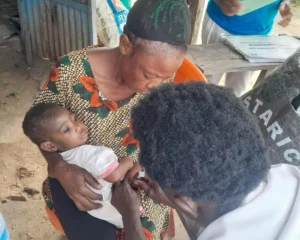
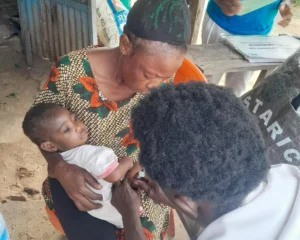
The Return: Informed by an APS that the vaccine stocks had been successfully replenished, Odete returned to the clinic. Her second visit was transformative. Her child received a comprehensive package of life-saving interventions, including the MR1, PCV3, and IPV2 vaccines, as well as the third dose of the malaria vaccine. In a powerful demonstration of the "life cycle" approach to immunization, Odete herself was administered the tetanus toxoid vaccine.
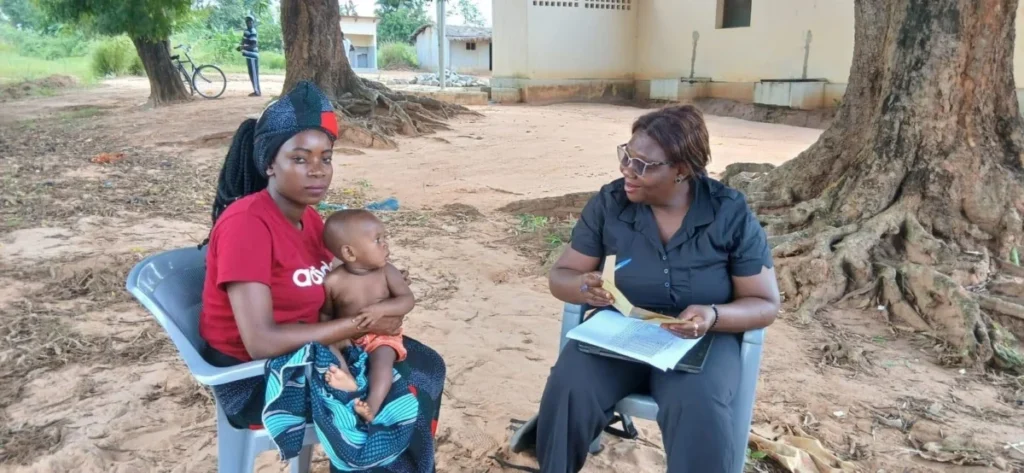
The Verification: This outcome was documented by Ilda Bila, an immunization officer at JSI, during an exit interview—a critical oversight tool used to assess the quality of care and patient satisfaction.
The Vital Role of Community Health Workers (APS)
The APS are the unsung heroes of the Mozambican public health strategy. In rural regions where geographical barriers and limited infrastructure complicate access to care, these individuals provide a level of accessibility that static clinics cannot match.
Trusted Messengers in the Community
The effectiveness of the APS lies in trust. Unlike formal medical staff who may be viewed as distant figures of authority, APS are neighbors. They understand the cultural nuances and linguistic nuances of their communities. When an APS provides information about vaccine availability, it carries a weight of credibility that encourages parents to prioritize clinic visits.
Education and Empowerment
Beyond relaying information about stock, APS play a crucial role in health literacy. They explain the "why" and "how" of vaccination, debunking myths and alleviating anxieties. By turning vaccination from a confusing clinical process into an understood necessity, they build a culture of health-seeking behavior. Without this human connection, the supply chain is just logistics; with the APS, the supply chain becomes a service.
Strengthening the System: The Power of Exit Interviews
Ilda Bila’s role in Nampula Province represents the systemic "feedback loop" that is necessary for large-scale improvement. Her visits to facilities like Kazuzo are not merely audits; they are opportunities for supportive supervision.
Data-Driven Insights
Exit interviews function as an early warning system. By interviewing caregivers as they leave the facility, supervisors can identify immediate pain points. If a parent is leaving without a vaccine, the interview reveals why: Was it a stock-out? Was the waiting time too long? Was the communication from staff unclear?
By aggregating this qualitative data, health officers like Bila can provide actionable insights to the Ministry of Health and the Expanded Program on Immunization (EPI). This allows for targeted interventions—such as better inventory management or improved staff training—rather than relying on guesswork to solve systemic failures.
Supporting Data and the Burden of Preventable Disease
Mozambique faces significant hurdles in maintaining high immunization coverage. According to global health metrics, the primary drivers of low coverage in Sub-Saharan Africa include supply chain volatility and the "distance decay" factor, where coverage rates drop significantly as the distance from the health center increases.
- Impact of MOVs: Missed opportunities for vaccination are a leading cause of child mortality in the region. When a child misses a scheduled dose, the risk of outbreaks for diseases like measles or rotavirus increases exponentially.
- The Integration Model: The case at Kazuzo highlights the success of integrating maternal and child health. By offering the tetanus toxoid to mothers while vaccinating their children, the system maximizes the impact of every contact, reducing the number of total visits required for a family to stay fully protected.
- Supply Chain Resilience: While stock-outs remain a critical challenge, the shift toward real-time reporting via mobile health platforms and stronger coordination between the EPI and local providers is beginning to show results in reducing the duration of these disruptions.
Official Responses and Strategic Implications
The Ministry of Health in Mozambique, supported by partners like JSI, has emphasized that the goal is not just to distribute vaccines, but to build a resilient system that can withstand the shocks of remote, rural delivery.
"Conversations like these tell me we are going in the right direction," says Ilda Bila. Her assessment is echoed by health officials who recognize that the future of immunization in Mozambique lies in the synergy between central policy and local action.
Scaling the Success
The lessons learned from the Kazuzo experience have broader implications for the national health strategy:
- Decentralized Tracking: Empowering individual health centers to manage their own drop-out lists and community engagement.
- Investment in Human Resources: Strengthening the APS network through continuous training and better communication equipment.
- Supportive Supervision: Moving away from punitive auditing and toward mentorship-based supervision, where officers work alongside staff to solve problems in real-time.
Conclusion: The Path Forward
The story of Odete and the Kazuzo Health Center is a microcosm of the progress being made across Mozambique. It is a story of resilience—not just the resilience of a mother committed to her child’s health, but the resilience of a health system that is learning to listen to the people it serves.
While the issue of vaccine stock-outs remains a significant challenge that requires continued investment in supply chain infrastructure, the ability to mobilize the community through APS and monitor the quality of service through exit interviews represents a substantial leap forward.
As Mozambique continues to integrate these services and close the gaps in its immunization coverage, the focus remains clear: to reach every child, in every village, with the protection they need to lead healthy lives. By prioritizing the human element—the conversation between the community worker and the mother—Mozambique is proving that even in the face of systemic challenges, progress is not only possible; it is happening one visit at a time.