
The Digital Dilemma: Navigating the Maze of Supplemental Educational Resources
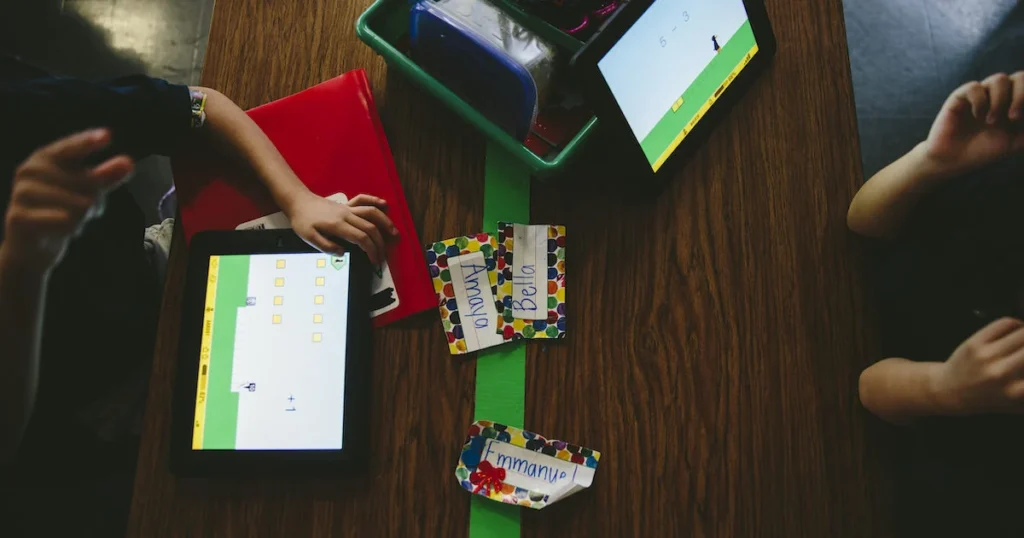
For the modern educator, the weekly planning cycle has become an increasingly complex balancing act. After reviewing formative assessment data, a teacher identifies a clear instructional need: a small cohort of students requires targeted scaffolding to grasp foundational concepts, while a group of high-achievers is ready to push beyond the constraints of the standard curriculum. The core program, while sufficient for the average learner, often fails to provide the necessary depth or differentiation for these outliers.
What follows is a ritual familiar to millions of teachers: a deep dive into the internet’s vast, uncurated repository of supplemental digital resources. What begins as a quest for a "just-right" activity frequently devolves into a multi-hour ordeal, sifting through a "curriculum bazaar" of freemium apps, questionable PDFs, and flashy but hollow gamified lessons.
The State of Supplemental Learning: A Chronology of Dependency
The reliance on supplemental materials is not a recent phenomenon, but it has accelerated significantly in the post-pandemic era.
- Pre-2015: Supplemental materials were largely physical—worksheets, supplemental textbooks, and teacher-made resources.
- 2015–2020: The rise of digital distribution platforms and "freemium" models led to a decentralized explosion of online resources, often bypassing district-level vetting.
- 2020–2022: The rapid transition to remote learning forced an unprecedented, often desperate adoption of digital tools, cementing the "mix-and-match" culture in classrooms.
- 2025: Current industry reports, including those from the RAND Corporation and the Center for Education Market Dynamics (CEMD), confirm that the supplemental market has become a multi-billion dollar, yet largely unregulated, secondary economy in education.
Supporting Data: The "Mix-and-Match" Reality
The 2025 RAND report underscores a systemic issue: 97 percent of teachers report using at least one supplemental product per week. On average, a teacher is tasked with juggling two core curricula alongside five different supplemental resources.
This creates a "coherence gap." While mixing and matching is not inherently detrimental, it places an immense cognitive load on the teacher. Educators are forced to act as curriculum designers, attempting to bridge the pedagogical gaps between disparate, non-integrated tools.
Furthermore, the scale of the market is staggering. The CEMD report identified over 350 supplemental math products currently in use across just 1,700 school districts. With such a saturated market, the barrier to entry for developers is low, leading to a glut of content that often fails to meet rigorous standards. A seminal 2019 study by the Fordham Institute, which analyzed high school ELA materials, found that the majority of available supplemental resources were "mediocre or very poor." These products were frequently cited for being cognitively shallow, poorly aligned with state standards, and lacking in support for diverse learner populations, such as English Language Learners or students with special needs.
The "Ad Hoc" Selection Crisis
Unlike core curricula, which often undergo a multi-year, rigorous adoption process involving committees, pilot programs, and stakeholder reviews, supplemental resources are frequently adopted in an ad hoc manner.
"Supplemental materials are often chosen in a more ad hoc manner," notes the CEMD report. "Districts may purchase multiple resources to fill gaps, and schools or teachers may adopt additional site-based tools independently."
This decentralized approach is exacerbated by the "freemium" model. Tech companies often offer basic versions of their software to teachers for free. Once a critical mass of teachers in a school or district adopts the tool, the company leverages this grassroots usage to pressure the district into a larger, enterprise-wide contract. While this provides teachers with immediate solutions to classroom challenges, it bypasses the necessary vetting for data privacy, pedagogical alignment, and accessibility.
Evaluating Quality: Three Pillars of Supplemental Success
Because the industry currently lacks a centralized, objective "seal of approval" for supplemental resources—unlike the rigorous standards-alignment reviews conducted by organizations like EdReports—the onus of quality control falls squarely on the educator. To navigate this landscape, teachers must move from "curriculum shoppers" to "curriculum evaluators."

1. Understanding the True Meaning of Engagement
"Engagement" is arguably the most misused term in educational technology. In the digital space, it is often conflated with "entertainment" or "gamification."
Effective engagement, as defined by educator David Sousa, is characterized by attention, interest, curiosity, and positive emotional connection. When evaluating a digital resource, teachers must distinguish between active learning and passive interaction. A study published in Psychological Science in the Public Interest warns that extraneous animations, sound effects, and tangential gaming loops often disrupt the coherence of a lesson. If a student is more focused on earning "virtual coins" or customizing an avatar than on the underlying mathematical concept, the resource is failing to drive cognitive growth.
Key Evaluative Questions:
- Does the engagement stem from the content itself, or from extrinsic reward structures?
- Do the game mechanics support the learning objective, or do they serve as a distraction?
- Does the resource promote productive struggle, or does it encourage students to bypass cognitive work to reach a reward?
2. Personalization vs. Acceleration
The primary driver for supplemental use is differentiation. However, personalization must be intentional. For students needing support, the goal is access; for students needing enrichment, the goal is depth.
When seeking Math resources for enrichment, prioritize tools that:
- Allow for real-world application of grade-level concepts rather than just "moving ahead" to the next grade level.
- Encourage multiple pathways to a solution, promoting mathematical discourse.
- Provide immediate, constructive feedback that helps students identify their own logic errors.
When seeking ELA resources, look for materials that:
- Offer a variety of texts across different genres and difficulty levels.
- Require students to engage in evidence-based writing and analysis.
- Provide scaffolds—such as vocabulary support or graphic organizers—that can be toggled on or off based on individual student needs.
3. Identifying the "Gap"
Before downloading or purchasing a resource, teachers must clearly articulate the "Why." Are you filling a content gap, a skill gap, or a motivation gap?
- Content Gap: The core curriculum lacks sufficient practice or explanation for a specific, difficult topic.
- Skill Gap: Students need foundational support in a prerequisite skill that was not mastered in previous years.
- Motivation Gap: Students find the core curriculum dry and require a different modality (e.g., video, interactive simulation) to pique interest.
Implications for the Future of Education
The reliance on supplemental resources is not going away; it is a permanent fixture of the modern classroom. However, the current model of individual, unvetted selection is unsustainable.
For the education system to move forward, two shifts must occur:
- Professional Training: Districts must move beyond "tech training" (how to log in) and invest in "instructional design training" (how to evaluate and integrate supplemental tools).
- Institutional Vetting: Districts must establish formal processes for vetting supplemental materials, ensuring they meet the same high standards for bias, rigor, and alignment that are required of core textbooks.
Ultimately, the goal is to reclaim the hours teachers lose in the "digital rabbit hole." By shifting the focus from quantity to quality—and by demanding more from developers regarding pedagogical transparency—the educational community can turn the supplemental bazaar into a curated library of high-quality, high-impact learning experiences. Teachers should not have to be detectives to find a good lesson; they should be architects of learning, supported by tools that are as rigorous and thoughtful as the students they serve.