The Disappearing Novel: Why Whole-Book Reading is Fading from Classrooms and How Educators are Fighting Back
By Educational Journalism Staff
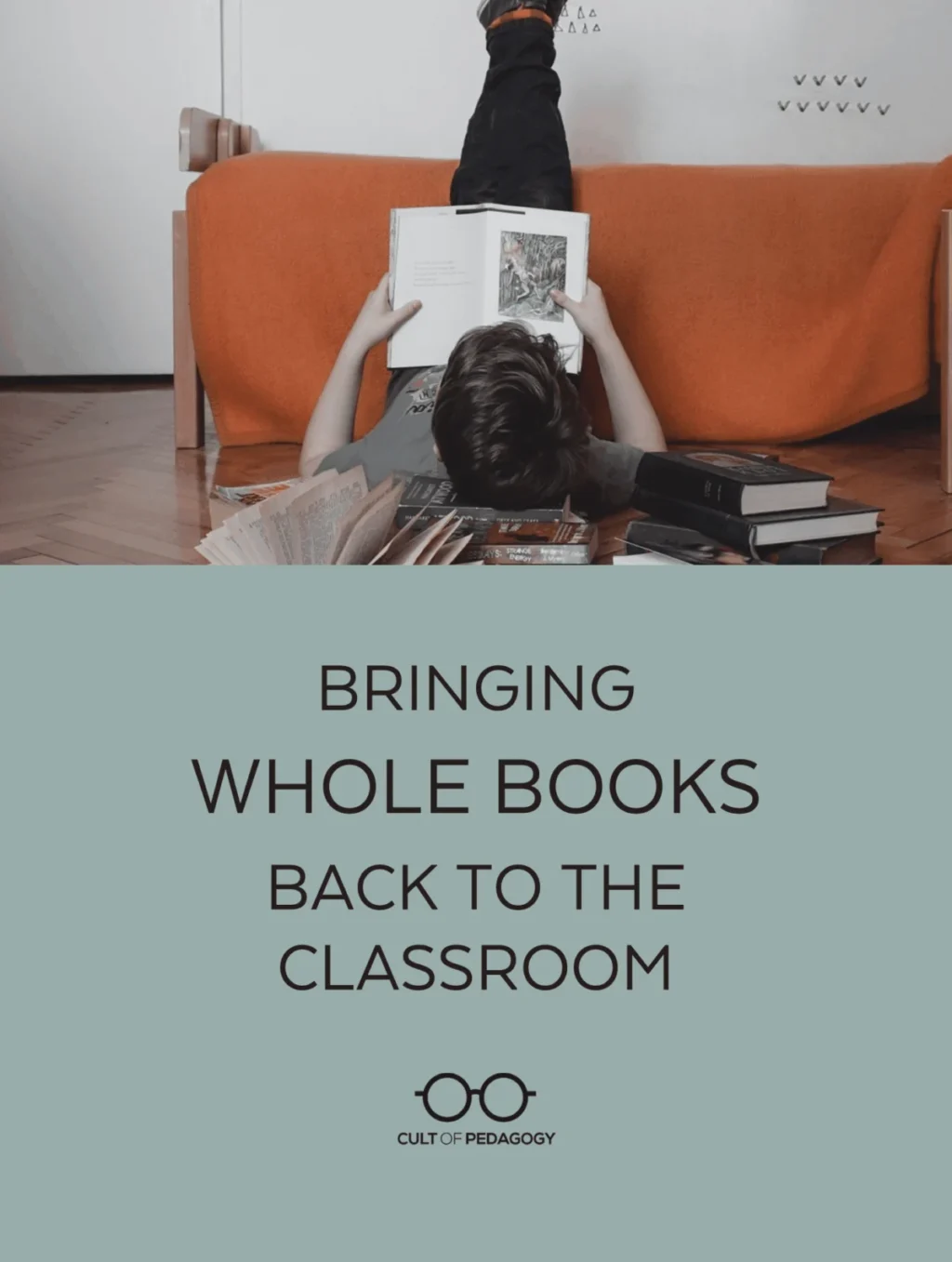
In an era dominated by rapid-fire digital feeds, short-form video content, and standardized assessments, a foundational pillar of American education is quietly slipping away. Across school districts nationwide, the traditional classroom novel—once the shared anchor of the English Language Arts (ELA) curriculum—is being phased out in favor of short reading passages, article excerpts, and heavily targeted multiple-choice assessment prep.
While curriculum designers argue that shorter texts offer unmatched flexibility and alignment with modern reading standards, literacy experts warn of a dangerous hidden cost. When students stop reading whole books, they lose the ability to sustain deep focus, build empathy through complex character arcs, and navigate the intricate cognitive demands of extended narratives.
Now, a growing movement of educators, researchers, and curriculum specialists are pushing back, advocating for a return to whole-book comprehension supported by new, structured instructional tools designed to fit within modern pacing constraints.
Main Facts: The Great Erasure of the Classroom Novel
The transformation of modern reading instruction did not happen overnight, but its cumulative effect has radically altered the educational landscape.
For generations, middle and high school ELA classes were defined by shared literary journeys. Classrooms stocked with floor-to-ceiling shelves held hundreds of copies of classics and contemporary staples—titles like Tuck Everlasting, Holes, Freak the Mighty, Roll of Thunder, Hear My Cry, and The Outsiders. Teachers would lead students through the opening chapters aloud, modeling think-aloud strategies, tracking character motivations, and bridging the gap between independent decoding and deep comprehension.
Today, however, that shared experience is increasingly rare. In many elementary and middle school classrooms, physical classroom libraries have been boxed up and relegated to closets, and school libraries have been converted into technology labs. In their place are hyper-focused core literacy programs centered entirely on short excerpts, informational articles, and isolated reading passages.

The primary catalysts for this shift include:
- The Data-Driven Testing Culture: The rise of standardized multiple-choice testing, which overwhelmingly utilizes brief, disconnected passages, has forced instructional time to mirror the test format.
- Shifting Curricular Mandates: Recent waves of reading reform—including legislative pushes aligned with the "Science of Reading"—have led many districts to adopt dense core reading programs that prioritize text-set building and cross-curricular informational reading over narrative fiction.
- Perceived Time Constraints: With packed academic calendars and rigorous pacing guides, educators frequently report that they simply "do not have time" to spend weeks on a single novel.
Chronology: How the "Passage-Only" Paradigm Took Over
To understand how whole books were marginalized, education historians point to a gradual policy and pedagogical shift spanning the last two decades.
2010–2015: The Rise of the Assessment Passage
The phenomenon first became glaringly apparent to teacher-educators around 2010, when supervisors overseeing university preservice teachers noticed a disconnect between university literacy theory and public school reality. Student teachers designing lesson plans aligned with state ELA standards were routinely handed district-issued assessments constructed entirely of multiple-choice questions based on brief, out-of-context snippets of text.
At the time, many viewed these instances as isolated anomalies—bureaucratic shortcuts utilized for interim benchmarking. Instead, they served as the canary in the coal mine for a systemic restructuring of reading instruction.
2015–2020: The Proliferation of Text Sets
As state standards evolved to demand rigorous analysis of informational text and cross-text comparisons, curriculum developers flooded the market with "text sets"—curated collections of short articles, poems, and short stories grouped around a central theme. While pedagogically useful for building background knowledge on specific topics, these anthologies began to crowd out narrative novels. Teachers found themselves jumping rapidly from one 500-word article to the next, leaving little breathing room for sustained literary exploration.
2020–Present: The "Science of Reading" Wave and Modern Curricula
In the wake of pandemic-era learning loss and renewed political and pedagogical focus on foundational decoding skills, districts nationwide rushed to adopt scripted core literacy programs. While these programs successfully brought structured phonics and vocabulary instruction to the forefront, many packaging formats left zero room for the inclusion of a class novel. School book rooms were systematically dismantled, locking away decades of accumulated literary resources.
Supporting Data: The Measurable Impact of Whole Books
Despite the logistical challenges of teaching full-length books, empirical research highlights the profound academic benefits of retaining them in the curriculum.

Educational researcher Maryanne Wolf, author of Reader, Come Home, has extensively documented the cognitive necessity of what she terms the "deep reading state." When readers immerse themselves in a sustained, long-form text, their brains engage in complex inferential reasoning, perspective-taking, and empathetic processing that cannot be replicated by skimming isolated paragraphs.
Furthermore, a landmark 2019 study published in the journal Literacy demonstrated the staggering impact of returning whole-book reading to the classroom. In the study, teachers temporarily set aside their standard instructional routines to guide students through two challenging novels at a rapid, supported pace over a 12-week period.
The results were transformative:
- General Gains: By the end of the 12 weeks, participating students demonstrated reading comprehension gains equivalent to an average of 8.5 months of standard progress.
- Struggling Readers: For students classified as struggling readers, the gains were even more dramatic, averaging 16 months of accelerated progress.
These findings suggest that whole-book reading is not merely an antiquated tradition or an optional luxury for advanced learners; it is a vital engine for accelerated reading growth, building the executive functioning skills—such as sustained attention and working memory—required to process complex information over time.
Official Responses and Expert Insights
Literacy expert and author Jennifer Serravallo has been at the forefront of the national conversation regarding the disappearance of the classroom novel. In extensive interviews examining the state of modern literacy instruction, Serravallo acknowledges the undeniable utility of shorter texts while sounding the alarm on the total exclusion of books.
"Many of these core programs rely on short excerpts, short stories, and articles," Serravallo notes. "They help kids connect across texts. You can build text sets to develop concept knowledge. You can get through a lot of different texts together in a short period of time."
However, Serravallo warns that the zero-sum nature of modern curriculum design has forced administrators to make draconian choices. "I’ve been in schools where they used to have a classroom library filled with books that kids could select from," she observes. "And they’ve put them in the closet. They’ve put them away. Because, ‘Oh, we don’t have time for that anymore.’"
In response to this systemic erasure, Serravallo and other curriculum designers are pushing for a middle ground. Rather than advocating for a wholesale rejection of core reading programs, experts are urging schools to intentionally carve out dedicated space for whole-book comprehension.
To bridge this gap, Serravallo developed Whole Book Comprehension, Grades 1–6, a low-prep, high-impact instructional resource designed to integrate seamlessly into existing literacy frameworks. By providing teachers with structured, grade-appropriate class sets of books and targeted comprehension strategies, the resource aims to make whole-book instruction accessible even within tightly controlled, pacing-heavy curricula.
Implications for the Future of Education
The ongoing debate over whole books versus short passages touches on a deeper philosophical question about the ultimate purpose of reading instruction in the 21st century.
As artificial intelligence systems increasingly automate basic writing, summarizing, and information-retrieval tasks, the cognitive skills that cannot be outsourced—deep critical thinking, long-form stamina, emotional empathy, and the ability to hold a complex narrative arc in mind—are becoming more valuable than ever.
If schools continue down the path of hyper-fragmented, passage-based instruction, educators risk raising a generation of students who can successfully decode a 300-word testing excerpt but lack the psychological endurance to read a book cover-to-cover.
Reclaiming the classroom novel requires administrative courage, flexible scheduling, and a willingness to step back from rigid pacing guides. Yet, as the data shows, the rewards far outweigh the logistical hurdles. By giving students the time, space, and scaffolding required to conquer a full-length book, educators do more than boost test scores—they hand students an identity, transforming them from reluctant decoders into confident, lifelong readers who can proudly say, "Yes, I’m a reader. I can do this. And I want to."