The Human Element: Why Trust, Not Tech, Is the True Frontier of AI in Higher Education
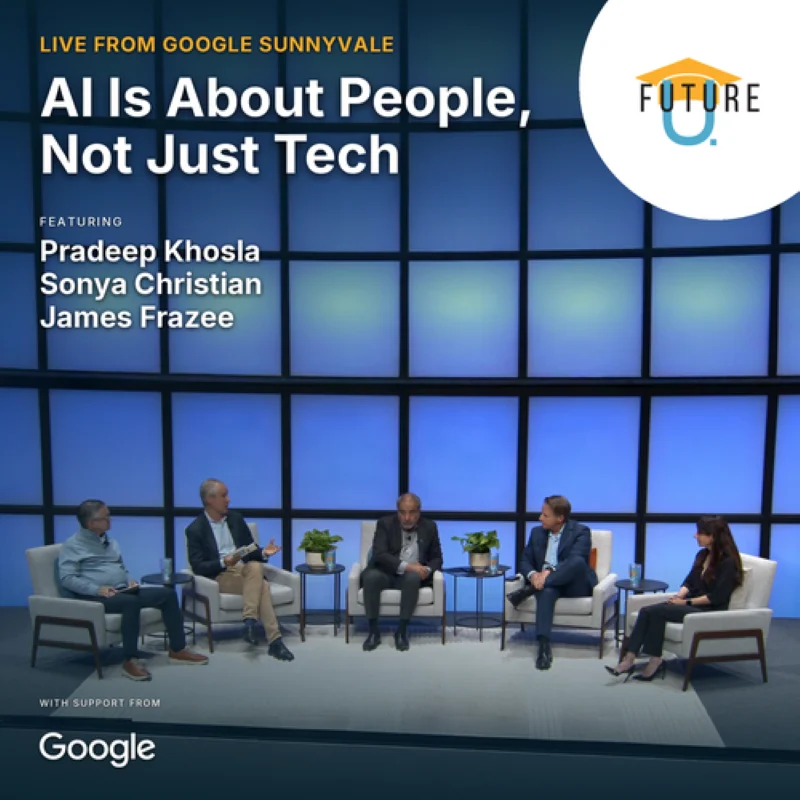
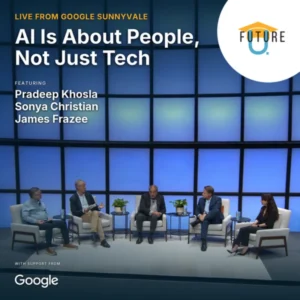
In the rapidly shifting landscape of modern academia, the discourse surrounding artificial intelligence (AI) has often been dominated by hardware specifications, software licensing, and the technical race to integrate Large Language Models (LLMs) into the campus ecosystem. However, a recent live recording of the Future U podcast, hosted by Michael Horn and Jeff Selingo at Google’s Sunnyvale campus, has shifted the focus toward a more critical, often overlooked variable: the human experience.
The episode, which brought together higher education leaders and technologists, posits a provocative thesis: the success of AI integration in universities will not be measured by the sophistication of their technological infrastructure, but by the level of trust established between institutions, faculty, and the student body. As AI becomes ubiquitous, the friction caused by inconsistent policies and pedagogical ambiguity is creating a crisis of confidence that threatens to undermine the very mission of higher education.
Main Facts: The Great Pedagogical Divide
The core issue identified by Horn, Selingo, and their guests is a widening disconnect between the high-level strategic investments universities are making in AI and the fragmented, often chaotic, reality of classroom adoption. While university administrations are pouring capital into AI-enabled research centers and administrative tools, the individual professor’s approach to AI in the classroom remains largely decentralized and idiosyncratic.
This lack of a unified institutional stance has created a "policy vacuum." Without clear, institution-wide guidance, AI usage has become a lottery for students. In one lecture hall, a professor might demand that students leverage generative AI to brainstorm complex problem sets, viewing it as a requisite skill for the modern workforce. One hour later, in a different building, a professor might characterize the use of the same tools as academic dishonesty, punishable by expulsion.
This dichotomy is not merely an administrative oversight; it is a fundamental disruption of the pedagogical contract. When students cannot predict the academic consequences of their digital habits, the resulting anxiety is not just a personal struggle—it is a systemic barrier to learning.
Chronology of the AI Integration Crisis
To understand how higher education arrived at this current impasse, one must look at the rapid-fire timeline of the last two years:
- The "Shock" Phase (Late 2022 – Early 2023): The public release of ChatGPT acted as a "Sputnik moment" for higher education. Universities scrambled to respond, with many reacting defensively by banning tools outright. The initial narrative was one of fear: the potential death of the essay and the erosion of critical thinking.
- The "Experimentation" Phase (Mid 2023): As banning proved impossible, institutions pivoted to experimentation. Faculty began to test AI in niche settings. This period saw the birth of "bring your own AI" policies, which varied wildly from department to department.
- The "Infrastructure Investment" Phase (Late 2023 – Early 2024): Universities began signing enterprise-level agreements with tech giants like Google and Microsoft, investing millions into secure, private AI environments.
- The "Crisis of Consistency" (Present Day): We are now in a phase where the infrastructure exists, but the culture has not kept pace. The technical barrier to entry is gone, but the policy barrier remains insurmountable for many students, leading to the current state of anxiety and confusion highlighted at the Google Sunnyvale summit.
Supporting Data and Expert Insights
The sentiment shared at the Sunnyvale event was anchored by the perspective of James Frazee, the Vice President and Chief Innovation Officer of San Diego State University. Frazee’s professional purview gives him a unique vantage point: he sees both the technological potential of AI and the human cost of its mismanaged implementation.
"They can go into their 9 o’clock class and be encouraged to use AI, and they could be expelled for doing the exact same thing in their 10 o’clock class," Frazee noted during the discussion. "And that’s causing a great deal of anxiety and stress among our students."
The Data Behind the Anxiety
While comprehensive longitudinal data on AI-induced student stress is still being compiled, early indicators from campus surveys suggest:
- Cognitive Load: Students report spending an increasing amount of time "decoding" syllabus policies rather than focusing on course material.
- Risk Aversion: High-achieving students, fearing potential disciplinary action, are avoiding AI tools entirely, potentially putting them at a disadvantage in future workforce readiness compared to peers who have mastered prompt engineering.
- Faculty Strains: Professors, particularly those without technical backgrounds, report feeling overwhelmed by the pressure to both police and innovate with AI, leading to a "wait and see" approach that leaves students without clear direction.
Official Responses: Shifting from Policing to Partnership
The consensus among the panelists at the Future U podcast was that universities must move away from the "policing" model of AI. Historically, academic integrity policies were reactive—designed to catch plagiarism. In an era where AI is a ubiquitous tool, these policies are failing.
Toward a "Trust-First" Framework
The experts proposed several shifts in how universities should respond:
- Radical Transparency: Instead of hiding behind vague "no AI" policies, institutions must encourage faculty to explicitly state the "why" behind their AI stance. If a professor bans AI, they must provide a clear pedagogical rationale for why the human-only process is vital for that specific learning outcome.
- Standardized Baselines: Universities should move toward a "tiered" policy system—perhaps color-coded or standardized—that allows students to know immediately upon entering a course what the AI guidelines are.
- Faculty Development as a Priority: Investing in AI infrastructure is useless if the faculty are not trained to integrate it. The human element requires that professors feel supported, not surveilled, by their institutions.
Implications: The Future of the University
The implications of this "trust crisis" extend far beyond the current semester. If universities fail to harmonize their approach to AI, they risk losing their status as the primary arbiters of professional and intellectual preparation.
1. The Workforce Readiness Gap
If students are discouraged from using the very tools that will define their future careers, the value proposition of the university degree itself is called into question. Employers are increasingly demanding AI fluency; if universities cannot provide a safe, consistent space to develop that fluency, students may turn to alternative credentials or private bootcamps that prioritize pragmatic AI integration.
2. The Erosion of Faculty-Student Relationships
The current climate of uncertainty forces faculty into the role of "AI police." This creates an adversarial dynamic that is antithetical to the mentorship model. When the primary interaction between a student and a professor regarding AI is disciplinary, the relationship suffers, and the potential for collaborative, AI-augmented research is stifled.
3. The Institutional Brand
Universities that establish a clear, human-centric approach to AI will differentiate themselves in a competitive market. Trust acts as a brand currency. Institutions that can successfully navigate this transition by prioritizing clear communication and ethical implementation will emerge as leaders, while those that remain mired in policy confusion will face declining student satisfaction and academic friction.
Conclusion: A Call for Human-Centric Innovation
As Michael Horn and Jeff Selingo articulated, the irony of the current AI boom is that it has made the "human" parts of education—trust, clarity, empathy, and communication—more important than ever. We are entering an era where technical proficiency will be a commodity, but the ability to guide students through the complexities of that technology will be the hallmark of the truly great university.
The takeaway from the Sunnyvale discussion is clear: technology is the delivery system, but trust is the curriculum. For AI to be successfully integrated, universities must move past the obsession with the "how" of the software and return to the "why" of the student experience. Until then, the disconnect will continue to foster anxiety, undermining the very innovation these tools were designed to support.
The path forward is not found in a new algorithm or a more powerful server; it is found in the classroom, in the syllabus, and in the consistent, transparent conversation between those who teach and those who learn.
For more in-depth analysis on this topic, listeners are encouraged to visit the Future U Podcast episode archive.