The Human Factor: Why Trust, Not Tech, Holds the Key to AI Integration in Higher Education
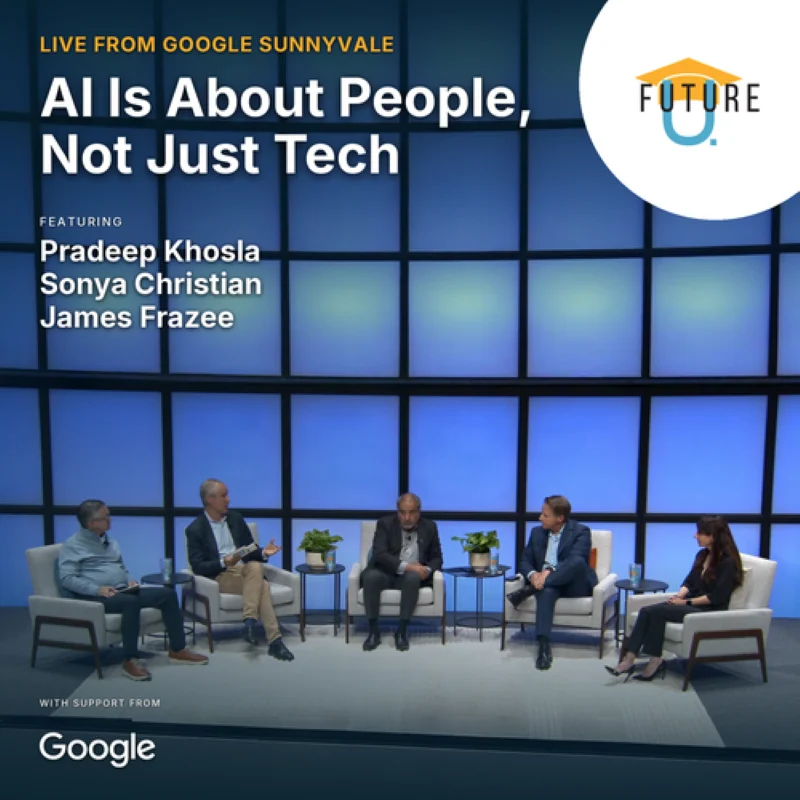
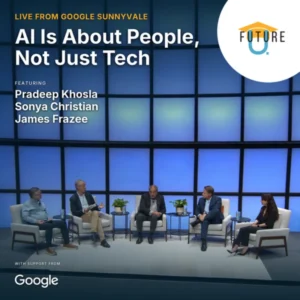
In the rapidly evolving landscape of modern academia, the conversation surrounding Artificial Intelligence (AI) has shifted from a speculative "what-if" to a pressing operational mandate. Yet, as universities scramble to secure the latest generative AI tools and infrastructure, a critical disconnect has emerged. A recent live recording of the Future U podcast, hosted by Michael Horn and Jeff Selingo at Google’s Sunnyvale campus, highlighted a stark reality: the success of AI in higher education is not tethered to the sophistication of the technology itself, but rather to the fragile foundation of human trust within the classroom.
The discourse, which featured academic leaders including James Frazee, Vice President and Chief Innovation Officer at San Diego State University (SDSU), suggests that without a unified, transparent, and empathetic approach to AI governance, the rapid adoption of these tools risks destabilizing the very educational outcomes they are intended to improve.
Main Facts: The Great Pedagogical Divide
The central tension identified by Horn, Selingo, and their guests is the chasm between institutional investment and classroom adoption. Universities are currently pouring significant capital into AI software suites, enterprise-level subscriptions, and hardware upgrades. However, these investments often outpace the development of clear, institutional-wide pedagogical frameworks.
The result is a fragmented environment where the "rules of the game" change every hour. When a student enters a lecture hall, they are often met with a unique set of expectations regarding AI usage. In one department, generative AI may be hailed as a productivity multiplier; in another, it may be strictly prohibited under the threat of academic integrity violations. This lack of standardization is not merely a bureaucratic hurdle—it is a significant source of psychological strain for the student body.
Chronology of the Crisis
To understand the current state of confusion, one must look at the rapid timeline of AI’s ascent in academia:
- Late 2022 (The Disruption): The public release of ChatGPT acted as a "Sputnik moment" for higher education. Universities were caught off guard, with many initially resorting to blanket bans to prevent potential plagiarism.
- Early to Mid-2023 (The Period of Experimentation): As the capabilities of Large Language Models (LLMs) became undeniable, faculty members began experimenting with AI in their syllabi. This led to a "Wild West" era where individual instructors became the sole arbiters of AI policy.
- Late 2023 to Present (The Governance Gap): Universities have moved toward procurement. Institutions are now buying enterprise access, but the policy layer—the "human" component—has struggled to catch up. The current moment is characterized by a "policy vacuum" where students feel caught in the middle of conflicting administrative and faculty agendas.
Supporting Data: The Cost of Inconsistency
While exact metrics on the psychological impact of AI policies are still being compiled by research institutions, anecdotal and qualitative data presented during the Google Sunnyvale session paint a concerning picture.
James Frazee’s testimony provides the most poignant data point: the "9 a.m. vs. 10 a.m." paradox. A student might be encouraged to utilize AI to brainstorm research topics in a Humanities course at 9:00 a.m., only to be threatened with expulsion for using that same tool to check a mathematical formula in a 10:00 a.m. STEM course.
This inconsistency creates a "compliance trap." When students are unsure of what constitutes "ethical use," they often default to anxiety or avoidance. Studies on student engagement suggest that when learners feel that the rules are arbitrary or punitive, their willingness to engage in critical thinking—the very skill AI is supposed to augment—decreases. Instead of focusing on learning, students focus on policy navigation.
Official Responses: Rebuilding the Trust Architecture
The panel, featuring voices from the front lines of university administration, emphasized that the solution requires a paradigm shift: move away from "policing" and toward "guiding."
The Role of Clear Communication
Frazee and his colleagues argued that trust is the currency of a successful academic environment. For students to trust the integration of AI, they must feel that the guidance provided by their university is consistent and transparent. This means:
- Standardized Rubrics: Institutions must move away from idiosyncratic, instructor-only policies toward departmental or university-wide guidelines that clearly define the boundary between "assistance" and "dishonesty."
- Transparency in Expectations: Faculty should explicitly state why a tool is permitted or banned. If AI is prohibited, the pedagogy should reflect why human-only labor is essential for that specific learning objective.
The Human-Centric Infrastructure
The experts emphasized that "great technical infrastructure" is a baseline, not a goal. A university can provide every student with an AI-powered tutor, but if the faculty-student relationship is strained by suspicion—where the professor views the student as a potential cheater and the student views the professor as an unpredictable gatekeeper—the technology will fail.
"We are seeing that trust is the missing link," Horn noted during the session. "We have the tools, we have the bandwidth, but we are neglecting the social contract that makes education work."
Implications: The Future of the University
The implications of failing to resolve this trust crisis are profound. If higher education institutions continue to project ambiguity, they risk alienating a generation of digital natives who are already utilizing AI in their personal lives.
1. The Erosion of Academic Integrity
If policies are inconsistent, the concept of academic integrity becomes diluted. When rules seem arbitrary, students lose respect for the institutional framework. This creates a culture of "getting away with it" rather than a culture of intellectual honesty.
2. The Widening Skills Gap
If universities are paralyzed by fear and lack of consensus, they will fail to teach AI literacy. As the job market increasingly demands proficiency in human-AI collaboration, graduates from institutions that avoided the topic out of fear or confusion will be at a significant competitive disadvantage.
3. Faculty-Student Strain
The conflict over AI is placing an unprecedented burden on the faculty-student relationship. Professors, already overwhelmed by administrative demands, are now forced to act as "AI police." This detracts from their primary roles as mentors and researchers. By providing clear, top-down guidance, universities can relieve this pressure, allowing faculty to return to their core mission of fostering critical inquiry.
Conclusion: A Call for Synchronicity
The consensus from the Google Sunnyvale discussion is clear: AI in higher education is not a software deployment problem; it is a community management problem. The technology is moving at a breakneck speed, but the culture of the university is moving at a glacial pace.
To bridge this divide, universities must adopt a "trust-first" approach. This involves:
- Institutional Alignment: Bringing leadership, faculty, and student representatives to the table to create a cohesive AI policy framework.
- Continuous Dialogue: Viewing AI policy as a living document that requires frequent review and student feedback, rather than a rigid, static rulebook.
- Pedagogical Evolution: Redesigning assessments so that they are less susceptible to AI-assisted cheating and more focused on the unique value of the human mind—the very thing that AI cannot replicate.
As the academic year progresses, the institutions that will thrive are those that recognize that technology is merely a scaffold. The real learning happens in the space between the teacher and the learner. By prioritizing trust and clarity, universities can ensure that AI serves to enhance that space, rather than fracture it. The goal is not to create a university that runs on AI, but a university that uses AI to empower the humans who study and teach within its walls.
For those interested in the full discussion, the recording of the "Future U" podcast is available at futureupodcast.com.