The Lingering Crisis: Assessing the Long-Term Impact of COVID-19 on American Education
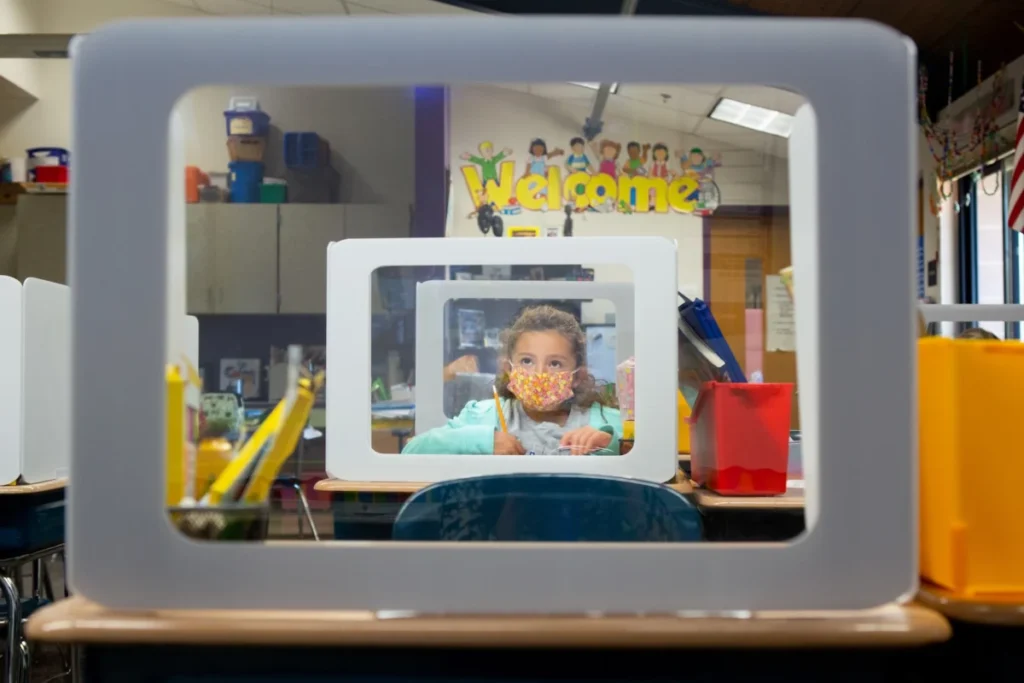
Four years after the global pandemic forced the shuttering of school doors and the hasty adoption of remote learning, the American public education system remains in a state of profound, unresolved instability. While the acute phase of the COVID-19 pandemic has passed, the "educational hangover"—characterized by stagnating achievement, historic absenteeism, and a fraying social contract between families and schools—continues to define the landscape of the 2024–25 academic year.
New research from the Center on Reinventing Public Education (CRPE), supported by the Walton Family Foundation, reveals a sobering reality: many of the recovery strategies implemented by school districts have proven insufficient. The crisis is no longer just about the initial learning loss; it is about the structural inability of current systems to reach the students most in need of support.
The State of the System: Key Facts and Figures
The data emerging from the 2024 academic cycle paints a picture of a system that has stalled in its recovery. According to the National Assessment of Educational Progress (NAEP), often cited as "The Nation’s Report Card," only 30% of fourth graders were proficient or advanced in reading as of 2024, a decline from 32% in 2022.
Even more alarming is the situation at the bottom of the achievement distribution. Among eighth graders, 34% scored "below basic" in reading—the largest percentage recorded in the 32-year history of NAEP reading assessments. This indicates that the academic floor is dropping for the nation’s most vulnerable students.
Simultaneously, chronic absenteeism has become the new normal. In the 2024–25 school year, 23% of students were chronically absent—a significant jump from the 15% pre-pandemic baseline. Despite concerted efforts across all 50 states to address this, not a single state has managed to return to pre-2020 attendance levels.
A Chronology of Recovery and Stagnation
To understand how the education sector arrived at this point, one must look at the timeline of the post-pandemic response:
- 2020–2021 (The Emergency Phase): Schools focused on survival, pivoting to hybrid models and attempting to maintain contact with disconnected students.
- 2021–2022 (The Funding Surge): Massive federal relief funds were injected into districts. Efforts were focused on "catching up," with a heavy reliance on generic summer school programs and temporary technology investments.
- 2022–2023 (The Realization): As initial interventions failed to move the needle on standardized test scores, the conversation shifted toward the "chronic absenteeism" crisis, recognizing that academic recovery is impossible if students are not in their seats.
- 2024–2025 (The Evidence Project): Recognizing that the "easy" fixes had been exhausted, researchers—including the team at CRPE—launched the Evidence Project. This initiative sought to look beyond broad-brush policies and identify why certain segments of the student population remained chronically disengaged.
The Intersection of Challenges: Why Strategies Are Failing
The central finding of the recent research is that current educational interventions are often "too little, too late, and too generic." While districts have rolled out initiatives—such as high-impact tutoring or expanded after-school programs—these efforts frequently miss the students who need them most.
The Complexity of Absenteeism
Researchers found that the reasons for student absence are far more complex than simple lack of motivation. While illness remains a factor, the "most-absent" students are often grappling with a constellation of systemic barriers:
- Family Responsibilities: Older students are frequently forced to care for younger siblings or contribute to household income.
- Transportation and Logistics: Shifts in busing services and family employment schedules have made the daily trek to school a logistical nightmare for low-income households.
- Mental Health and Disengagement: There is a strong correlation between mental health screenings and school attendance. Students reporting higher levels of psychological distress report missing twice as much school as their peers.
The research underscores a painful truth: absenteeism is not a standalone issue; it is a symptom of broader instability in the lives of students. In low-income districts, where students were already less likely to have recovered in math and reading, absenteeism has increased at a disproportionately higher rate, widening the equity gap.
The Data Infrastructure Gap
Perhaps the most significant systemic failure identified by the Evidence Project is the lack of coherent data infrastructure. Most districts operate in a "siloed" environment. Attendance records, academic grades, behavioral reports, and intervention tracking exist on separate, non-communicating platforms.
Without integrated data, school leaders are essentially flying blind. They lack the ability to predict which student is at risk of becoming chronically absent until they have already missed a significant number of days. MIT and USC research highlighted that districts that made successful post-COVID recoveries were characterized not by the volume of data they collected, but by their active use of that data to drive precise, individual-level interventions.
Leadership as the Final Frontier
Amidst the systemic failures, one variable consistently predicted success: the presence of strong, stable, and advocacy-driven leadership.
Researchers noted that in schools where progress was sustained, it was almost exclusively due to principals and district superintendents who refused to accept the status quo. These leaders were not just managing resources; they were actively solving problems—advocating for the continuation of high-impact tutoring once federal grants expired and fostering a school culture that prioritized student belonging over mere policy compliance.
Conversely, where leadership was transient or disconnected, interventions—no matter how well-funded—faded away the moment the "emergency" spotlight shifted.
Implications for Policy and Future Research
The Evidence Project suggests that the path to recovery requires a fundamental pivot. The "one-size-fits-all" approach to education, which was already showing cracks prior to 2020, is no longer viable in the post-pandemic era.

Recommendations for the Field:
- Investment in Integrated Data Systems: Schools must move beyond fragmented tracking. Investing in platforms that synthesize academic, social-emotional, and attendance data is no longer a luxury—it is a prerequisite for effective intervention.
- Targeted, High-Intensity Support: Because current strategies are "too generic," resources must be reallocated toward more ambitious, individualized interventions. This includes moving toward case-management models for the most chronically absent students, where a single point of contact helps coordinate support for family, mental health, and academic needs.
- Prioritizing Leadership Stability: Policymakers must incentivize long-term leadership in high-needs districts. Turnover at the principal level acts as a reset button on progress; keeping effective leaders in place is essential for building the culture necessary to sustain recovery efforts.
- Addressing Labor Constraints: As noted by the AIR research in California, even when districts have the intent to support students, labor market constraints (such as teacher shortages) often prevent them from doing so. Recovery plans must include aggressive strategies for talent acquisition and retention in hard-to-staff schools.
Conclusion: A Call for Ambitious Reinvention
The findings from the 2024 Evidence Project are a clarion call. The "COVID hangover" is not merely a temporary state of affairs that will resolve itself with the passage of time. Without significant structural changes, the decline in student achievement and the rise in chronic absenteeism threaten to become permanent features of the American educational landscape.
We have spent four years attempting to patch a broken system. The evidence now suggests that the system itself requires a more ambitious, data-informed, and leadership-centered reinvention. To serve the students who have been left behind, we must move beyond the generic outreach of the past and build a, more responsive, and more equitable infrastructure capable of meeting the complex realities of 21st-century childhood.
As the funding from this round of research concludes, the challenge remains for policymakers and educators: will we continue to manage the decline, or will we use the hard-learned lessons of the last four years to build a stronger, more resilient future for our students? The data indicates that the window for meaningful, systemic change is narrow, but the path forward—built on data, leadership, and precision—is clear.