
Unlocking the Digital Future: A Comprehensive Review of the CodeMonkey Coding Platform
In an era where computational literacy is becoming as fundamental as reading and writing, parents and educators are constantly searching for pedagogical tools that bridge the gap between complex computer science concepts and the intuitive, play-based nature of childhood. CodeMonkey, an award-winning educational platform, has emerged as a frontrunner in this space. By gamifying the process of learning programming, the platform successfully transforms the often-daunting task of syntax mastery into a series of rewarding, puzzle-like challenges.
Main Facts: What is CodeMonkey?
CodeMonkey is a comprehensive, browser-based coding environment designed to take students from absolute beginners to proficient young programmers. Targeted primarily at students from preschool through 8th grade, the platform utilizes a game-based approach to teach professional-grade programming languages, including CoffeeScript, Python, and JavaScript.
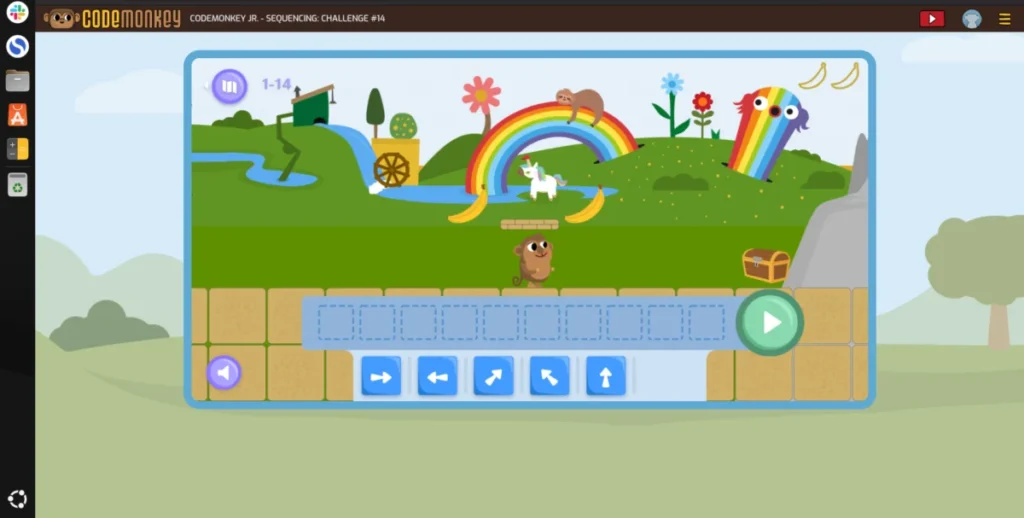
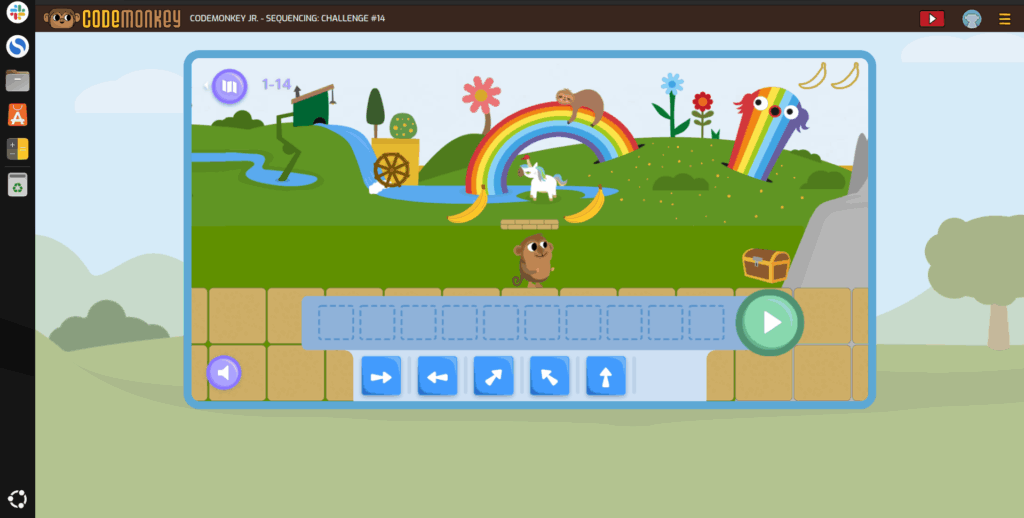
Unlike traditional learning modules that rely on static text, dry YouTube tutorials, or dense textbooks, CodeMonkey places the student in an immersive digital environment. The core premise is simple yet effective: students must write lines of code to guide a monkey through various levels to collect bananas. This immediate feedback loop—where the code written by the student causes an immediate, visual change on the screen—demystifies the logic behind software development.
Key Pillars of the Platform:
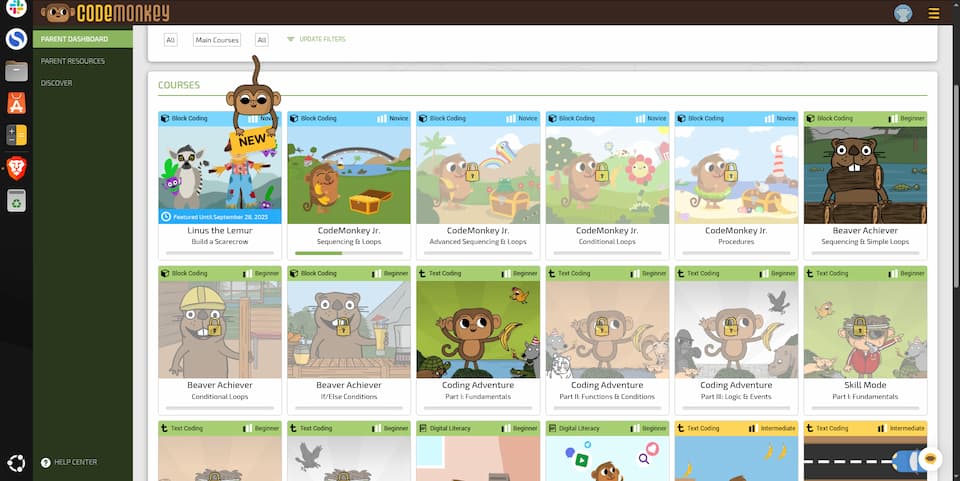
- Skill Progression: The curriculum is scaffolded, beginning with block-based coding for younger children (via CodeMonkey Jr.) and transitioning seamlessly into text-based, syntax-heavy programming for older students.
- Curriculum Depth: With over 400 unique challenges, the platform covers a vast array of computer science fundamentals.
- Versatility: The platform is engineered to function equally well in a structured classroom setting, a virtual learning environment, or as a supplement to a homeschooling curriculum.
Chronology: From Concept to Classroom
The evolution of CodeMonkey mirrors the broader trend in STEM education: the shift toward "learning by doing."
- Foundational Years: The developers recognized that the primary barrier to entry for kids in coding was not a lack of interest, but the intimidating nature of raw syntax. By introducing a "Coding Adventure" framework, they established a low-stakes environment where errors were not failures, but opportunities to debug.
- Introduction of CodeMonkey Jr.: To capture the attention of early learners (preschool and kindergarten), the team developed a block-based visual interface. This ensured that even children who were not yet reading proficiently could grasp the logic of algorithms and sequencing.
- Expansion into Text-Based Languages: As the user base matured, the platform integrated real-world languages. By moving from CoffeeScript (a "cleaner" version of JavaScript) to standard Python, CodeMonkey ensured that students were gaining skills that translate directly into professional career pathways.
- Modern Integration: Today, the platform includes a "Game Builder" feature, allowing students to transition from consumers of games to creators, effectively closing the loop on their programming education.
Supporting Data: Why Gamification Works
The efficacy of CodeMonkey is supported by both its pedagogical design and its engagement metrics. According to educational research, students who engage with gamified learning platforms exhibit higher retention rates of technical concepts compared to those who utilize passive learning methods.
The "Three-Star" Feedback System
In every challenge, students are encouraged to achieve a "three-star" rating. This isn’t merely for vanity; it requires the student to write the most efficient code possible. This teaches a vital industry skill: optimization. By rewarding students for cleaner, shorter, and more elegant solutions, CodeMonkey instills the professional habit of writing "clean code."
Skill Tracking and Analytics
The platform provides a "Skill Mode" that maps out a student’s progress against specific computer science competencies. Parents and teachers receive granular reports, allowing for a "top-down" view of where a child might be struggling—whether it’s with variables, loops, or conditional logic—enabling targeted support.
Programming Concepts Covered
CodeMonkey does not shy away from complex topics; rather, it makes them accessible through metaphors and logic-based puzzles.
1. Control Flow (Loops and Conditions)
The platform teaches loops by illustrating the inefficiency of repetitive tasks. When a student learns that a "loop" can perform a repetitive movement—like moving a character ten steps—they gain an intuitive understanding of why programmers use iterative structures to keep codebases manageable. Similarly, "if-else" conditions are taught as decision-making trees, empowering students to program interactive logic where the game reacts to user inputs.
2. Data Structures (Variables, Objects, and Arrays)
Understanding how to store and retrieve data is the bedrock of programming. CodeMonkey uses the concept of "containers" to explain variables, allowing children to visualize information as items placed in a box. Arrays are introduced as organized lists, such as a "queue" of objects, helping students grasp how to manipulate large datasets effectively.
3. Functional Programming
Functions are presented as "recipes." By writing a block of code once and calling it repeatedly, students learn the importance of modularity and DRY (Don’t Repeat Yourself) principles, which are essential for large-scale software development.
Official Responses and Educational Philosophy
The creators of CodeMonkey maintain a clear stance: coding is not just a technical skill; it is a way of thinking. In official communications, the platform emphasizes the development of "computational thinking"—the ability to break down a massive, overwhelming problem into smaller, solvable components.
Regarding privacy and technical implementation, the platform addresses concerns by noting that while they utilize session cookies to maintain student progress and login states, these are functional in nature. They distinguish these from third-party advertising cookies, providing a safe digital space for children. For schools and parents, the platform offers dedicated support channels, including chatbots for immediate troubleshooting and extensive lesson plans that align with various state and international education standards.
Implications for Future Learning
The broader implication of platforms like CodeMonkey is the democratization of tech-fluency. By lowering the barrier to entry, these tools ensure that children from diverse backgrounds can explore computer science without the need for expensive hardware or prior parental expertise in software engineering.
Career Readiness and Beyond
While not every student using CodeMonkey will become a professional software engineer, the foundational skills gained—problem-solving, logical reasoning, and perseverance—are universally applicable. In an increasingly automated workforce, the ability to "talk to machines" is a competitive advantage.
The Homeschooling Advantage
For the growing number of homeschooling families, CodeMonkey serves as a turnkey curriculum. It removes the pressure on parents to be subject-matter experts, as the platform acts as the tutor, providing the instruction, the practice, and the assessment. The inclusion of video tutorials for those moments when a student gets truly stuck ensures that the learning process remains continuous rather than stalled.
Conclusion: Is it Worth the Investment?
The consensus among educators and parents is that CodeMonkey provides a high-quality, structured, and genuinely enjoyable introduction to programming. Whether for a student looking to build their first game or a teacher aiming to facilitate an "Hour of Code," the platform offers a robust environment that grows alongside the student.
By prioritizing engagement through gamification and reinforcing that engagement with real, industry-standard languages like Python, CodeMonkey stands as a vital tool for the next generation of digital architects. For those ready to begin the journey, the platform’s accessible sign-up options make it easy to start exploring the intersection of play and programming today.
As the digital landscape continues to expand, the investment in a child’s early coding education is not just an investment in a potential career; it is an investment in their ability to understand, navigate, and eventually shape the world around them.