Securing the Lifeline: How Ethiopia is Revolutionizing Its Vaccine Cold Chain Through Local Leadership and Technical Mastery
ADDIS ABABA — Across the globe, billions of vaccine doses are lost annually to minor, preventable disruptions in the cold chain. In low- and middle-income countries, the vulnerability of temperature-sensitive medical supplies can mean the difference between community resilience and devastating disease outbreaks. While procuring and installing state-of-the-art cold rooms is a vital and often celebrated first step, public health experts increasingly recognize that the true measure of a resilient healthcare system lies in something far more difficult to acquire: the enduring institutional capacity to maintain, manage, and adapt that infrastructure over time.
Over the past year, JSI, in close and dynamic partnership with Ethiopia’s Ministry of Health and the Ethiopian Pharmaceutical Supply Service (EPSS), has redefined what infrastructure development looks like. Rather than treating cold chain upgrades as isolated logistical transactions—where international contractors fly in, execute a project, and leave local teams dependent on external expertise—Ethiopia and JSI turned every logistical hurdle into a masterclass in capacity development and policy formulation.
The initiative has transformed the nation’s supply chain landscape, turning hands-on mechanical relocations into milestones for national self-reliance, safeguarding millions of doses, and protecting the health of over 32 million citizens across multiple regional hubs.
Main Facts: The Anatomy of Ethiopia’s Cold Chain Transformation
The multi-hub cold chain optimization initiative tackled systemic vulnerabilities across Ethiopia’s primary pharmaceutical distribution arteries.
- The Core Challenge: Shifting demographics, rapid urban development, and operational inefficiencies placed immense strain on Ethiopia’s legacy cold chain network. Decentralized equipment and poorly integrated warehouse layouts threatened the potency of vaccines and dry supplies destined for millions.
- The Scale of Impact: Interventions spanned three critical regional hubs—Mekelle, Hawassa, and Addis Ababa—directly optimizing storage systems that serve a combined catchment population exceeding 32 million people.
- The Operational Paradigm: Moving away from traditional dependency models, the partnership utilized a "co-execution" and "learning-by-doing" framework. EPSS engineers and technicians took center stage, dismantling, transporting, and recommissioning massive cold rooms and freezer units under JSI mentorship.
- The Policy Dividend: Field-level technical victories were not left as isolated successes. Instead, they were codified into national protocols and standard operating procedures, ensuring that the lessons learned on the warehouse floor will permanently shape Ethiopia’s national supply chain resilience.
Chronology of a Transformation: Step-by-Step Regional Overhauls
The success of Ethiopia’s cold chain renaissance was not achieved overnight. It was forged through a deliberate, sequential chronology of increasingly complex engineering and logistical operations across three major distribution hubs.
Phase 1: Streamlining Warehouse Operations in the Mekelle Hub
The journey began at the EPSS Mekelle hub, a critical facility serving more than seven million people across northern Ethiopia. An initial diagnostic assessment revealed severe operational inefficiencies, predominantly caused by scattered cold storage equipment. Two walk-in cold rooms and one heavy-duty freezer were isolated across different zones of the facility, complicating workflow and elevating the risk of temperature excursions during internal transfers.
JSI and EPSS teams devised a centralization plan. Rather than hiring external technicians to move the machinery, EPSS staff worked side-by-side with JSI experts. Together, they systematically dismantled, transported, and recommissioned the cold rooms into a unified, streamlined space. This meticulous planning transformed a routine warehouse reorganization into a live technical demonstration, demystifying the internal mechanics of commercial refrigeration and building foundational confidence among local technicians.
Phase 2: Navigating Geopolitical and Infrastructural Constraints in Hawassa
With foundational skills established in Mekelle, the partnership undertook a significantly more complex challenge at the Hawassa storage facility, a vital lifeline serving over 10 million people in southern Ethiopia.
Here, external forces collided with internal logistics: a government-sponsored road corridor expansion project threatened to encroach upon the existing warehouse footprint, necessitating the urgent relocation of two walk-in cold rooms. The stakes were extraordinarily high. Moving 150 cubic meters of active cold storage required absolute precision to ensure zero downtime and zero risk to sensitive vaccine stocks.
Under this immense pressure, EPSS took the operational lead. JSI stepped back into a coaching and advisory role, allowing EPSS leadership to orchestrate the complex relocation. Technicians successfully uninstalled, relocated, and re-erected 150 cubic meters of cold storage to a brand-new site. The move preserved international cold storage standards and vaccine potency without a single hour of cold chain interruption, proving that local teams could manage high-stakes, crisis-level logistical shifts.
Phase 3: The Ultimate Test at Addis Ababa Hub 1
The culmination of the year-long capacity-building journey unfolded at Addis Ababa Hub 1, the nation’s largest sub-national vaccine store, which acts as the distribution heart for a staggering 15 million people.
Before the intervention, the facility’s architecture was a logistical nightmare. Five cold rooms and one dedicated freezer room were scattered across three separate, disconnected warehouses. This poor spatial design forced warehouse staff to physically transport temperature-sensitive immunizations across open-air floors. During these transit windows, ambient temperatures frequently soared to a dangerous $38^circtextC$, threatening the structural integrity and potency of life-saving vaccines.
In what would serve as the ultimate test of their growing expertise, EPSS cold chain technicians assumed complete, independent leadership of the Addis Ababa consolidation. Working under light JSI mentorship, local biomedical engineers and technicians successfully integrated five cold rooms and a freezer room into a single, thermally optimized warehouse facility.
Completed within a matter of weeks, the Addis Ababa relocation was executed with flawless quality control. It stood as definitive proof that the iterative capacity-strengthening model had successfully transformed novice technicians into confident, world-class cold chain experts.
Supporting Data and Operational Metrics
Behind the narrative of logistical triumphs lie critical quantitative metrics that underscore the scale and efficiency of the JSI-EPSS partnership:
- 32 Million+ Lives Impacted: The combined catchment populations of the Mekelle, Hawassa, and Addis Ababa hubs represent a massive demographic footprint, ensuring that millions of mothers and children receive potent, safe immunizations.
- 150 Cubic Meters Relocated: At Hawassa alone, 150 cubic meters of active cold storage were seamlessly transitioned to a new site without a single temperature excursion.
- 6 Major Units Consolidated in Addis Ababa: Five distinct cold rooms and one freezer room were merged into a single integrated facility at the nation’s premier sub-national store, drastically reducing internal transit times and eliminating exposure to $38^circtextC$ ambient temperatures.
- Zero Cold Chain Failures: Across all three complex relocations, rigorous monitoring ensured 100% maintenance of vaccine potency, validating the technical competence of the local workforce.
- Weeks, Not Months: The Addis Ababa consolidation was executed entirely by local technicians within a matter of weeks, demonstrating high operational velocity and minimal disruption to national supply schedules.
Official Perspectives and Institutional Insights
The philosophy driving Ethiopia’s cold chain transformation represents a fundamental shift in how international development organizations partner with sovereign governments. For decades, foreign aid in the health sector has frequently relied on the "turnkey" model: external agencies procure equipment, install it, and hand over the keys, leaving local institutions vulnerable when technical failures inevitably occur.
Public health strategists at JSI and the Ethiopian Ministry of Health recognized that true sustainability cannot be imported in a shipping container. It must be cultivated from within.
"Teaching while doing was not merely a stylistic choice for these projects; it was an absolute prerequisite for national health security," noted project coordinators involved in the initiative. By intentionally working with the same core group of local technical personnel across three consecutive, escalating projects—from Mekelle to Hawassa, and finally to Addis Ababa—the partnership allowed skills to compound exponentially.
Through this iterative framework, technicians did not just learn how to follow a manual; they developed diagnostic intuition, troubleshooting capabilities, and leadership skills. When unexpected mechanical anomalies arose during the Hawassa relocation, it was EPSS leadership that drove the problem-solving process, utilizing JSI mentors as a sounding board rather than a crutch.
Furthermore, the institutionalization of these lessons marks a critical victory for Ethiopian health policy. Field-level realities—such as the spatial constraints in Addis Ababa or the urban development pressures in Hawassa—were systematically documented and translated into national maintenance protocols. This policy feedback loop ensures that the knowledge gained during these emergency relocations will be embedded into the permanent curriculum for incoming biomedical engineers and supply chain managers across Ethiopia.
Implications for the Future of Public Health in Ethiopia
The successful reorganization and modernization of the Mekelle, Hawassa, and Addis Ababa hubs carry profound implications for the broader landscape of public health delivery in East Africa.
1. Hardening Against Climate and Demographic Shocks
As urban centers expand and regional demographics shift rapidly, supply chains are subjected to unprecedented stress. By mastering the art of cold room relocation and spatial optimization, EPSS has proven that Ethiopia’s logistics infrastructure is not rigid or fragile, but adaptable. When future urban development projects or road expansions threaten healthcare infrastructure, national teams now possess the technical agency to relocate multi-ton cold storage facilities independently and swiftly.
2. Safeguarding Vaccine Confidence and Efficacy
Temperature excursions are silent killers of immunization programs. When a vaccine is exposed to sub-zero freezing or excessive ambient heat (such as the $38^circtextC$ conditions previously encountered in Addis Ababa), it may lose its potency while appearing completely normal to healthcare workers. By consolidating facilities, shortening transit exposure windows, and optimizing thermal performance, the JSI-EPSS partnership has dramatically hardened the supply chain against potency loss, ensuring that every dose administered in the field delivers its intended immunological protection.
3. A Blueprint for Sustainable Capacity Building
The Ethiopia model offers a compelling blueprint for international health organizations and ministries of health worldwide. It demonstrates that capacity strengthening is most effective when it is practical, continuous, and tied to real-world infrastructure investments. By transforming routine maintenance and logistical relocations into immersive training grounds, nations can bypass the cycle of long-term technical dependency.
Conclusion
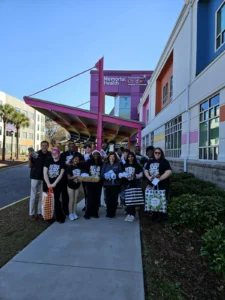
As the biomedical engineers and technicians who orchestrated the Addis Ababa relocation paused for a commemorative photograph—surrounded by the hum of perfectly calibrated, integrated cold rooms—they captured more than just the end of a project. They captured the face of a self-reliant national health system.
Through intentional partnerships, rigorous hands-on training, and a steadfast commitment to local leadership, Ethiopia has built a sustainable cold chain legacy. The billion-dollar global challenge of vaccine wastage is being met in Ethiopia not merely with imported machinery, but with homegrown expertise, resilient policies, and a workforce ready to protect the nation’s health for generations to come.