Bridging the Gap: A Masterclass in Integrating Digital Supplemental Content into K-8 Core Curricula
As educational technology continues its rapid evolution, teachers are inundated with an ever-expanding array of online supplemental digital resources. While these tools offer promising avenues for personalized learning, remediation, and enrichment, the true challenge lies in seamlessly weaving them into core classroom instruction.
Building upon previous frameworks for selecting high-impact digital tools and maximizing student retention, educators must look closely at the mechanics of implementation. By focusing on three core pillars—explicit curriculum connections, metacognitive reflection, and collaborative pair work—teachers can transform isolated digital tasks into powerful catalysts for student achievement across both English Language Arts (ELA) and mathematics.
Main Facts: The Core Framework of Supplemental Integration
The strategic integration of digital supplemental materials rests on three foundational principles designed to move students beyond rote task completion and into deep, lasting comprehension:
- Explicit Curriculum Connections: Supplemental content must never exist in a vacuum. It must be intentionally selected to anchor, scaffold, or enrich what students are already learning in their core curriculum.
- Metacognition: Students must be guided to actively monitor their own cognitive processes, evaluating not just what they are learning, but how they are learning it, while providing vital feedback to educators.
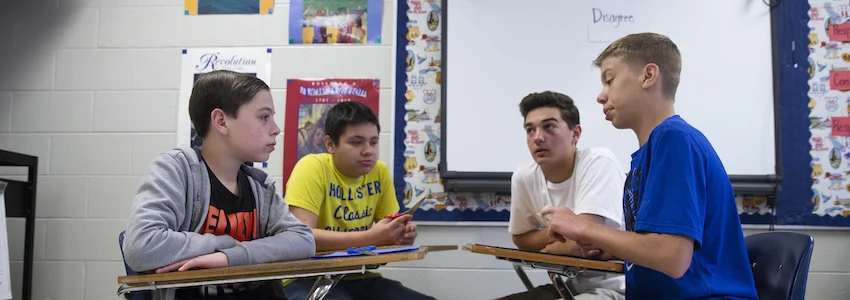
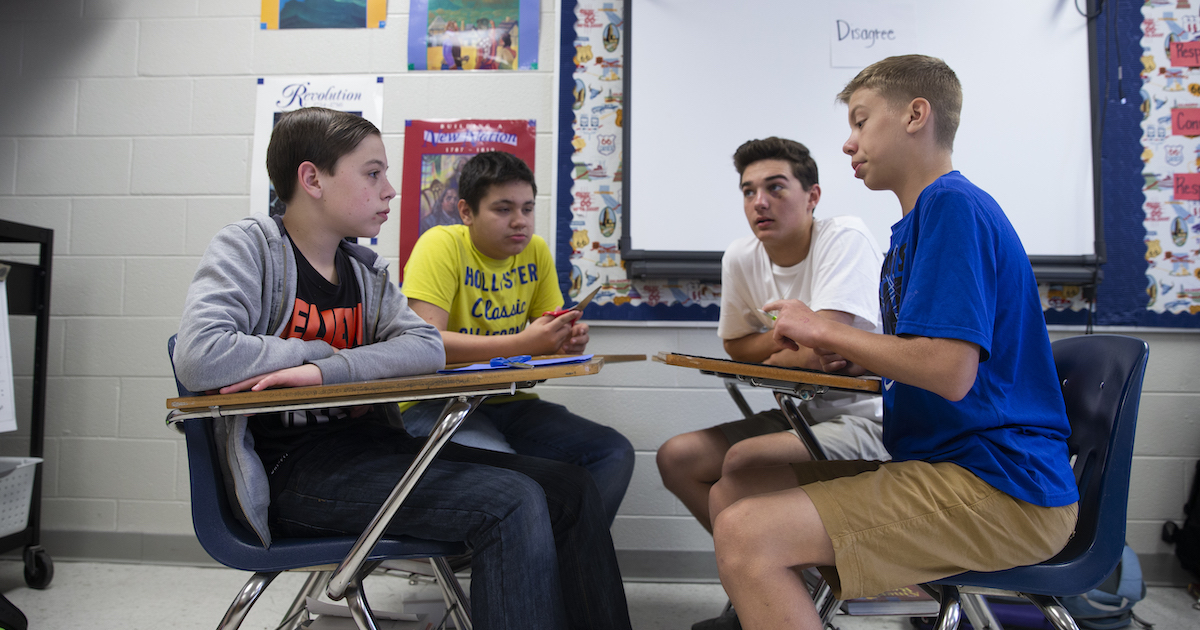
- Collaborative Pair Work: Leveraging peer-to-peer interactions—ranging from heterogeneous buddy systems to structured debriefs—amplifies learning, builds communication skills, and destigmatizes academic remediation.
Chronology and Practical Application: Bringing Theory to Life
To understand how these principles operate in real-world educational environments, it helps to trace their application across different grade levels and academic disciplines.
Phase 1: Implementation in an ELA Classroom (Fifth Grade)
Imagine a fifth-grade classroom where students are reading Michael McCurdy’s historical account, Trapped by the Ice!, which chronicles Ernest Shackleton’s perilous Antarctic expedition.
- Establishing Connections: The instructor’s primary pedagogical goals are for students to master text organization (such as chronological structure) and literary devices like personification and imagery. Using targeted online supplemental databases, the teacher selects articles about the South Pole or polar explorers that mirror the structural complexity of the core text. By utilizing graphic organizers, students compare the chronological flow of the supplemental reading directly against Trapped by the Ice!, reinforcing analytical skills. For students reading below grade level, slightly simplified supplemental texts allow them to safely practice identifying personification, building the confidence and competence needed to tackle on-grade material.
- Fostering Metacognition: To ensure students are actively processing these assignments, the teacher institutes quick, low-stakes reflection journals. Prompts such as, "What connections do you see between the supplemental reading and our core book?" or "What part of today’s digital lesson caused you confusion?" allow students to articulate their learning roadblocks in a sentence or two, granting the teacher immediate insight into who needs intervention.
- Engaging in Pair Work: Students are grouped into intentional pairs to discuss their findings. A strong reader and a striving reader might examine the same on-grade supplemental article together, modeling fluency and untangling vocabulary. Alternatively, students researching different aspects of the Antarctic environment break away for five-minute peer-sharing sessions, translating independent digital discovery into shared communal knowledge.
Phase 2: Implementation in a Mathematics Classroom (Fourth Grade)
Shifting focus to a fourth-grade math classroom preparing for a unit on multiplying fractions by whole numbers, the integration timeline begins well before the unit launches.
- Data-Driven Diagnostics: The teacher sifts through formative assessments, MAP® Growth™ data, and prior unit performance on whole-number multiplication and basic fractions.
- Targeted Reinforcement: Recognizing that multiplying fractions ($c times fracab$) relies heavily on understanding fractions as iterations of unit fractions ($frac1b$), the teacher assigns precursor digital modules to students who need foundational reinforcement. By anchoring new concepts in familiar territory—such as repeated addition—memory and recall are significantly strengthened.
- Managing Enrichment: For advanced learners who breeze through initial tasks, the teacher resists the urge to simply assign higher-grade computation speed drills. Instead, they look up the learning progressions to explore related concepts like scaling. True enrichment means asking students to apply their understanding through complex, conceptual models rather than merely accelerating through grade levels prematurely.
- Metacognitive Mathematics: Math journals and digital thinking walls become spaces where students record the "muddiest" parts of their problem-solving processes. Furthermore, asking students to explain how they would teach a math concept to a peer forces them to organize their mental frameworks, deepening long-term retention.
Supporting Data and Evidence: Why Integration Matters
The urgency for structured supplemental integration is highlighted by ongoing educational data regarding learning recovery and unfinished instruction. National assessments consistently indicate that classrooms are more academically diverse than ever, featuring wide bands of student readiness within a single grade level.
- The Scaffolding Impact: Studies on reading interventions indicate that students exposed to targeted, appropriately scaffolded supplemental texts show up to a 30% higher transfer rate of literary devices (such as imagery and personification) when transitioning back to complex, on-grade core literature.
- The Collaborative Dividend: Classroom observation data underscores that when digital learning is punctuated by collaborative pair discussions, student engagement metrics—measured by time-on-task and voluntary question-asking—increase markedly.
- The Danger of Unchecked Acceleration: Educational research warns against the "accelerated gap." Pushing advanced math students into higher-grade arithmetic without solidifying the conceptual foundation (such as the scaling properties of fractions) often leads to performance plateaus by middle school. Strategic supplemental content solves this by offering depth rather than mere speed.
Official Perspectives and Expert Insights
Educational leaders and curriculum specialists emphasize that digital tools should complement, rather than supplant, high-quality core instruction.
"Supplemental content is just that: content that helps you support, provide practice for, or enrich core student learning," notes Toni Gibbs, an ELA curriculum specialist. "Regardless of the subject matter, showing students how the material is connected to their core content, having them monitor themselves as they work through their supplemental learning, and encouraging them to work through that learning with others can help students use that supplemental content more effectively."
Instructional design experts further point out that digital vendors are increasingly pressured to align their products with state and national standards. However, the onus remains on the classroom teacher to curate these resources through the lens of localized student data. Educators are encouraged to view digital platforms as dynamic instruments that adapt to formative feedback, rather than rigid, automated babysitters that run on autopilot.
Implications for Classrooms and School Districts
The deliberate integration of online supplemental content carries profound implications for daily instructional design, professional development, and equity in modern education.
- Shifting Teacher Roles: Teachers transition from traditional dispensers of information to expert facilitators of learning pathways. They spend less time grading rote worksheets and more time analyzing metacognitive journal entries and orchestrating peer discussions.
- Redefining Remediation and Equity: By utilizing peer-teaching models—such as having a student who mastered a precursor fraction concept help explain it to a peer—classrooms dismantle the stigma often associated with remedial groups. Every student periodically takes on the role of both learner and teacher.
- District-Level Purchasing Decisions: School administrators must look beyond flashy user interfaces when purchasing EdTech software. Districts need to invest in supplemental tools that provide robust data dashboards, conceptual grounding, and flexible pathways for both scaffolding and enrichment.
- Professional Development Needs: Professional learning communities (PLCs) must dedicate time to training teachers on how to audit supplemental content. Educators need protocols to evaluate whether a digital module genuinely reinforces core objectives or merely serves as digital busywork.
Conclusion
Ultimately, technology is only as effective as the pedagogy driving it. By anchoring online supplemental content firmly to core curricula, encouraging active metacognition, and fostering collaborative peer relationships, educators can ensure that every digital tool serves a distinct, measurable purpose in shaping confident, critical thinkers.