Beyond the Checklist: What U.S. Educators Can Learn from Denmark’s Human-Centric Schools
By Global Education Desk
The stark contrast between the relentless, high-stakes environment of American public schools and the humane, trust-based model of Scandinavian education has long been a subject of academic fascination. Yet, cross-national comparisons often conclude with a sense of resignation: It works there, but it could never work here.
A recent in-depth interview featuring author, literacy advocate, and educator Pernille Ripp—who relocated from the United States to her native Denmark after years of teaching American students—challenges that defeatist narrative. Rather than pointing to unattainable funding levels or systemic overhauls, Ripp’s insights suggest a radical yet simple paradigm shift: American education doesn’t need more programs, more funding, or more oversight. It needs subtraction.
Main Facts: The Anatomy of Two Educational Realities
For over a decade, Ripp has chronicled the realities of literacy and classroom culture through her widely read blog and books, such as Passionate Learners. Having taught within both the American and Danish educational ecosystems, her comparative analysis highlights structural philosophies that shape the daily lived experiences of both teachers and students.
In the United States, public school classrooms are frequently defined by hyper-accountability, scripted curricula, rigid pacing guides, and standardized testing pressures. Teachers are often treated as middle-management implementers of top-down mandates rather than autonomous professionals.
Conversely, the Danish educational model is built upon systemic professional trust, holistic student development, minimal homework, and a structural philosophy that prioritizes depth over pace. By examining these contrasts, educators and policymakers can identify actionable, low-cost interventions to alleviate teacher burnout and foster genuine student autonomy.

Chronology: From U.S. Classrooms to the Danish System
To understand how these contrasting realities manifest in daily practice, it is helpful to trace the evolution of the dialogue surrounding international educational comparisons:
- The U.S. Context (Pre-Relocation): Ripp spent years teaching in American schools, navigating the growing administrative burden, scripted pacing guides, and the constant erosion of teacher autonomy. Her work during this period, including the popular podcast How to Stop Killing the Love of Reading, focused on humanizing literacy instruction amidst tightening institutional constraints.
- The Transition to Denmark: Relocating back to her home country, Ripp entered a public school system characterized by sweeping trust, broad curricular outlines, and a localized decision-making structure.
- Reflective Comparisons (Recent Years): Through ongoing dialogues with global educators, Ripp began contrasting her American tenure with her Danish experience. These conversations highlighted that the superiority of the Danish model lay not in expensive technological integrations, but in the systematic removal of bureaucratic clutter.
- The Current Framework: Today, Ripp advocates for actionable adjustments, urging U.S. educators to adopt a mindset of "strategic subtraction" to reclaim their professional agency and student well-being.
Supporting Data and Comparative Insights
The divergence between the two systems is best understood by examining specific structural pillars: teacher professionalism, student autonomy, and institutional design.
1. Professional Trust vs. Micro-Management
In Denmark, the national government drastically streamlined its educational guidelines, reducing hundreds of bureaucratic checkboxes down to roughly ten broad, age-based goals. There are no mandatory pacing guides dictating what a teacher must cover on any given Tuesday. Teachers are presumed competent professionals capable of tailoring instruction to their specific cohort. Decisions happen at the school level, allowing communities to select curricula that match their distinct needs.
In contrast, U.S. teachers navigate an intricate web of compliance metrics. Scripted programs, restrictive sign-out sheets, and rigid field-trip permission protocols communicate an institutional subtext of profound distrust.
2. Workload and Environment for Educators
- Time Allocation: Ripp operates on a predictable 40-hour workweek, with only 20 hours dedicated to direct student contact. Remaining hours are reserved for collaborative planning and grading.
- Physical Workspaces: Danish teachers typically prep in secure, quiet administrative offices after students depart. Soundproofed rooms and clear cultural norms—such as wearing noise-canceling headphones to signal "do not disturb"—eliminate the constant interruptions of intercom announcements and drop-in visits. Furthermore, because classrooms are shared community spaces rather than personalized shrines, teachers are freed from the exhausting expectation to privately fund and maintain elaborate decor.
- Abseeism and Sub Culture: When a Danish teacher falls ill, they simply call in before 7:00 AM without writing exhaustive substitute lesson plans. Schools employ permanent, building-based substitute teachers who are integrated into the school community and arrive prepared with their own engaging activities.
3. Student Autonomy and Developmental Realities
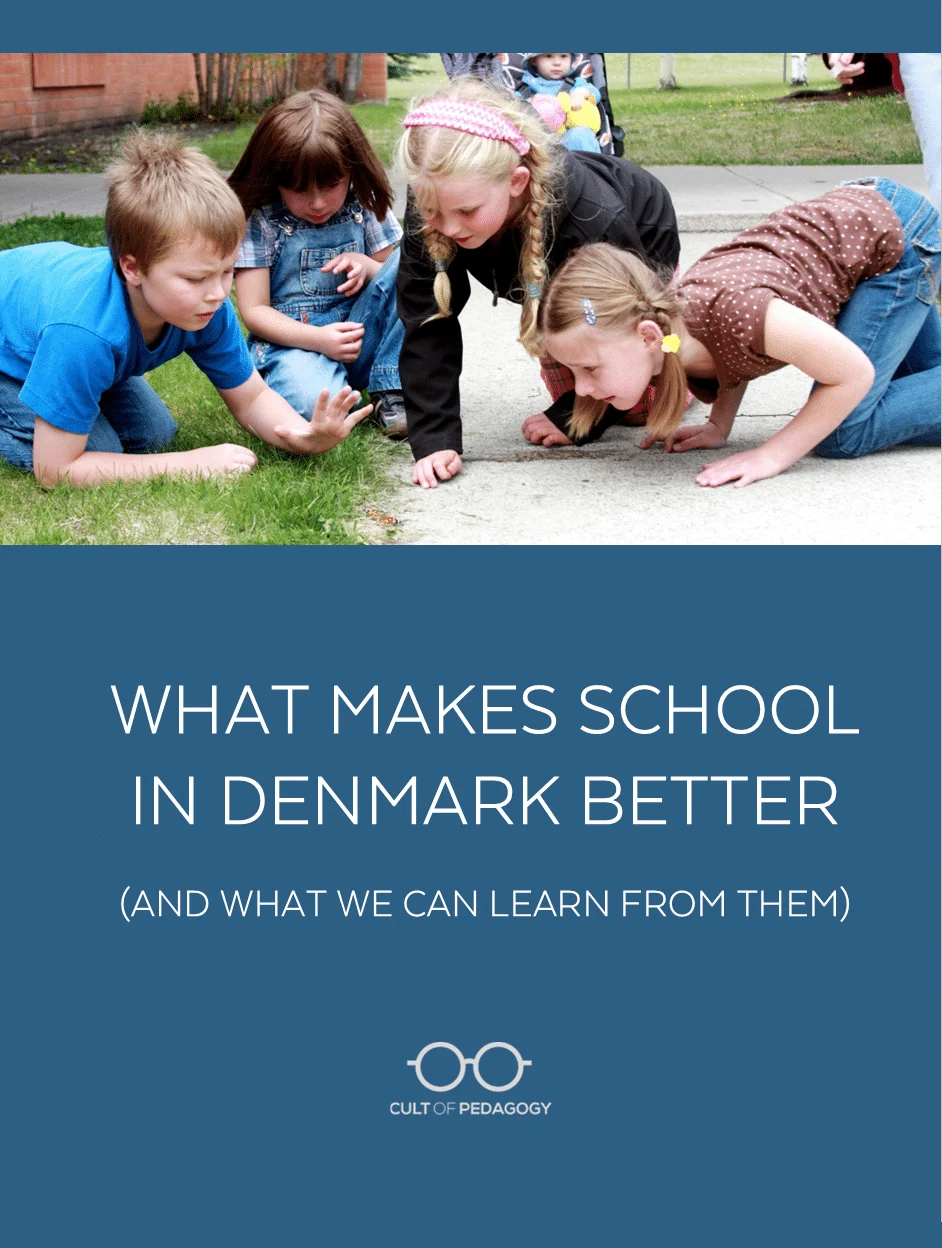
Danish schools treat autonomy as a developmental necessity rather than an earned privilege. Children are expected to manage their own materials, pack their backpacks, and navigate social spaces independently from an early age.
Academically, the pressure is deferred. Formal reading instruction does not begin until age seven (equivalent to first-grade milestones in the U.S.), and entering kindergarten without alphabet mastery is normal. Grades are withheld until seventh grade.

Moreover, physical movement and unstructured play are treated as non-negotiable tools for emotional regulation. Danish students go outdoors daily, regardless of weather conditions, and schools even establish supervised zones for robust physical play, such as designated snowball-fight areas. Homework in elementary grades is minimal to nonexistent, preserving evenings for family and community life.
Official Responses and Systemic Implications
While systemic shifts require policy-level consensus, individual school leaders and educators can implement transformative changes immediately, requiring zero additional budgetary outlays.
Bridging the Gap in U.S. Schools
- Reclaiming Teacher Agency: Administrators can pivot mandated curricula from rigid scripts to baseline starting points. By asking staff, "We must use this program, but how would you modify it?" and reviewing outcomes collaboratively, schools can restore professional judgment.
- Protecting Preparation Time: Educational leaders can ruthlessly protect teacher planning periods by eliminating non-essential meetings, banning drop-in interruptions, and grouping planning time into substantive blocks.
- Redefining Substitute Protocols: Schools can transition away from the crisis-driven sub-plan model by utilizing building-substitute pools equipped with pre-approved, flexible module activities.
- Embracing Strategic Slower-Paced Learning: Teachers can intentionally slow down their instructional pacing to prioritize deep comprehension over superficial curriculum coverage. As Ripp advises, educators should ask themselves what they would cut if forced to operate at "80 percent capacity"—and then eliminate those elements permanently.
- Cultivating Student Voice Over Compliance: Replacing superficial social-emotional learning (SEL) checklists with dedicated class meetings allows students to authentically navigate real-world interpersonal dynamics and community governance.
Implications for the Future of Public Education
The overarching lesson from Pernille Ripp’s cross-continental experience is that systemic improvement does not inevitably require massive financial investment. Educational systems are human constructs, designed by people, and therefore capable of being reshaped by people.
By stripping away the superfluous administrative weight, micro-management protocols, and high-stakes anxieties that currently plague American classrooms, schools can create environments that honor the professional dignity of educators and the holistic developmental needs of students. Ultimately, doing less may be the single most effective strategy for saving modern education.