From Working Hands to a New Horizon: The Rise, Fall, and Reimagining of Vermont’s Sterling College
By Higher Education Bureau
Published as part of The College Closure Files
Main Facts: The End of an Era in Craftsbury
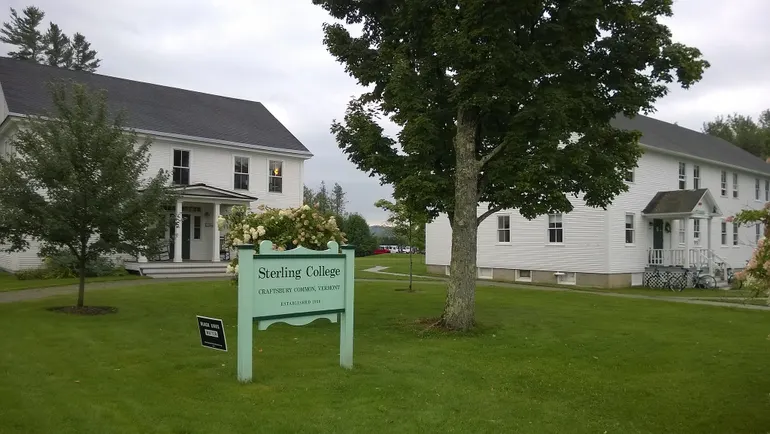
For more than half a century, Sterling College stood as a radical, defiant experiment in ecological education. Tucked away in the rugged landscape of Vermont’s remote Northeast Kingdom, this tiny private institution operated on a principle as simple as it was demanding: Working hands. Working minds.
However, the harsh realities of the twenty-first-century higher education landscape ultimately proved insurmountable. Following a devastating post-pandemic enrollment collapse that left the institution with a mere 57 students in the fall of 2024, Sterling College officially shuttered its doors following its spring 2026 term.
Yet, the closure of the physical college does not spell the absolute end of its ethos. In a rare twist for the current era of higher education closures, stakeholders, alumni, and former faculty are actively mobilizing to secure a second act. Through a pending campus acquisition by the Headwaters Community Trust and the nascent development of the Sterling Institute for Conservation and Community Leadership, the community is working to morph a traditional tuition-dependent college into a self-sustaining regional hub for ecological restoration, workforce development, and hands-on learning.
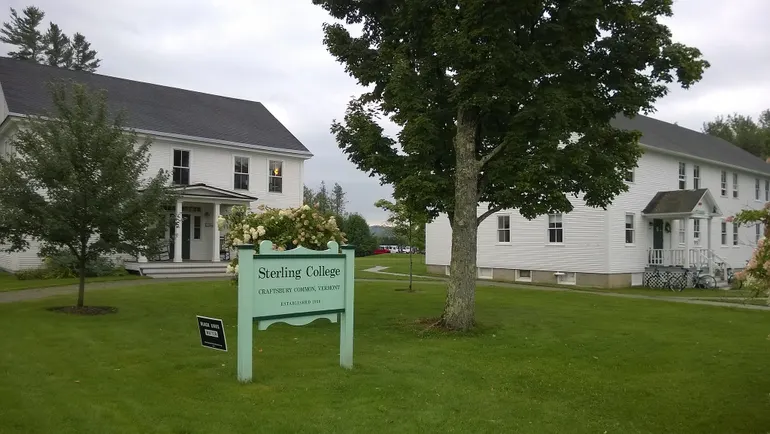
Chronology: From Boys’ Prep to Experiential Pioneer
The institution’s trajectory spans nearly seven decades, marked by radical pivots in response to shifting national demographics and educational philosophies.
1958–1970s: The Preparatory Roots
Before it ever granted a college degree, Sterling began in 1958 as a traditional boys’ preparatory school set deep within Craftsbury, Vermont. In its early decades, students wore coats and ties, debated French history, played soccer and chess, and undertook grueling backcountry expeditions. Beginning in the 1960s, these students participated in "Bounder"—an extended outdoor expedition through the Vermont backwoods designed to test endurance, resilience, and group problem-solving.
The 1970s–1983: The Higher Education Pivot
As the Baby Boomer generation moved past K-12 schooling, the prep school found itself in deep financial and enrollment distress, dropping to fewer than 20 students. Recognizing that the handwriting was on the wall, visionary educators stepped in. William Manning, recruited from Maryland, arrived to help steer a transformation. In 1974, the school launched the Grassroots Project—a one-year program centered on outdoor and environmental curricula. By 1983, the institution officially transitioned into a two-year, degree-granting college, with Manning serving as its first president.
1983–2023: The Golden Age of "Real Food" and Hard Labor
Under its new collegiate banner, Sterling turned its extreme geographic isolation into its greatest pedagogical asset. The campus became an immersive laboratory. Students routinely woke up early for campus chores, chopped wood, backpacked through frigid winters on snowshoes during the mandatory "Winter Expedition," and worked directly on the campus farm.
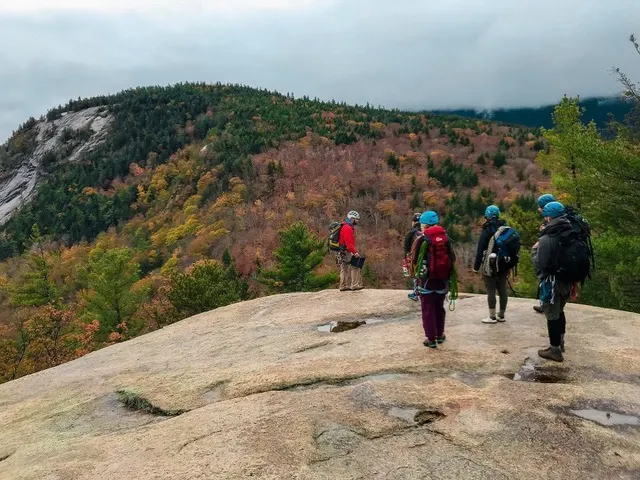
Sterling eventually became one of only ten federally recognized work colleges in the United States. In recent years, students were required to complete 80 hours of labor per semester. The campus kitchen and farm became legendary: students raised livestock, harvested vegetables with draft horses, washed carrots using a bicycle-powered washer, and cycled food waste back into farm compost. In 2023, in a desperate bid to streamline operations amid mounting financial strain, the college moved to a single-major model, offering degrees solely in environmental studies with specialized concentrations.
2024–2026: The Final Descent and Closure
Despite streamlining its academic offerings, the college could not outrun demographic trends and economic pressures. Enrollment tumbled precipitously from historical norms of roughly 150 students down to 78 in 2023, and bottoming out at 57 in the fall of 2024. In November 2025, college leadership officially announced that Sterling would close permanently after the spring 2026 term. By mid-September 2026, a sale agreement for the campus was forged with the Headwaters Community Trust, paving the way for a post-college future.
Supporting Data: Anatomy of a College Closure
A combination of national demographic shifts, geographical hurdles, and hyper-small operational scales squeezed Sterling College out of existence.
- Enrollment Freefall: Historically housing fewer than 150 students, Sterling’s headcounts fell off a cliff post-pandemic. Federal data shows enrollment dropped by 38.1% between 2021 and 2023 alone, plunging to 78 students, before hitting an unsustainable low of 57 students in fall 2024.
- The Regional Demographic Cliff: According to the Western Interstate Commission for Higher Education (WICHE), the pipeline of high school graduates in the Northeast fell 4% (to 612,000) between 2012 and 2024. Worse still, WICHE projects that Vermont will experience a staggering 15% decline in high school graduates by 2041 compared to 2023 levels.
- Thin Financial Margins: In fiscal year 2023, Sterling managed a razor-thin operating surplus of just over $300,000 while maintaining less than $2 million in cash and investments.
- Physical Assets: The campus features roughly 10 to 20 buildings laden with deferred maintenance, alongside a working farm, forest tracts, wetlands, a yurt, a climbing wall, and over 300 acres in the nearby Bear Swamp. During its final semester, the campus farm housed 18 ewes, 15 spring lambs, 80 egg-laying hens, and two cows—requiring intensive logistical efforts to find homes for the livestock.
Official Responses and Stakeholder Perspectives
The closure of Sterling College sent shockwaves through the niche world of environmental higher education, prompting profound reflections from leadership and consultants alike.

- William Manning, Former President and Institute Co-Founder:
Reflecting on the early days and the current transition, Manning emphasized that the spirit of the institution refuses to die. "The story I want to emerge from this is the launch of the institute," Manning stated. "All the statistics on the colleges that are closing, especially small colleges—well, guess what: This one isn’t." Speaking on the design of the upcoming Sterling Institute for Conservation and Community Leadership, he added: "This is not an ivory tower where we’re going to do 75% discounts on tuition and be underwater all the time." - Laura Spence, Dean of Academics:
Spence highlighted the unique, localized nature of Sterling’s educational model, noting how pandemic-era lockdowns devastated recruitment. "While it does look cool on paper, you don’t really get a sense of the place unless you visit," Spence said, dismissing virtual campus visits as "rubbish." On the college’s culinary identity, she added, "The kitchen at Sterling has really prided itself in what you could call real food since before that was fashionable." - Seth Hayden, Director of Operations:
Hayden underscored the crushing administrative burden placed on micro-institutions. "Our size has been definitely a weakness in some ways, where we’ve had to do all the same things that a normal institute of higher education has to do," Hayden explained, pointing out the disproportionate fixed costs of managing accreditation and financial aid for fewer than 100 students. - Larry Ladd, Higher Education Consultant:
Ladd analyzed the structural disadvantages faced by isolated, diminutive schools. "Decisions by a small number of potential students have huge impact, whereas they don’t at a big place," Ladd noted. He contrasted Sterling’s path with institutions like Maine’s Unity Environmental University, which successfully scaled up by pivoting heavily to online education—a route that would have fundamentally violated Sterling’s hands-on, land-based ethos. - Hannah Rushing, Former Director of Advancement:
Discussing the failed merger and partnership talks, Rushing noted the hostile macroeconomic climate for risk-taking in higher education. "We heard from all the schools it wasn’t the right time for them," she said. "It was a challenging external environment—not a great time to take that kind of risk."
Implications: Lessons from the Woods
The demise of Sterling College and its subsequent transformation offer critical lessons for the broader higher education sector as it navigates an era defined by demographic decline and institutional consolidation.
- The Perils of Hyper-Niche Isolation: While a distinct mission is frequently touted as the ultimate defense against market saturation, extreme geographic isolation combined with a micro-scale student body creates a fragile ecosystem. When campus visits are restricted—as seen during the COVID-19 pandemic—institutions lacking urban accessibility or robust digital alternatives have virtually no buffer to absorb recruitment shocks.
- The Burden of Fixed Administrative Overheads: Regulatory compliance, federal financial aid administration, and accreditation standards do not scale downward. Small colleges must carry the same administrative machinery as universities ten times their size, crushing profit margins and draining cash reserves.
- Pivoting Beyond Tuition Dependency: The architects of the incoming Sterling Institute for Conservation and Community Leadership are deliberately rethinking the funding model. By shifting away from a traditional tuition-reliant framework toward self-sustaining regional enterprises—such as local food service programs, ecological restoration contracts, and outdoor innovation hubs—they hope to forge a resilient blueprint for alternative education.
- Preserving Institutional Legacy Through Community Stewardship: Sterling’s story demonstrates that even when a traditional college fails financially, its underlying cultural and physical assets can be salvaged. Through the intervention of the Headwaters Community Trust, the campus real estate is poised to remain anchored to the community, proving that the death of a college does not necessarily mean the erasure of its community impact.
As the snow falls once more over Craftsbury’s Green Mountains, the legacy of Working hands. Working minds lives on, transitioning from an accredited degree-granting campus into a bold, community-driven experiment in regional resilience.