The Mechanical Advantage: Unlocking the Physics of Simple Machines
Simple machines represent the fundamental vocabulary of engineering. Long before the advent of the internal combustion engine or the microchip, human civilization relied on a core set of mechanical principles to manipulate the physical world. These tools—characterized by few or no moving parts—serve as the building blocks for every complex mechanism in existence today. By understanding the lever, the inclined plane, the wedge, the screw, the wheel and axle, and the pulley, we gain insight into the mechanics of our daily lives.
Defining Work: The Physics Behind the Effort
In casual conversation, "work" implies exertion or a professional task. In the realm of physics, however, work is a precise mathematical concept. It is defined as the product of force applied to an object and the distance over which that force is applied. Expressed by the formula W = Fd, work represents the transfer of energy.
When we attempt to move a heavy load, we are often limited by our own physical output. This is where simple machines provide a vital service: the mechanical advantage. Contrary to popular belief, simple machines do not reduce the total amount of work required to perform a task. Instead, they redistribute the effort, typically by extending the distance over which the force is applied. By spreading the required energy over a greater distance, these machines make the "impossible" feel manageable. For instance, hoisting an elevator to the top of a skyscraper would be impossible for a human alone; a pulley system, however, allows us to lift that immense weight by applying a steady, manageable force over a longer duration.
The Six Pillars of Mechanics: A Chronological Evolution
The study of these devices dates back to the Greek philosopher Archimedes, who famously remarked, "Give me a place to stand, and I shall move the world," referring to the power of the lever. Over millennia, the understanding of these machines has evolved from rudimentary survival tools to the foundational curriculum of modern STEM education.
- The Lever: A rigid beam pivoting on a fulcrum. Levers are classified into three categories based on the placement of the effort, load, and fulcrum.
- The Inclined Plane: A flat supporting surface tilted at an angle, used to raise objects with less force than a vertical lift.
- The Wedge: Essentially two inclined planes back-to-back, used to separate materials or hold objects in place.
- The Screw: An inclined plane wrapped around a cylinder, converting rotational motion into linear motion.
- The Wheel and Axle: A circular frame that rotates on a rod, drastically reducing friction during transport.
- The Pulley: A wheel with a groove for a rope, allowing for redirected force and mechanical advantage.
Empirical Demonstrations: Bringing Physics to Life
For educators and parents, the most effective way to teach these concepts is through hands-on experimentation. By moving beyond textbooks, students can observe the mechanical advantage in real-time.
Project 1: The DIY Pulley
By utilizing string and a simple spool, students can construct a basic pulley system. Beyond the assembly, the real lesson comes from a "load test." By attempting to lift a weighted bucket with and without the pulley, students witness the reduced exertion required by the machine, quantifying the force needed to move the same object.
Project 2: The Marble Run (Inclined Plane)
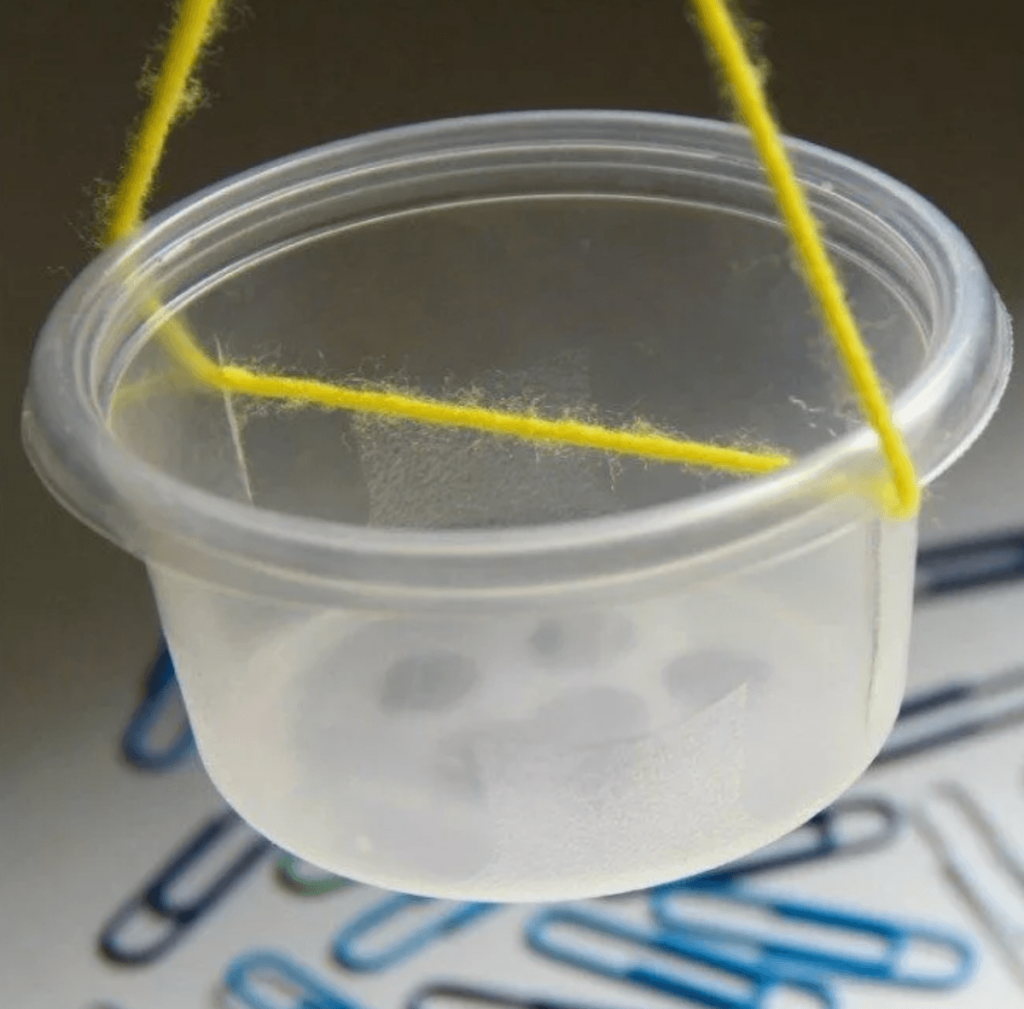
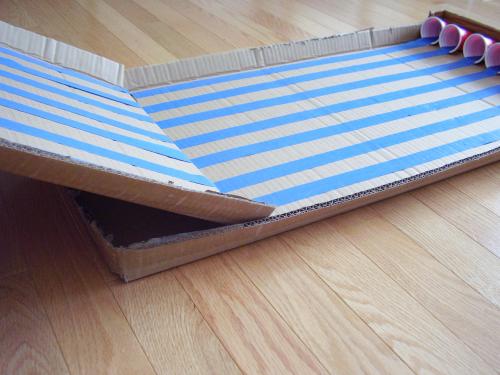
The inclined plane is best demonstrated through motion. A marble run serves as an ideal racecourse. By adjusting the angle of the incline, students can experiment with how gravitational potential energy is converted into kinetic energy, providing a visual representation of how elevation changes affect the force required to move a load.
Project 3: The Binder Clip Lever
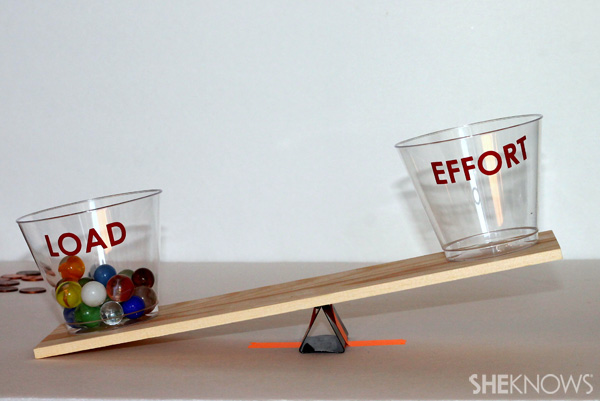
A lever is a perfect study in balance. Using a simple binder clip as a fulcrum and a ruler as the beam, students can test the "class" of the lever. By shifting the fulcrum closer or further from the load, they can observe how the effort required changes, teaching them the vital importance of pivot points.
Project 4: The Wedge and Play-Dough
While a real ax is dangerous, play-dough provides a safe, malleable medium to test the efficacy of the wedge. By attempting to "split" a log of dough with a flat hand versus a triangular wedge, the difference in efficiency is immediate. This illustrates how the wedge concentrates force along a narrow edge, allowing for easier penetration of materials.
Project 5: The Screw Mechanism
The screw is an essential component of construction. By comparing the effort required to push a nail into wood versus turning a screw, the distinction is clear. The screw’s threads act as a spiraled inclined plane, allowing for deeper, more secure penetration with significantly less force than direct, vertical impact.
Project 6: Recycled Wheel and Axle
Using cardboard tubes, straws, and bottle caps, students can build their own transport vehicles. This project demonstrates how the wheel and axle reduce the surface area contact, thereby lowering friction and making the transport of heavy items across the floor significantly more efficient.
Dispelling Common Misconceptions
Despite their simplicity, simple machines are frequently misunderstood. A primary misconception is that all levers operate with identical efficiency. In reality, the class of the lever dictates its mechanical advantage. A first-class lever (seesaw) balances weight, a second-class lever (wheelbarrow) increases force, and a third-class lever (tweezers) increases distance or speed.
Furthermore, there is a recurring confusion regarding the role of friction. While friction is often viewed as a hindrance to motion, it is actually a functional requirement for many simple machines. A wedge would slide out of a crack without the friction of its surface, and a wheel would spin uselessly on an axle without the friction required to grip the road. Friction is a tool, not an adversary.
Implications for Modern Engineering
The implications of mastering these basic concepts are profound. Every piece of heavy machinery, from the cranes on a construction site to the internal mechanisms of a wristwatch, is a compound machine—a sophisticated assembly of these six simple components.
When students engage in these projects, they are not merely playing; they are developing the "engineering mindset." They are learning to look at the world as a series of problems that can be solved through mechanical ingenuity. Whether they are designing a complex Rube Goldberg machine or simply attempting to move a heavy piece of furniture at home, these foundational principles provide the toolkit for innovation.
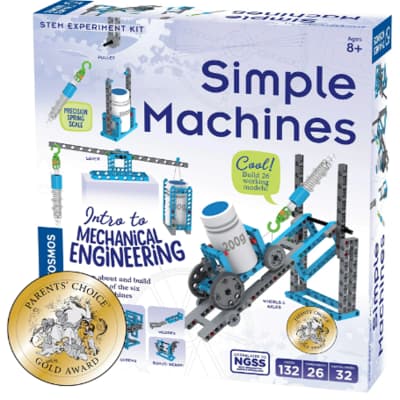
For those interested in exploring this further, there are numerous resources available. STEM subscription boxes and model-building kits are excellent avenues for sustaining curiosity, providing guided projects that deepen a child’s understanding of structural integrity and physical forces.
Conclusion: The Path Forward
The study of simple machines is an essential rite of passage for every aspiring scientist or engineer. By acknowledging that these tools do not "save" work but rather "reorganize" it, we gain a clearer understanding of how to optimize our own efforts.
As we encourage the next generation of builders, we must prioritize these hands-on experiences. By fostering a environment where kids can experiment, fail, and succeed with these six basic building blocks, we are equipping them with the knowledge to reshape the future. The simple machine is the starting point of all human progress; let us ensure our children have the tools—and the curiosity—to take that first step.