Mastering Complexity: How the Engineering Design Process Shapes Our World
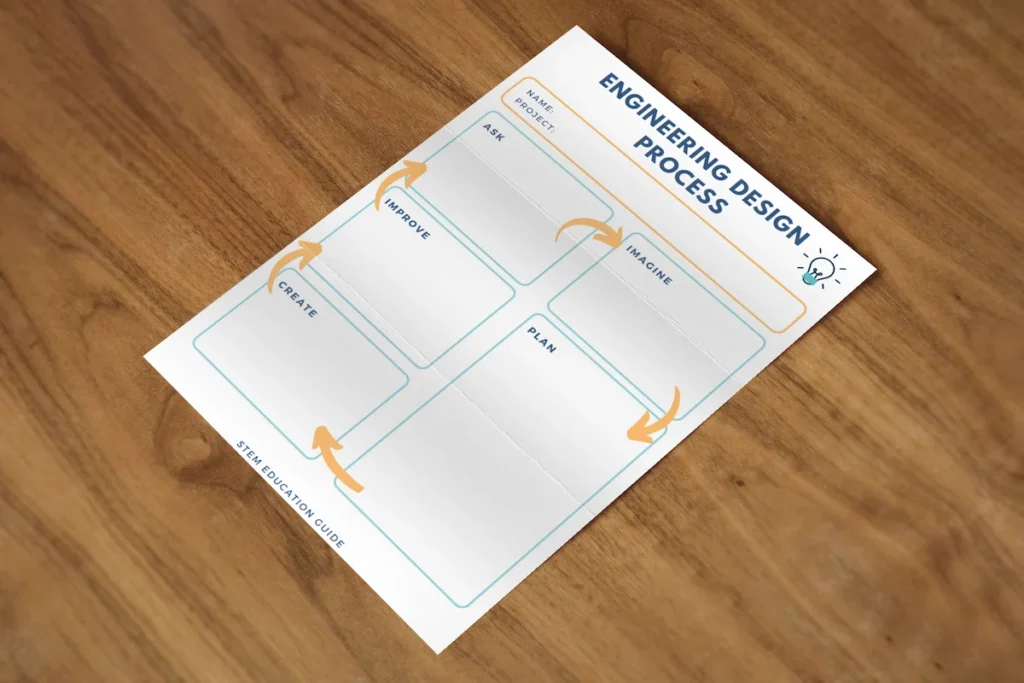
In the landscape of modern innovation, the transition from an abstract idea to a functional reality is rarely a straight line. Whether it is a software developer debugging a complex application, a civil engineer planning a bridge, or a home cook preparing a multi-course dinner, the underlying logic remains the same. This structured approach is known as the Engineering Design Process (EDP).
While often associated with high-tech laboratories and industrial manufacturing, the EDP is, at its core, a universal cognitive framework for problem-solving. By breaking down daunting challenges into manageable, iterative stages, engineers and everyday problem-solvers alike can navigate uncertainty and achieve optimal outcomes.
The Core Architecture of the Engineering Design Process
At its most fundamental level, the Engineering Design Process is an iterative cycle. Unlike a linear checklist that has a definitive "end," the EDP is designed as a circular loop. Once a solution is created and tested, the information gained through that experience flows back into the beginning of the process, prompting refinements and new innovations.
While academic literature may categorize the process into varying numbers of stages, most practitioners agree that it boils down to five essential pillars: Ask, Imagine, Plan, Create, and Improve. By understanding these steps, we move from passive observers of problems to active architects of solutions.
Chronology of Innovation: A Case Study in Everyday Engineering
To understand the EDP in practice, one need not look further than the family kitchen. Consider the common, yet often stressful, challenge of preparing a healthy dinner for a large family with varying dietary needs and limited time.
Step 1: Ask – Identifying the Constraints
The process begins with a clear definition of the problem. A hungry family, a cluttered kitchen, and limited inventory represent the "parameters" of the challenge. In engineering terms, this is the phase of requirements gathering. What is the goal? (A nutritious meal). What are the constraints? (Time, available ingredients, kitchen safety).
Step 2: Imagine – The Brainstorming Phase
With the constraints defined, the next stage is divergent thinking. Brainstorming allows for the exploration of multiple pathways. During this phase, families—much like engineering teams—weigh variables such as heat management (avoiding the oven on a hot day) and nutritional density (utilizing fresh garden vegetables). Research is also critical here; checking online resources for protein pairings ensures that the proposed solution is grounded in knowledge rather than just guesswork.
Step 3: Plan – Structuring the Solution
Once the brainstorming settles, the team must move to convergence. This involves creating a list of materials (potatoes, zucchini, kidney beans, etc.) and developing a strategy. In this case, the decision to prepare three separate stews to accommodate different protein preferences serves as a "modular design," allowing for greater flexibility and satisfaction.

Step 4: Create – Implementation
The "Create" phase is where the design meets reality. Division of labor is key here. Just as a project manager assigns tasks to specialized teams, the family delegates roles: kids handle soft vegetables, while adults manage complex or dangerous cutting tasks. This collaborative effort transforms the plan into a tangible product.
Step 5: Improve – The Iterative Feedback Loop
Perhaps the most critical stage is improvement. Real-world execution often reveals hidden flaws—such as the unintended "mushiness" of tofu or the aesthetic failure of staining the entire soup pink with beets. Engineers perform "testing and evaluation" at this stage. By removing the beets or stir-frying the tofu separately to ensure texture, the team is performing a "design pivot." This iterative refinement is the hallmark of professional engineering.
Supporting Data: The Distinctions Between Science and Engineering
A common point of confusion for students and the general public is the overlap between the Scientific Method and the Engineering Design Process. While both share a reliance on empirical observation and logical deduction, their ultimate goals diverge significantly.
The Scientific Method: Seeking Truth
The Scientific Method is a pursuit of knowledge. It follows a rigorous path:
- Observation/Question
- Hypothesis
- Experimentation
- Data Analysis
- Conclusion/Reporting
Scientists seek to understand how the natural world operates. When a scientist studies the biochemical properties of beet juice, they are gathering data to understand why that juice may improve blood flow or lower blood pressure. Their "product" is information—a paper or a book that contributes to the collective human knowledge base.
The Engineering Design Process: Seeking Utility
Conversely, the Engineering Design Process is a pursuit of utility. Engineers apply the findings discovered by scientists to create new technologies, products, or systems. An engineer takes the knowledge about beet juice—its health benefits, its viscosity, and its chemical reactions—and designs a product, such as a shelf-stable, palatable, and portable beet-based health supplement. Their "product" is a physical solution to a human need.
Official Perspectives: The Role of Engineering in Modern Education
Educational organizations and STEM advocacy groups increasingly emphasize that the EDP is a vital "soft skill" as much as it is a technical one. By teaching students to view failure not as an endpoint, but as a data point within the "Improve" stage, educators are fostering a growth mindset.
When children use worksheets to map out the EDP during a simple task like cooking, they are internalizing the ability to handle frustration. They learn that if the tofu is mushy, the solution is not to quit, but to modify the thermal application. This is the exact same logic required to fix a broken satellite or design a more fuel-efficient engine.

The integration of these processes into early education serves as a bridge, preparing the next generation to tackle global challenges—from climate change to resource management—using a disciplined, repeatable, and logical framework.
Implications: Why the EDP Matters Beyond the Laboratory
The implications of adopting the Engineering Design Process in our daily lives are profound. When we apply the EDP to our personal or professional lives, we effectively reduce the anxiety associated with "messy" problems.
Overcoming "Design Paralysis"
Many people suffer from design paralysis—the fear that a solution must be perfect on the first attempt. The EDP removes this pressure by acknowledging that the first draft is rarely the final version. By embracing the circular nature of the process, we grant ourselves the permission to prototype, learn, and iterate.
Enhancing Resource Management
As demonstrated in the kitchen scenario, applying a structured design process leads to better resource management. By assessing what is currently available (the fridge/pantry) before embarking on a new "build," we minimize waste. This principle of sustainability is a cornerstone of modern industrial engineering and is equally applicable to sustainable household management.
Fostering Cross-Disciplinary Collaboration
The EDP also emphasizes the importance of communication. In the kitchen, the family had to agree on ingredients and roles. In the professional world, this translates to cross-functional teams where designers, developers, and stakeholders must align on a vision. Without this communication, the "Create" phase results in fragmentation rather than a cohesive solution.
Conclusion: A Continuous Loop of Growth
The Engineering Design Process is more than just a pedagogical tool; it is a philosophy of resilience. It teaches us that every challenge—whether it is an ingredient that doesn’t blend well or a global crisis that requires a new technological approach—is simply an opportunity to refine our understanding and improve our outcomes.
As we look toward the future, the complexity of our problems will only increase. By mastering the cycle of asking, imagining, planning, creating, and improving, we equip ourselves with the most powerful tool available: a systematic way to turn our ideas into reality. Whether you are cooking a meal or designing the next great technological breakthrough, remember that the process is the path. Keep the circle moving, keep learning from your iterations, and never stop improving.