Beyond Phonics: Educators Spotlight Executive Functioning and Brain-Based Strategies to Revolutionize Writing Instruction

By Educational Insights Desk
Published March 2026
Main Facts
In contemporary educational discourse, literacy dominates policy debates, curriculum overhauls, and professional development seminars. However, these high-stakes conversations are glaringly lopsided. While educators, policymakers, and parents fiercely debate phonics methodologies, fluency drills, and reading comprehension frameworks, the mechanics of writing instruction are routinely sidelined.
This oversight ignores a fundamental pedagogical reality: reading and writing are deeply intertwined, reciprocal cognitive acts.

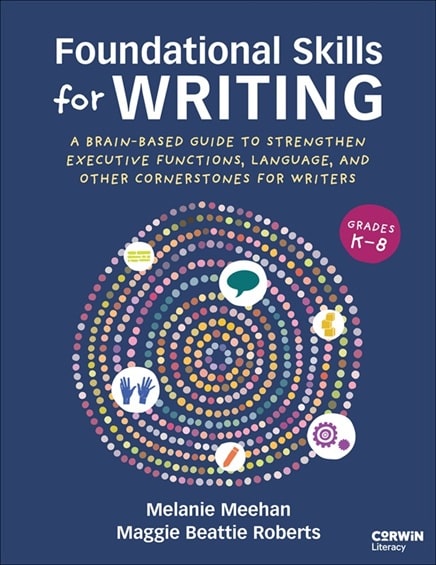
Seeking to bridge this critical gap, former curriculum coordinator Melanie Meehan and veteran literacy consultant Maggie Roberts have released a groundbreaking new book: Foundational Skills for Writing: A Brain-Based Guide to Strengthen Executive Functions, Language, and Other Cornerstones for Writers. Published earlier this month, the text shifts the educational paradigm away from rote memorization and mechanical correction, focusing instead on what the brain actually undergoes when a child is asked to write—and identifying the neurological roadblocks that impede them.
To make these neurological concepts actionable for busy classrooms, Meehan and Roberts introduce a system called "Minute Moves." These are quick, flexible, 60-to-90-second activities designed to be slipped into classroom transitions, utilized as warm-ups, or practiced casually. By targeting three core foundational domains—transcription skills, oral language, and executive functioning—these minute exercises aim to automatize foundational writing mechanics, thereby freeing up crucial cognitive bandwidth for higher-level composition.
Chronology
The journey toward Foundational Skills for Writing spans decades of combined classroom experience, diagnostic tutoring, and curriculum design.
- The Classroom Foundations (Early 2000s–2010s): Maggie Roberts spent nearly two decades working directly inside middle school classrooms, supporting teachers as they navigated student writing anxieties and stagnant syntactical development. Concurrently, Melanie Meehan served as a curriculum coordinator, observing systemic gaps in how districts approached literacy. Both educators noted a recurring pattern: students consistently struggled with writing not because they lacked imagination, but because the mechanical act of putting pen to paper overwhelmed their cognitive processing limits.
- The Post-Pandemic Literacy Shift (2020–2024): As national literacy debates intensified following pandemic-related learning disruptions, Meehan and Roberts observed that the renewed focus on foundational reading skills (the "Science of Reading" movement) frequently failed to incorporate writing. Meehan transitioned to opening an in-person writing center, where she diagnostic-tested students and noted how deeply spelling, syntax, and executive dysfunction intersected.
- Book Conception and Research (2024–2025): Drawing on cognitive science, linguistic research (including insights from spelling expert Rebecca Treiman), and executive function frameworks, Meehan and Roberts synthesized their classroom trials into a cohesive manuscript. They focused on isolating bite-sized interventions that did not require massive curriculum overhauls.
- Publication and Public Launch (March 2026): Foundational Skills for Writing officially hit shelves, accompanied by high-profile practitioner interviews, including an in-depth appearance on the widely followed Cult of Pedagogy podcast hosted by Jennifer Gonzalez. The release marked a timely intervention in ongoing discussions regarding modern literacy instruction.
Supporting Data and Pedagogical Frameworks
The core premise of Meehan and Roberts’ work is that writing is one of the most complex cognitive tasks a human brain can perform. It requires the simultaneous orchestration of motor skills, linguistic retrieval, working memory, and emotional regulation. When any of these foundational pillars are underdeveloped, the brain’s cognitive load capacity maxes out, resulting in avoidance, behavioral friction, or minimalist, low-effort writing.
The authors categorize these foundational skills into three primary pillars, operationalized through eight signature "Minute Moves":
Pillar 1: Transcription and Spelling Mechanics
Traditional spelling instruction relies heavily on weekly memorization tests followed by rapid forgetting. Meehan and Roberts advocate for morphological awareness—helping students see words as living, connected networks.

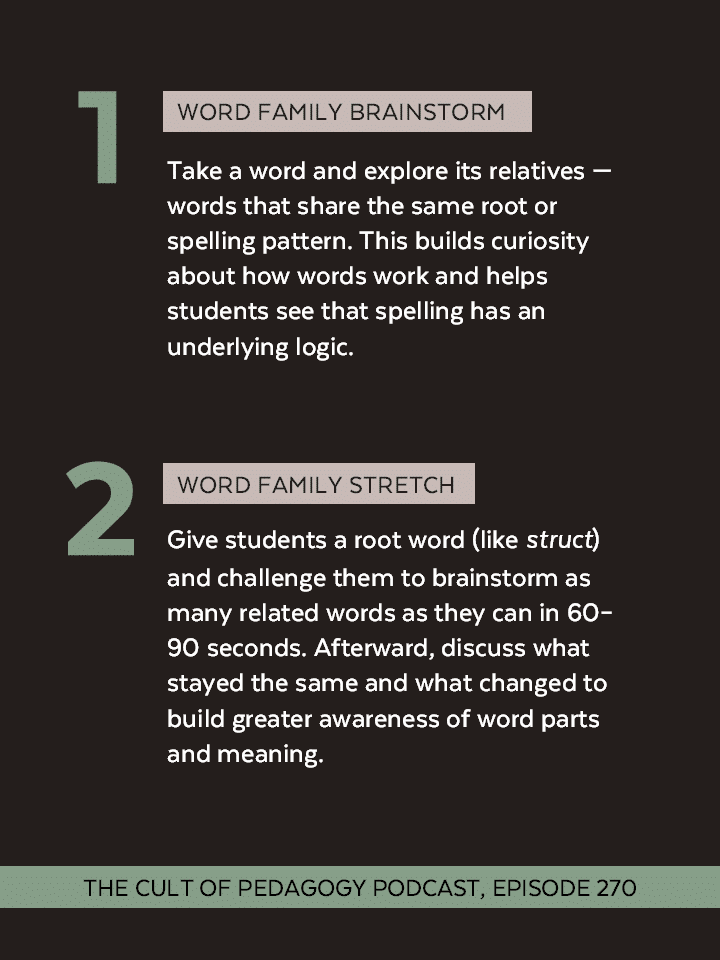
- Word Family Brainstorm: Grounded in research by Rebecca Treiman, this strategy connects seemingly difficult spelling patterns to conceptual "twoness." For instance, rather than memorizing two, to, and too in isolation, students link the number two to twin, twine, and twenty. Similarly, complex words like decision are unlocked by tracing their Latin root (meaning "to cut") to decide, incision, and scissors.
- Word Family Stretch: Students are given a bound or free root—such as struct ("to build") or form—and given 60 seconds to generate related words (structure, destruction, construct). A subsequent debrief analyzes how prefixes and suffixes alter meaning, internalizing structural patterns across academic vocabulary.
- Prefix Swap: Focusing explicitly on morphological shifts, students alter base words by swapping prefixes (e.g., reform, transform, inform, deform). This proves especially powerful for multilingual learners, who frequently recognize Latinate and Greek roots (such as bene or mal) from their native languages, accelerating English vocabulary acquisition.
Pillar 2: Sentence Construction and Syntax
Choppy, unsophisticated sentences are rarely a sign of poor creativity; they are usually a symptom of underdeveloped syntactic stamina.
- Sentence Scramble: Instructors write component words or phrases of a sentence on individual index cards. Students physically manipulate the cards to reconstruct the sentence, engaging in metacognitive dialogue about punctuation, word order, and grammatical constraints. Teachers can introduce complexity by adding distractor words or removing punctuation.
- Sentence Expander: Moving away from dry grammatical jargon like "subject" and "predicate," Meehan encourages framing sentences around "doers" and "doings." Starting with a kernel sentence (The cat purrs), students ask targeted questions (Which cat? What color? Where? When?) to systematically build a rich, complex sentence before experimenting with syntactical rearrangement.
- Sentence Combining: Hailed by Roberts as a high-impact, low-barrier intervention, students take bare-bones sentences (My cat is orange, My cat is big) and merge them using conjunctions and targeted word harvesting. This accelerates the natural transition from rudimentary prose to sophisticated, precise syntax.
Pillar 3: Executive Functioning and Cognitive Flexibility
Writing requires profound cognitive flexibility: the ability to shift perspectives, alter plans mid-stream, and evaluate alternative paths.
- "What’s Another Way?": Students take an existing sentence and intentionally alter its architecture—starting with a dependent clause, substituting nouns with pronouns, or aggressively condensing the text. Meehan stresses that teaching students the explicit vocabulary of cognitive flexibility empowers them to view writing as an intentional craft where length is not automatically superior to impact.
- New Angle: Zooming out to the narrative level, students retell familiar stories, historical events, or media clips from alternative character perspectives. Utilizing tools like Pixar’s short film Snack Attack, students practice dual-perspective writing. This builds empathy and perspective-taking capacities that extend far beyond the language arts classroom.
Official Responses and Expert Perspectives
The educational community has responded to Foundational Skills for Writing with cautious optimism, particularly as educators seek practical solutions to post-pandemic learning gaps without burning out instructional staff.

Speaking on the challenges of modern literacy reform, Melanie Meehan emphasized the emotional and cognitive payoff of naming neurological processes directly for students:
"When you start naming that as cognitive flexibility for kids, that’s exciting to them. There’s something genuinely empowering about being told you’re practicing a sophisticated cognitive skill—especially for students who have struggled to see themselves as capable writers."
Maggie Roberts underscored the urgency of moving beyond isolated skill drills toward syntactic synthesis:
"Sentence combining is a really high-impact, quick way for kids to graduate from writing a series of simple sentences to ones that are more syntactically complex, interesting, and precise."
Furthermore, experts have praised the "Minute Moves" model for addressing teacher burnout. Rather than demanding exhaustive curricular overhauls or expensive software packages, these brief, high-frequency interventions fit seamlessly into dead time—such as hallway transitions, morning warm-ups, or the final minutes before lunch—making brain-based literacy instruction accessible to educators operating under severe time constraints.
Implications
The publication and reception of Foundational Skills for Writing carry profound implications for the future of K-12 education:
- Rebalancing the Literacy Debate: The text challenges the false dichotomy of the "Reading Wars." By demonstrating that transcription, oral language, and executive functioning form the bedrock of both decoding and encoding, Meehan and Roberts provide a blueprint for a unified, comprehensive literacy framework.
- Equitable Access for Multilingual Learners: By emphasizing morphological awareness—teaching roots, prefixes, and suffixes—the strategies outlined in the book offer an immediate bridge for English Language Learners and students from diverse linguistic backgrounds, leveraging cognates to build rapid vocabulary depth.
- Cultivating Democratic Empathy: Beyond technical writing proficiency, the executive functioning exercises—specifically perspective-taking activities like the "New Angle" strategy—position writing instruction as a vehicle for social-emotional learning and civic empathy. In an increasingly polarized society, the ability to inhabit another person’s viewpoint on the page is an indispensable democratic skill.
- Redefining Remediation: Traditional remediation often subjects struggling writers to punitive, isolated handwriting or spelling drills. By embedding these skills into rapid, gamified "Minute Moves," educators can support neurodiverse learners and students with executive dysfunction without stigmatizing them or draining their enthusiasm for storytelling.
As districts nationwide continue to re-evaluate their literacy pipelines, Foundational Skills for Writing serves as a timely reminder that exceptional writing instruction is not born from harsh grading or endless worksheets, but from intentional, brain-based scaffolding that honors the complex cognitive choreography of the human mind.