Beyond the Classroom: Seven Washington Districts Launch AI-Powered Transformation of Data Infrastructure
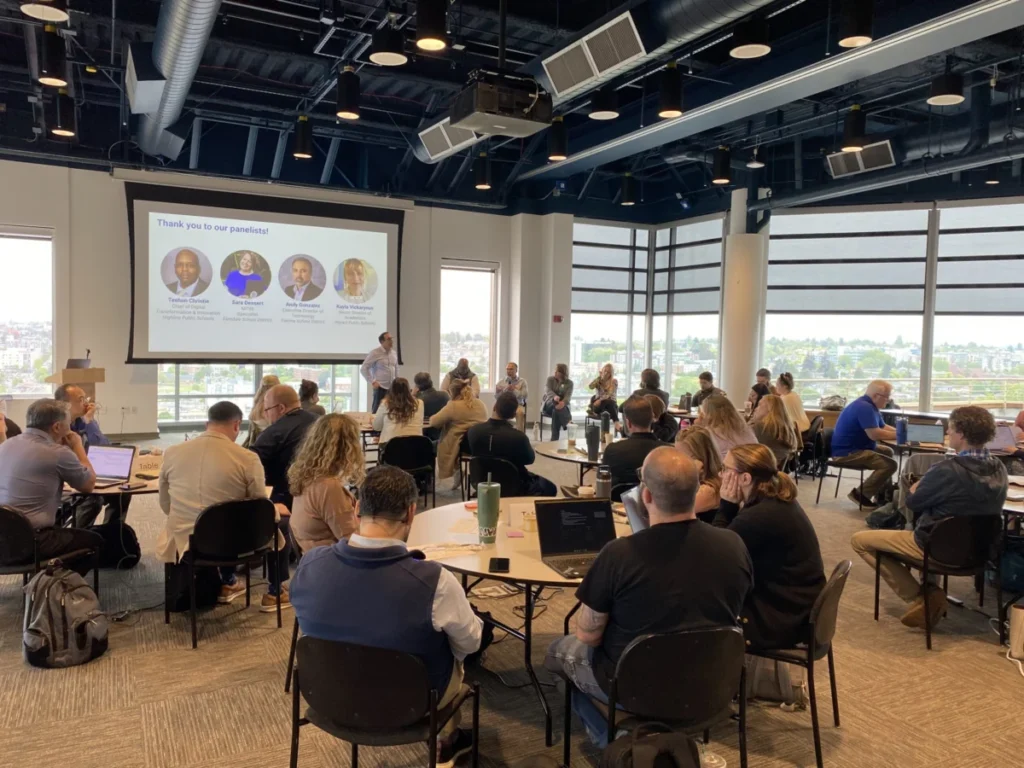
In a significant leap forward for educational technology, seven Washington school districts have been selected to spearhead a pioneering initiative aimed at integrating Artificial Intelligence (AI) into the "hidden" architecture of K-12 schooling. While the global discourse on AI in education has remained largely fixated on classroom-level applications—such as personalized tutoring bots or generative writing assistants—this new phase of the Washington K-12 Innovation with AI Community of Practice shifts the focus toward the complex operational challenges that dictate school effectiveness.
The Center on Reinventing Public Education (CRPE), in strategic partnership with Education First and StrategicEDU, has announced that Ferndale School District, Highline Public Schools, Impact Public Schools, Kalama School District, Sequim School District, Summit Public Schools, and Yakima School District will lead this ambitious effort. Backed by grant funding from the Bill & Melinda Gates Foundation, these districts are tasked with moving beyond the hype of AI to address systemic inefficiencies that have historically hindered student success.
The Core Mandate: Fixing the "Siloed" System
For decades, school districts have struggled with the "data silo" problem. Student information regarding attendance, behavioral trends, standardized testing, and social-emotional well-being often exists in disparate, incompatible databases. This fragmentation prevents administrators and educators from forming a cohesive picture of a student’s journey, often leading to delayed interventions or missed opportunities for instructional support.
The selected Washington districts will receive innovation grants of up to $45,000 to pilot AI-enabled solutions specifically designed to bridge these gaps. By leveraging AI to untangle complex data systems and improve interoperability, these districts aim to create a "connected" data ecosystem. The goal is to provide school leaders with actionable, real-time insights that can inform instructional decisions while maintaining rigorous standards for student data privacy and security.
Chronology: From Readiness to Implementation
The current initiative is not an overnight experiment; it is the culmination of a deliberate, multi-phase strategy aimed at responsible technology adoption.
Phase I: The Readiness Foundation
Earlier this year, participating districts underwent an intensive readiness assessment. During this phase, leadership teams evaluated their existing data infrastructure, identified internal technical debt, and established governance frameworks necessary to handle AI tools. This period was characterized by a focus on "human-in-the-loop" systems, ensuring that technology serves as an augmentative tool rather than a replacement for professional judgment.
Phase II: The Pilot Launch (Current)
With the launch of the second phase this school year, the focus has shifted from planning to execution. Over the next twelve months, the seven districts will begin deploying AI-integrated solutions. This stage involves:
- Customized Coaching: District teams are working closely with experts from Education First and StrategicEDU to navigate the technical and cultural hurdles of AI implementation.
- Capacity Building: Through a series of planning sessions and peer-to-peer learning forums, districts are sharing technical strategies and ethical guardrails.
- Iterative Development: As pilot projects go live, districts are mandated to document outcomes—both successes and failures—to refine the technology’s application.
Future Outlook: Scaling and Policy
Looking ahead, the project aims to distill these local experiences into a broader "playbook" for the state of Washington and beyond. CRPE is tracking the progress of these districts in parallel, ensuring that the lessons learned are not lost to individual district silos. The ultimate objective is to provide a roadmap for other state departments of education to replicate these successes, backed by evidence-based policy recommendations.
Supporting Data: Why Operations Matter
Why focus on the backend of schooling? The answer lies in the limitations of the status quo. Data from the initial phase of this community of practice suggests that educators spend an estimated 20% to 30% of their non-instructional time attempting to manually reconcile data across platforms.
By automating the ingestion and analysis of this data, AI can potentially:
- Reduce Response Time: Identify students at risk of chronic absenteeism weeks earlier than traditional quarterly reporting.
- Enhance Resource Allocation: Direct support services toward schools and cohorts that show the greatest correlation between specific interventions and academic growth.
- Ensure Equitable Access: Use predictive modeling to highlight equity gaps in advanced course enrollment or disciplinary practices, which are often obscured by aggregated school-wide data.
These districts represent a diverse cross-section of Washington, ranging from large urban school systems to smaller rural districts. This variety is intentional; it allows researchers to understand how AI-enabled infrastructure performs under vastly different resource constraints, technical landscapes, and student demographics.
Official Responses and Perspectives
The collaboration between CRPE, Education First, and StrategicEDU is viewed by industry observers as a model for "responsible innovation."
The Role of Coaching
"AI implementation is not just a software deployment; it is an organizational transformation," noted a lead consultant from StrategicEDU. "Our work with these seven districts is focused on building the human capacity to govern these tools. We are teaching district staff how to ask the right questions of their data and how to build ethical protocols into the very code of their operations."
CRPE’s Strategic Vision
CRPE has positioned itself as an observer and synthesizer. By studying these districts in real-time, the organization aims to move the conversation from "whether" districts should use AI to "how" they can do so securely. Their research will focus on the "indicators of success," providing a framework that other districts can use to justify future AI investments to their school boards and communities.
The Foundation’s Investment
The Gates Foundation’s support highlights a growing trend among philanthropic organizations to move away from funding "flashy" classroom gadgets and toward the "unseen" infrastructure that keeps public systems afloat. By funding the modernization of district data systems, the initiative seeks to solve the fundamental problem of scalability in public education.
Implications: Building a Sustainable Future
The implications of this project are far-reaching. If these seven districts can successfully demonstrate that AI can securely and reliably integrate siloed data, the results could catalyze a significant shift in state-level policy.
Defining Ethical AI in Public Schools
The most critical implication is the creation of a standard for responsible AI. As these districts document their workflows, they are establishing best practices for data privacy, consent, and transparency. This is vital in an era where public distrust of tech companies is high. By keeping the governance of these tools within the hands of public educators, the initiative serves as a firewall against the unchecked commercialization of student data.
Shaping Future Investments
For state legislators and local school boards, the data generated by this project will serve as a vital tool for budgetary decision-making. Instead of speculative spending on unproven ed-tech products, decision-makers will have access to validated, scalable models. The findings are expected to shape future AI investments, ensuring that tax dollars are directed toward tools that have proven their utility in complex, real-world school environments.
The Path Forward
As the districts move through the current school year, the education community remains watchful. The "Community of Practice" model—which prioritizes collaboration over competition—is an unconventional approach in the often-siloed world of educational technology. However, it may be exactly what is needed to navigate the complexity of the AI age.
For those interested in the progress of these initiatives, a webinar is scheduled for Friday, September 18th. The session will provide an overview of the early lessons learned during the first phase of this work, offering a glimpse into how the seven districts are tackling the challenges of AI implementation. Click here to register for the upcoming webinar.
In the final analysis, this project is not merely about the adoption of a new technology; it is about the modernization of the educational institution itself. By untangling the data that holds back student progress, Washington’s seven pilot districts are laying the groundwork for a more efficient, equitable, and data-informed future for K-12 education. Whether this experiment will successfully scale across the nation remains to be seen, but for now, it represents the most sophisticated effort to date to align the promise of AI with the practical, messy, and urgent needs of the American classroom.