Navigating the Parent-Teacher Conference: A Comprehensive Guide to Maximizing Collaboration Between Home and School

By Education Desk
Updated and Expanded for the Modern Academic Year
Main Facts: The Anatomy of a Parent-Teacher Conference
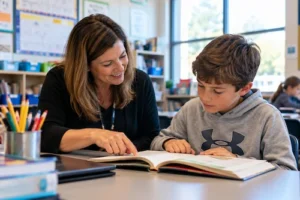
For generations, the biannual parent-teacher conference has remained a cornerstone of the K-12 educational experience. Scheduled typically once in the fall and once in the spring, these brief, high-stakes meetings—usually lasting between 10 and 20 minutes—serve as a critical bridge between a child’s home life and their academic environment. Far from being a punitive measure or a disciplinary hearing reserved for struggling students, these conferences are universal check-ins designed by schools to engage every family.
At its core, a parent-teacher conference is a collaborative team meeting. Parents and guardians bring an intimate, lifelong understanding of their child’s personality, emotional triggers, and home habits. Educators, meanwhile, offer a specialized lens into how that same child performs within a structured peer group, responds to academic challenges, and navigates institutional expectations.
When approached correctly, these short interactions go far beyond the standard metrics of a report card. They provide a nuanced portrait of a student’s social-emotional health, academic trajectory, and day-to-day engagement. Despite their brevity, these meetings offer an invaluable opportunity to catch minor academic or behavioral hurdles before they compound into major obstacles, establishing a unified front that reassures the student of their support system.
Chronology: A Step-by-Step Timeline for Success
To extract maximum value from a 15-minute time slot, intentional planning must occur across three distinct phases: before, during, and after the conference.
Phase 1: Pre-Conference Preparation (The 20-Minute Blueprint)
Preparation is the single greatest determinant of a successful conference. About a week before the scheduled meeting, parents should initiate a dialogue with their child. In a relaxed setting—such as during a car ride or over dinner—ask open-ended questions like, "What do you think is going really well in school right now?" or "Is there anything you wish your teacher understood better about you?"
Reviewing recent progress reports, graded assignments, and the school’s online grade portal allows parents to pinpoint specific areas of curiosity or concern. Crucially, parents should write down their top three questions to ensure critical topics are not lost in the flow of conversation. Finally, logistics must be handled well in advance: confirming the time, testing virtual links if the meeting is remote, and securing childcare for younger siblings.
Phase 2: During the Conference (Executing the Agenda)
When the meeting begins—whether in-person, over the phone, or via video stream—time management is essential.
- Arrive on time: Given the back-to-back scheduling of modern educators, tardiness directly cuts into vital discussion time.
- Prioritize top concerns: Lead with the two or three most pressing questions regarding academics or social well-being.
- Listen actively: Allow the teacher to present their assessment of strengths and areas for growth before jumping to conclusions.
- Take precise notes: Record specific action items, agreed-upon timelines, and recommendations.
- Clarify next steps: Ensure both parties walk away with a shared understanding of what happens next.
Phase 3: Post-Conference Follow-Through
The utility of a conference is measured entirely by what happens after it concludes. Within 24 to 48 hours, parents should speak with their child, leading with the positive feedback shared by the educator. If constructive criticism was given, frame it as a team effort rather than a punishment.
Next, immediate implementation of agreed-upon home strategies—such as establishing a 15-minute nightly reading window or monitoring homework binders—must begin. Finally, sending a brief, two- or three-line thank-you email to the teacher solidifies the partnership, creating a written paper trail of the agreed-upon action plan.
Supporting Data: The Impact of Family-School Partnerships
Educational research consistently underscores the profound impact of active parental engagement on student achievement. According to data compiled by educational advocacy organizations and school districts nationwide, students whose families engage regularly in school partnerships exhibit:
- Higher Grade-Point Averages (GPAs): Regular communication between home and school correlates directly with steady improvements in core subjects like mathematics and reading comprehension.
- Improved Attendance Records: Students are more likely to value school attendance when they see their parents actively investing time in their educational environment.
- Enhanced Social-Emotional Resilience: Children who witness cooperative problem-solving between their parents and teachers demonstrate lower levels of school-related anxiety and better peer conflict-resolution skills.
- Higher Graduation Rates: Long-term studies tracking cohorts from elementary through high school show that consistent parental involvement significantly decreases dropout rates, particularly in under-resourced districts.
Despite these proven benefits, institutional surveys reveal that up to 30% of parents skip conferences due to scheduling conflicts, language barriers, or lingering intimidation stemming from their own negative historical experiences with the educational system. Modern school districts are increasingly addressing these data points by offering flexible scheduling, virtual options, and multilingual interpretation services.

Official Responses and Educator Perspectives
From the perspective of educators and school administrators, the parent-teacher conference is one of the most vital professional responsibilities of the academic calendar. Teachers frequently report that the quality of home-school collaboration dictates the classroom climate.
"When parents view us as allies rather than adversaries, the entire dynamic shifts," notes Dr. Elena Vance, a veteran middle school principal and educational consultant. "We do not host these conferences to grade the parents; we host them to build a comprehensive map of the child. A teacher sees a student for roughly six hours a day, surrounded by twenty-something peers. Parents see them in moments of exhaustion, vulnerability, and growth that we never witness. We need that puzzle piece to help them thrive."
Administrators emphasize that receiving a conference request should never trigger anxiety. "If a teacher reaches out for an unscheduled meeting outside of regular conference weeks, it usually means they want to intervene early—before a small misunderstanding snowballs," says Marcus Brody, a high school administrator. "It is an act of proactive care, not a reprimand."
Furthermore, teachers appreciate when parents bring specific, solution-oriented questions rather than general complaints. Educators advise framing inquiries around support and strategy: "What specific tool can I use at home to reinforce this math concept?" rather than "Why is my child struggling in this class?"
Special Situations and Adaptability
Not every family fits the traditional mold of a 20-minute, in-person conference. Modern educational systems have evolved to accommodate diverse family structures, language needs, and learning accommodations.
Student-Led Conferences
Increasingly popular in upper elementary and middle schools, student-led conferences place the child in the driver’s seat. The student walks their parents through a portfolio of their work, articulates their own academic goals, and evaluates their behavior, while the teacher acts primarily as a facilitator. This method fosters profound accountability and self-reflection in the student.
Virtual and Phone Conferences
Technology has broken down geographical barriers for working parents and separated co-parents. When participating virtually, experts recommend testing all hardware (cameras, microphones, and internet connections) at least ten minutes prior. Finding a quiet, distraction-free space ensures that full attention can be dedicated to the dialogue.
Language Access and Interpretation
Under civil rights guidelines and educational policies, parents whose primary language is not English possess the legal right to language assistance during school meetings. Families are strongly encouraged to request a professional interpreter or translated materials through the school office well in advance of the conference date. Relying on young children to interpret sensitive academic information should be avoided to ensure accuracy and prevent emotional stress for the student.
Navigating IEPs and 504 Plans
For students receiving specialized instruction through an Individualized Education Program (IEP) or a 504 plan, the standard parent-teacher conference serves as a valuable progress check. Parents should use this time to verify whether day-to-day accommodations are being effectively implemented. However, formal adjustments, additions, or structural overhauls to these legal plans require a separate, dedicated ARD (Admission, Review, and Dismissal) or IEP team meeting.
Implications for the Future of Education
The shifting nature of parent-teacher conferences carries deep implications for the future of student development. As educational institutions move toward holistic learning models—placing equal weight on mental health, digital literacy, and traditional academics—the traditional lecture-style conference is giving way to dynamic, collaborative dialogues.
When parents and teachers master the art of the conference, the implications extend far beyond the classroom walls. Children absorb the collaborative ethos modeled by the adults in their lives, learning how to receive constructive feedback gracefully, set actionable goals, and advocate for their own needs. Ultimately, the 15-minute parent-teacher conference serves as a micro-cosm of a healthy educational ecosystem: one where communication is transparent, expectations are shared, and the child remains at the absolute center of every decision.