The Great Magnetic Tile Debate: Finding Quality Without the Premium Price Tag
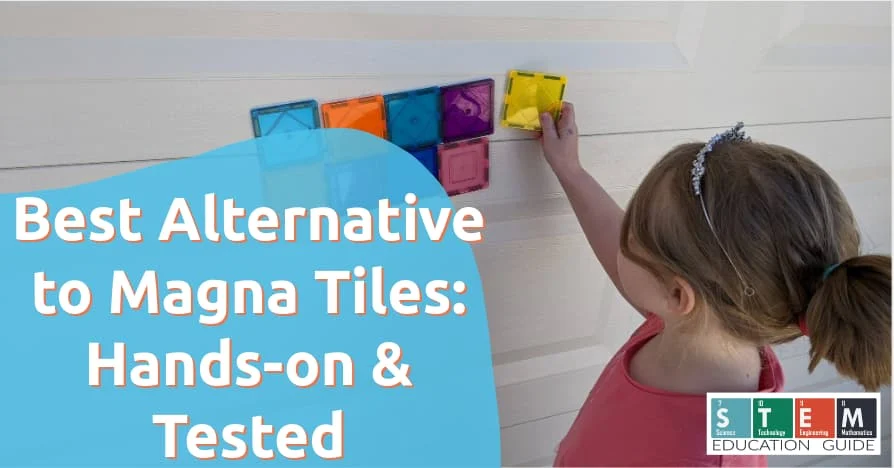
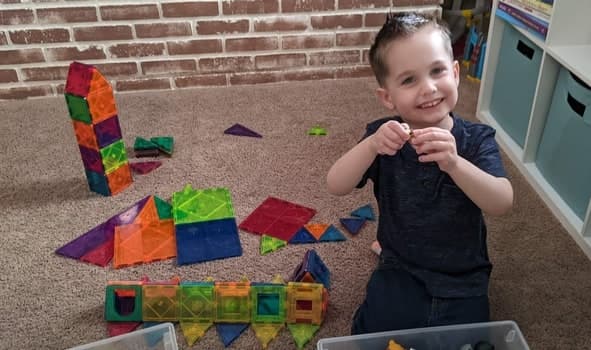
In the modern playroom, few toys have achieved the iconic status of Magna-Tiles. Celebrated for their simplicity, durability, and ability to foster open-ended STEM (Science, Technology, Engineering, and Mathematics) learning, these colorful, magnetic geometric shapes have become a staple in households worldwide. They transform the floor into an architectural playground, allowing children to build everything from soaring towers to intricate, sprawling cityscapes.
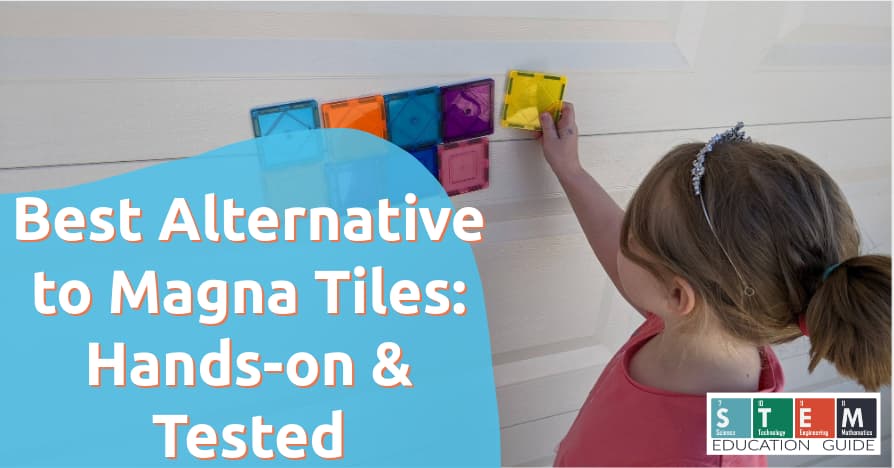
However, there is one significant hurdle that parents consistently face: the price. As the demand for high-quality, screen-free educational toys grows, families are increasingly looking for ways to expand their collections without breaking the bank. This pursuit of the "best alternative to Magna-Tiles" has sparked a massive market of competitors, leading many to wonder: are the name-brand tiles truly superior, or are you simply paying for the logo?
Main Facts: The Anatomy of a Magnetic Tile
At their core, magnetic tiles are simple instruments of play. They consist of high-quality ABS plastic frames housing internal magnets that allow the pieces to snap together at various angles. Because they rely on geometry, they provide an intuitive introduction to spatial reasoning, physics, and structural engineering.
The primary argument for the premium price of name-brand tiles—like the original Magna-Tiles—is the rigorous safety testing they undergo. Because these toys are often handled by toddlers and young children, they must be free of BPA, phthalates, and lead. Furthermore, the magnets must be securely encased within the plastic to prevent the dangerous ingestion of small, powerful magnets.
While brand-name manufacturers set the gold standard for these safety protocols, many secondary brands have successfully entered the market by meeting, and sometimes exceeding, the same international toy safety standards. This has democratized the market, offering families a variety of price points for what is essentially the same mechanical function.
A Chronological Evolution of Magnetic Construction
The history of the magnetic tile is a story of innovation that began in the late 1990s.
- 1997: The Pioneer: The concept of the magnetic tile was introduced to the market, revolutionizing how children interact with 3D construction. Magna-Tiles were the first to market, establishing a firm foothold and setting the aesthetic and functional benchmark for all future iterations.
- The Early 2000s: Market Dominance: For the first decade, the "original" tiles remained largely unchallenged, allowing the company to solidify its pricing structure. Because they were the sole provider, they dictated the market value, which remains high to this day.
- The 2010s: The Rise of Competitors: As patents expired and manufacturing technology became more accessible, new players entered the scene. Brands like PicassoTiles, Cossy, and others began offering sets that were not only compatible with the original brand but often featured more vibrant colors and specialized shapes (like curves and arches) that the pioneers had not yet introduced.
- The Present Day: The Era of Compatibility: Today, we are in a "golden age" of construction toys. Because most of these tiles adhere to similar geometric dimensions, cross-brand compatibility is the norm, allowing families to mix and match sets to create massive, diverse building projects.
Supporting Data: Quality vs. Cost
To understand why the price gap exists, one must look at manufacturing overhead and brand equity. Research from independent consumer organizations and the Good Housekeeping Institute suggests that while the original tiles are indeed high-performing, the "off-brand" market is not necessarily inferior.
Durability and Rigidity
In comparative "stress tests"—where tiles are dropped from heights or pried apart—original Magna-Tiles often display a slightly higher level of structural rigidity. The plastic casing is dense, and the internal magnet placement is precise. However, for the average user, these differences are marginal. Many budget-friendly alternatives use similar high-grade ABS plastic, meaning they can withstand years of daily play just as effectively as the more expensive sets.
Transparency and Aesthetics
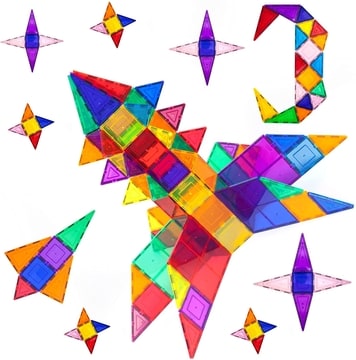
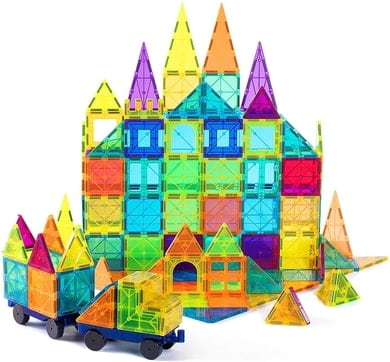
One of the most common complaints about some cheaper knock-offs is a lack of color clarity. However, brands like Cossy Kids have made a name for themselves by emphasizing high-transparency plastic. When sunlight hits these tiles, they cast vibrant, stained-glass-like shadows, which many parents find superior to the more muted tones of older, original sets.
Examining the Top Alternatives
If you are looking to expand your collection, the following brands have established reputations for reliability and value:
1. PicassoTiles: The Gold Standard for Value
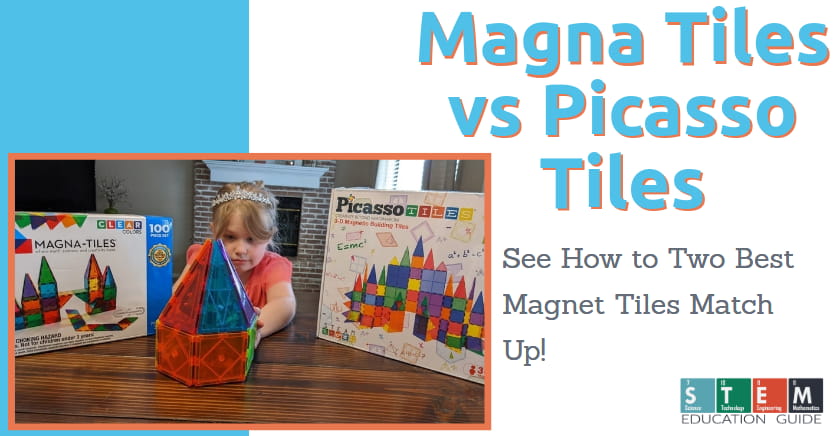
PicassoTiles consistently ranks at the top of our reviews for the best alternatives. Having tested them alongside both Magna-Tiles and Connetix, we found they hold up remarkably well under the pressures of heavy use. Their catalog is extensive, ranging from basic starter packs to specialized sets that include cars, wheels, and unique geometrical add-ons. They serve as an excellent base for any collection.
2. Cossy Kids: Illuminating Play
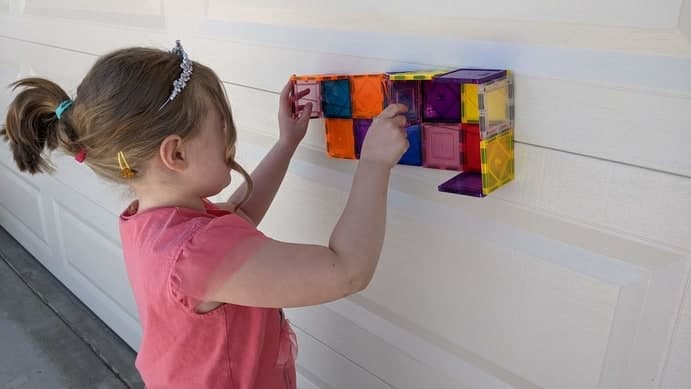
Cossy is frequently highlighted for its vibrant, highly transparent tiles. They offer a brilliant aesthetic that makes them a favorite for window-side play. Beyond their looks, they are durable and come with very clear age-appropriateness labels, helping parents navigate which sets are safe for toddlers versus those intended for older, more precise builders.
3. Shapemags: The Literacy Twist
Shapemags stand out by integrating "Stile Mags"—small magnetic overlays featuring letters and images. This bridges the gap between construction play and early literacy. By allowing children to label their buildings or create magnetic messages, they transform a standard engineering toy into a multidisciplinary learning tool.
4. Magblock: The Architectural Specialist
Magblock sets are unique in that they often include "architectural" pieces like doors, window frames, and archways in their base sets. While other brands might require you to purchase expensive add-on packs to get these items, Magblock includes them, providing more "bang for your buck" and allowing children to build more complex, realistic structures from the start.
Official Responses and Pricing Strategies
A frequent question among parents is: "Do these ever go on sale?"
The reality for the original brand is that they maintain a strict pricing policy. Retailers are generally required to adhere to a specific price floor set by the manufacturer. This is a common strategy for premium brands to maintain their perceived value in the marketplace. Consequently, you are unlikely to find deep discounts on original sets.
Conversely, off-brand manufacturers operate in a hyper-competitive space, often utilizing aggressive pricing and frequent promotional bundles on platforms like Amazon. For families operating on a budget, this is a distinct advantage. The "official" stance of the industry is that safety is paramount, and parents should always check for third-party safety certifications (such as ASTM or EN71 standards) regardless of the brand’s price point.
The Implications for Creative Play
Perhaps the most significant takeaway is that the "best" toy is the one that stays out of the box and on the floor. The benefits of magnetic tile play—developing fine motor skills, understanding geometric relationships, and practicing patience—are not proprietary to any single brand.
A Pedagogical Approach
To get the most out of your collection, whether you have a mix of brands or a single set, consider these engagement tips:
- The Weight Test: Ask your child to compare the magnetic strength of a tile from one set against another. This encourages scientific observation.
- Light Exploration: Experiment with light sources to see how different brands and colors interact with shadows.
- Engineering Challenges: Use free online resources or "play challenges" to build specific structures, such as the tallest possible tower or a bridge that can hold a specific weight.
Conclusion
The magnetic tile market has evolved from a single-brand monopoly into a thriving ecosystem of high-quality, accessible options. While original Magna-Tiles hold the historical prestige and offer a slight edge in absolute durability, the alternatives available today provide an incredible level of quality that satisfies the needs of even the most dedicated young builders.
By choosing reputable alternatives like PicassoTiles, Cossy, or Magblock, parents can double or triple the size of their children’s building collections for the price of a single premium set. In the end, the value of these toys is found not in the brand name printed on the box, but in the hours of imaginative, open-ended play that unfolds on the living room rug. Whether you choose to invest in the original or branch out into these capable alternatives, you are providing your child with one of the most effective and enduring tools for STEM education available today.