The Architecture of Innovation: Mastering the Engineering Design Process
In the world of professional engineering, complexity is the default state. Whether constructing a skyscraper, developing a microchip, or optimizing a municipal water system, engineers do not rely on guesswork. Instead, they employ a rigorous, iterative framework known as the Engineering Design Process (EDP). This systematic, step-by-step methodology is the backbone of modern innovation, providing a universal language for problem-solving that moves from abstract challenges to functional, tangible solutions.
While the process is often presented as a linear sequence, its true power lies in its circular nature. Once a solution is created, it is tested, refined, and improved, often restarting the cycle to achieve even greater efficiency. By applying this methodology, engineers—and even curious families in their own kitchens—can break down daunting obstacles into manageable, solvable tasks.
The Core Anatomy of the Engineering Design Process
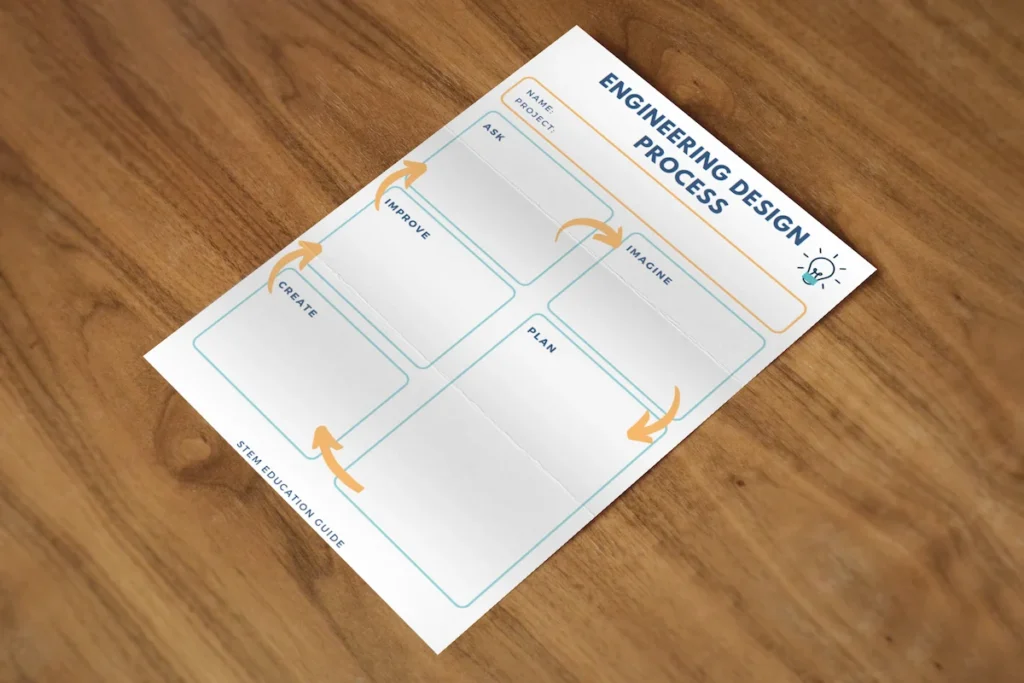
At its fundamental level, the Engineering Design Process is comprised of five essential phases. While different industries may expand these into ten or twelve stages, they almost always map back to these primary pillars:
- Ask: Identifying the problem and defining constraints.
- Imagine: Brainstorming potential solutions and conducting preliminary research.
- Plan: Selecting the best approach and drafting a blueprint for action.
- Create: Developing a prototype or initial iteration.
- Improve: Testing the result and iterating based on performance data.
To understand how this operates in real-time, one need not look further than the daily logistics of home management—specifically, the challenge of preparing a family meal under time and resource constraints.
A Case Study in Engineering: The "Dinner Dilemma"
Consider a family of six, all managing conflicting schedules. The objective: Provide a nutritious dinner using limited pantry resources without excessive prep time. By applying the EDP, the family transitions from chaos to a structured, successful outcome.
Step 1: Ask – The Problem Definition
The process begins with a clear definition of the challenge. The "client" (the hungry family) identifies that there is no plan for dinner. They evaluate their constraints: limited time, specific inventory in the fridge and freezer, and the need for a meal that satisfies diverse dietary preferences. This is the "Ask" phase—the moment of objective setting.
Step 2: Imagine – Research and Brainstorming
The family moves into the brainstorming phase. They rule out roasted meat because the oven would overheat the kitchen, and they recognize the need to utilize garden vegetables before they spoil. They research protein-rich alternatives that pair well with garden produce, shifting from passive hunger to active design.
Step 3: Plan – Drafting the Blueprint
Planning involves organization. The family lists specific ingredients—potatoes, carrots, zucchini, turnips, and green beans—and selects three protein sources: kidney beans, tofu, and eggs. Because consensus on a single dish is impossible, they design a "parallel processing" plan: three separate pots of stew, each utilizing a different protein, allowing for customization.

Step 4: Create – Implementation
The "build" phase involves task delegation. Younger family members handle manual tasks like shelling peas, while adults manage complex tasks requiring high-precision cutting. Each team manages their specific "prototype" (the stew pot), adding base liquids, spices, and their chosen protein.
Step 5: Improve – Iteration and Optimization
In engineering, the first prototype rarely works perfectly. During the cooking process, the teams encounter "bugs": the tofu breaks down into mush, and the red beets bleed dye, turning the entire stew a uniform pink. The engineers (the family) pivot: they remove the beets to preserve the aesthetic, and a parent stir-fries the tofu separately to create a crust before adding it to the pot. They test the consistency of the kidney beans, realize they are undercooked, and extend the heating time. Through these adjustments, the final product is optimized for taste and texture.
Scientific Method vs. Engineering Design Process
A common point of confusion is the distinction between the Scientific Method and the Engineering Design Process. While both rely on logic and evidence, their goals and outcomes differ significantly.
The Scientific Approach: Understanding Reality
The Scientific Method is a tool for discovery. It starts with a question, leads to a hypothesis, and relies on experimentation to gather data. The goal of the scientist is to understand how the world works. Scientists publish their findings in peer-reviewed journals, adding to the global body of knowledge.
The Engineering Approach: Building Reality
The Engineering Design Process is a tool for creation. Engineers start with a problem and apply existing scientific knowledge to develop a product, a system, or a technology. The goal of the engineer is to build something that functions within specific constraints. Instead of writing research papers, engineers produce functional solutions—technologies, infrastructure, or consumer goods.
The Intersection: A Case of Beet Juice
The distinction becomes clear when examining the humble beet. A scientist might use the Scientific Method to study the chemical composition of beet juice, concluding that specific molecules (nitrates) aid in blood flow and blood pressure regulation. This research is vital for public health.
The engineer, however, takes that data and applies it to a real-world problem. If the goal is to improve athletic performance or heart health, the engineer might design a process to extract, stabilize, and package concentrated beet juice for mass consumption. The scientist explains the why; the engineer executes the how.
Supporting Data: Why Iteration Matters
The "Improve" stage is perhaps the most critical, yet most overlooked, aspect of the EDP. Data from engineering firms suggests that the cost of correcting a design flaw during the planning phase is exponentially lower than correcting it after a product has reached the market.

| Phase of Design | Relative Cost of Change |
|---|---|
| Concept/Ask | 1x |
| Planning | 5x |
| Prototyping/Create | 20x |
| Final Production | 100x |
This table illustrates why the family’s decision to remove the beets early in the "Improve" phase was a success. Had they waited until the meal was served to address the aesthetic issue, the "customer satisfaction" (family morale) would have plummeted.
Official Perspectives on STEM Integration
Educational experts and industry leaders have long advocated for the integration of the EDP into standard school curricula. Dr. Helena Vance, a lead researcher in STEM pedagogy, notes: "The Engineering Design Process is not just for future civil engineers. It is a cognitive framework. When a student learns to iterate—to see a failure not as a dead end, but as a data point—they develop the resilience necessary for any high-level career."
The inclusion of these practices in primary and secondary education aims to move students away from the "right or wrong answer" mentality and toward a "solution-oriented" mindset. By downloading and utilizing structured design worksheets, students learn to document their brainstorming, track their adjustments, and communicate their design choices.
Implications for Future Innovation
As we move further into a technological age defined by artificial intelligence and automated systems, the ability to follow a rigorous design process is becoming a foundational skill. We are seeing these processes applied to everything from climate change mitigation (designing carbon capture systems) to space exploration (iterating on rocket reusability).
The lessons from the "Dinner Dilemma" are universal. Whether you are a student learning to build a bridge out of popsicle sticks, or a lead engineer at an aerospace firm, the steps remain the same:
- Ask the right questions.
- Imagine beyond the obvious.
- Plan for contingencies.
- Create with precision.
- Improve through relentless, data-driven iteration.
By mastering this cycle, we transform from mere observers of the world into its architects. The Engineering Design Process is more than a strategy; it is the engine of human progress, ensuring that every challenge is treated as an opportunity for advancement. As we continue to face global hurdles, the willingness to iterate—to fix the mushy tofu and remove the bleeding beets—will define the success of our future generations.