Empowering the Next Generation: How Harshman Middle School Students Are Bridging the Digital Divide
November 16, 2021 – In an era where digital literacy is as fundamental as reading and writing, a transformative partnership between Net Literacy and the classrooms of Harshman Middle School is proving that the next generation is not just consuming technology—they are mastering it. Under the guidance of educator Dr. Caren Lettofsky, middle school students are gaining hands-on STEM (Science, Technology, Engineering, and Mathematics) experience while simultaneously tackling one of the most pressing social issues of our time: the digital divide.
Through a structured program of technical instruction, refurbishment, and community service, these students are reclaiming retired hardware and transforming it into vital educational tools for their peers.
Main Facts: A Cycle of Service and Skill
The core of this initiative is a unique circular model of philanthropy. Net Literacy, a non-profit organization dedicated to increasing digital inclusion, provides the raw materials—donated computers that have reached the end of their corporate or institutional lifecycles.
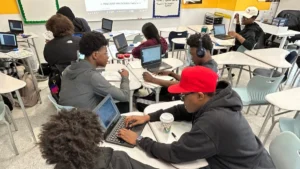
Dr. Lettofsky’s class acts as the hub for this transformation. Students are tasked with the rigorous process of troubleshooting, hardware repair, software configuration, and system optimization. Once a computer is brought back to full functionality, it does not go to a warehouse or a generic charity; instead, it returns to the Harshman Middle School community. The beneficiaries are classmates whose families lack the financial resources to provide a home computer.
This program accomplishes three critical objectives:
- STEM Proficiency: Students move beyond textbook theory to gain practical, high-demand technical skills.
- Digital Inclusion: By placing computers directly into the hands of students who need them, the program ensures that no child is left behind in a homework environment that increasingly requires internet access.
- Civic Responsibility: The students learn that technology is not just for recreation or personal use; it is a tool for community empowerment.
Chronology: The Journey of a Refurbished Machine
To understand the impact of this program, one must follow the journey of a single computer through the Harshman Middle School pipeline.
Phase 1: The Procurement (Pre-Semester)
The process begins with Net Literacy’s logistics network. As companies upgrade their hardware, they donate their legacy machines to Net Literacy. These devices are often high-quality business-grade machines that are "obsolete" for corporate needs but perfectly capable of handling word processing, educational software, and web browsing for students.
Phase 2: The Classroom Lab (November 2021)
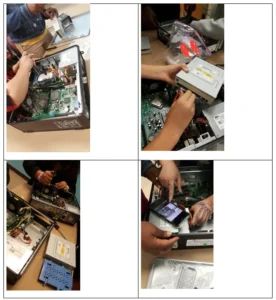
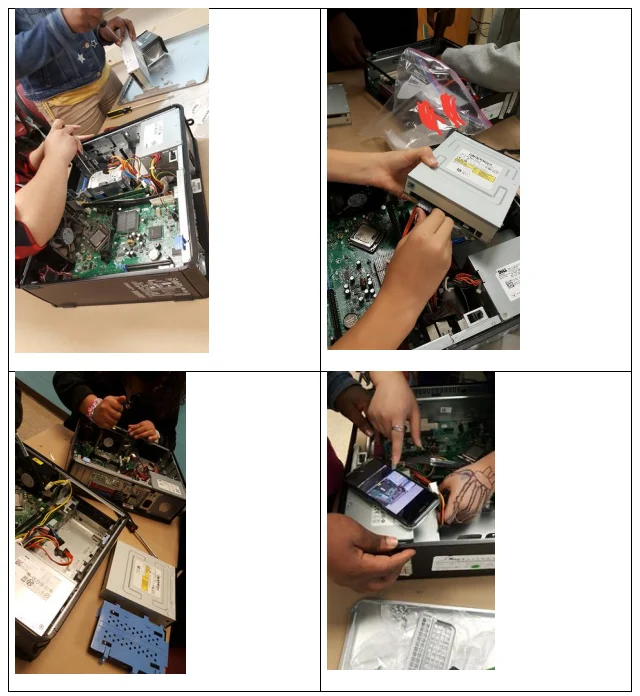
In the months leading up to the end-of-year milestone, Dr. Lettofsky leads her students through a structured curriculum. During this phase, students act as "IT technicians." They disassemble chassis, replace faulty hard drives, install updated operating systems, and perform stress tests to ensure the units can withstand the rigors of daily academic use.
Phase 3: Community Identification
Simultaneously, the school identifies students who face a "homework gap." In many cases, these students rely solely on library hours or mobile devices to complete assignments. By matching these students with a fully functioning PC, the school provides them with a "digital anchor" for their studies.
Phase 4: Delivery and Impact (December 2021 – January 2022)
The culmination of the work is the distribution of the devices. For the recipients, these machines are more than just hardware; they are symbols of equity. For the student technicians, the letters of gratitude received from their peers serve as a powerful testament to the value of their labor.
Supporting Data: The Reality of the Homework Gap
The necessity of this program is underscored by national and local data regarding the digital divide. According to reports from the Pew Research Center, roughly one-third of households with children ages 6 to 17 and an annual income below $30,000 a year do not have a high-speed internet connection at home. Even more alarming, many of these families lack a traditional computer, relying exclusively on smartphones.
While mobile devices are excellent for communication, they are often insufficient for the technical requirements of middle school curriculum, which includes coding, complex research, and document formatting.
Key Metrics for Success:
- Technical Output: Each semester, the program successfully restores dozens of units that would have otherwise been destined for an e-waste facility.
- Environmental Impact: By refurbishing rather than recycling, the program prevents heavy metals and plastics from entering landfills, aligning with modern sustainability goals.
- Educational Outcomes: Internal surveys from Harshman Middle School indicate that students with home access to computers report higher completion rates for long-term projects and increased comfort with software interfaces.
Official Responses: The Human Element
The impact of this initiative is best captured through the voices of those involved. The letters sent to Net Literacy by the students of Harshman Middle School are poignant reminders of the project’s human scale.
"I never thought I could fix something so complicated," wrote one student technician. "Knowing that a friend of mine will be able to do their history project from their own kitchen table because of the work I did today makes all the hours of troubleshooting worth it."
Dr. Caren Lettofsky has long championed this approach, noting that technical education is most effective when it is tied to an emotional outcome. "When students understand that the motherboard they are installing is the difference between a classmate feeling excluded or included in the classroom, their engagement level skyrockets. It moves the curriculum from abstract to essential."
Net Literacy officials have praised the Harshman model as a gold standard for school-based technology programs. By decentralizing the refurbishment process, they have empowered local teachers to become agents of change within their own districts.
Implications: Building a Resilient Future
The partnership between Harshman Middle School and Net Literacy serves as a blueprint for schools across the nation. As we look toward the future of education, several implications arise from this model:
1. The Shift to "Circular Education"
Educational institutions are beginning to realize that they possess the infrastructure to address their own students’ needs. By integrating IT departments and STEM classrooms with community outreach, schools can create self-sustaining support systems that do not rely entirely on erratic funding or government grants.
2. Redefining STEM Education
For too long, STEM has been viewed through the lens of high-cost robotics or expensive software subscriptions. The Harshman model proves that the most valuable STEM lessons involve "appropriate technology"—using existing, accessible resources to solve real-world problems. This teaches students the value of durability, repairability, and resource management.
3. Closing the Equity Gap
The "Digital Divide" is often discussed in abstract terms of infrastructure and fiber-optic cables. However, as the Harshman project demonstrates, the divide is also about individual agency. When a student is empowered to fix their own tools, they develop a sense of technical self-efficacy that will serve them throughout their careers.
4. Environmental Stewardship
With the global rise of e-waste, the refurbishment model promoted by Net Literacy provides a sustainable path forward. By extending the lifecycle of every computer by even two to three years, the program demonstrates that technological progress does not have to come at the cost of environmental degradation.
Conclusion
The efforts at Harshman Middle School under the direction of Dr. Caren Lettofsky are a shining example of what can be achieved when community passion meets institutional support. By transforming the classroom into a laboratory for good, these middle schoolers are not just repairing hardware; they are repairing the social fabric of their school.
As we move further into the 21st century, the ability to navigate, maintain, and repurpose technology will remain a defining trait of successful students. Through the continued generosity of donors and the tireless work of students and educators alike, the digital divide is being closed one computer—and one letter of gratitude—at a time.
For those interested in seeing the impact firsthand, the documentation provided by Net Literacy—including images of students at work and the letters from the recipients—serves as a compelling invitation to support, donate, or replicate this model in other communities. The work of these students is a reminder that the future of technology is not just in the chips and wires, but in the hands of the young people who know how to use them to help one another.