Cultivating Resilience: World Education’s Holistic Initiative to Restore Learning in Conflict-Affected Cameroon
Byline: International Education & Development Correspondent
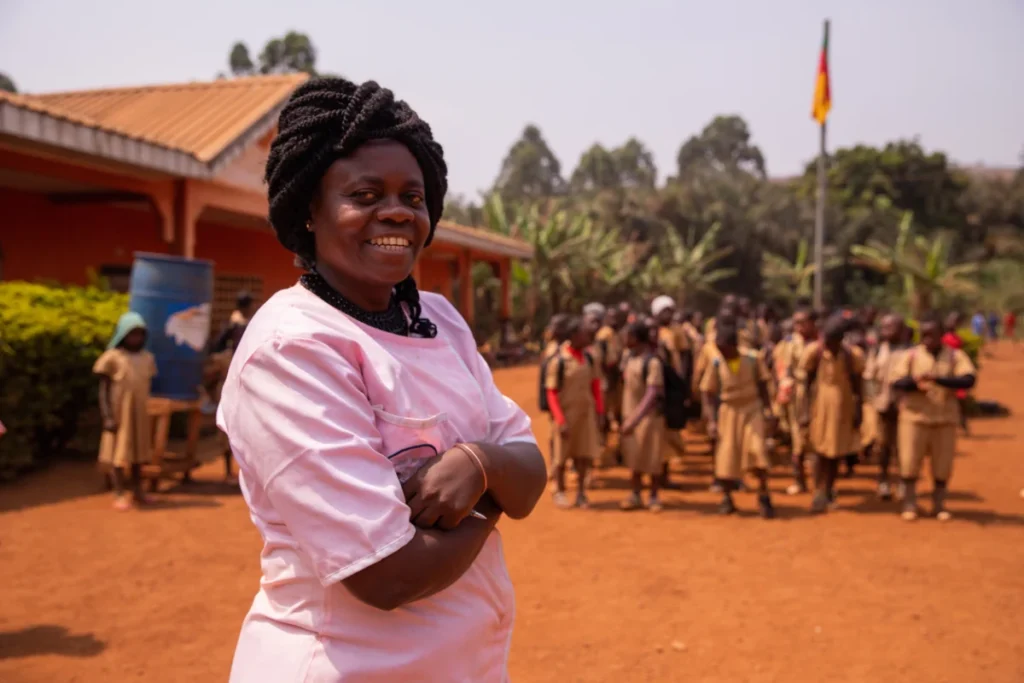
In the Northwest and Southwest regions of Cameroon, the sound of a school bell—once a symbol of opportunity—has, for many, become a source of anxiety. Years of localized conflict have cast a long shadow over the classroom, leaving a generation of students and educators grappling with the invisible scars of trauma. However, a transformative new initiative is seeking to turn these schools from zones of instability into bastions of healing and growth.
World Education, a JSI initiative, has officially launched a specialized program dedicated to improving the psychosocial well-being of students and teachers in Cameroon. This endeavor forms a critical pillar of a broader, five-year international development activity (2024–2029) spearheaded by Nascent Solutions, Inc. (Nascent). Backed by the United States Department of Agriculture (USDA) Foreign Agricultural Service (FAS) through the McGovern-Dole International Food for Education and Child Nutrition Program, the project represents a significant investment in the human capital of Cameroon’s most vulnerable regions.
The Core Mandate: Beyond Academics
At its heart, the project recognizes a fundamental truth often overlooked in emergency education: children cannot learn when their nervous systems are locked in a state of survival. While the McGovern-Dole program is traditionally associated with nutritional support and school feeding, this iteration expands that scope to include the emotional architecture required for academic success.
The initiative focuses on integrating targeted psychosocial care with deep community ownership. The objective is to foster a secure environment where children are not only physically present but are emotionally and socially equipped to engage with their curriculum. By addressing the "hidden emotional barriers"—such as persistent anxiety, hyper-vigilance, and withdrawal—World Education is attempting to bridge the gap between mere school attendance and meaningful cognitive development.
A Chronology of Crisis and Commitment
The urgency of this initiative is underscored by the timeline of the conflict in Cameroon’s Anglophone regions.
- 2017–2023: The Period of Disruption: For over six years, the Northwest and Southwest regions have faced recurring cycles of violence. This period saw widespread school closures, the displacement of teachers, and the systemic disruption of the educational pipeline. During this time, the psychosocial health of the community deteriorated, with limited external resources available to address the resulting trauma.
- 2024: The Strategic Pivot: Recognizing that food security alone is insufficient to stabilize a school system, the USDA and Nascent Solutions incorporated a comprehensive psychosocial component into their multi-year strategy. World Education was selected to lead this segment, leveraging their global track record in conflict-sensitive education.
- 2024–2029: The Implementation Horizon: The current five-year window is designed to shift from emergency response to sustainable, community-led resilience. The program is currently in its foundational phase, establishing the infrastructure for Psychosocial Support Teams (PSTs) and Psychosocial Support Groups (PSGs) across the target districts.
The Dual-Structure Strategy: A Holistic Framework
World Education’s strategy for restoration is built upon a two-pronged, collaborative model. Rather than imposing external solutions, the organization is embedding expertise directly into the existing public health and educational infrastructure.
The Psychosocial Support Teams (PSTs)
The first layer involves the creation of 96 specialized Psychosocial Support Teams. Each team is a hybrid unit consisting of master teachers and local health workers. This synergy is deliberate: teachers possess the daily proximity to identify changes in a student’s demeanor, while health professionals offer the clinical expertise to provide interventions.
These 96 teams will be trained in standardized, evidence-based screening methods. Their primary goal is the early identification of symptoms associated with trauma, including chronic anxiety, depression, and antisocial behaviors. By providing simple, school-based interventions, these teams act as a "first responder" layer. When a student’s needs exceed the capacity of the school environment, these teams are equipped to facilitate clinical referrals, ensuring that the most severe cases receive professional medical attention.
The Psychosocial Support Groups (PSGs)
Complementing the PSTs are the Psychosocial Support Groups. If the PSTs are the technical "engine" of the program, the PSGs are the "connective tissue." These groups operate at the community level, incorporating parents, school management committees, and local traditional and civic leaders.
The PSGs serve three vital functions:
- Sensitization: They work to de-stigmatize mental health, helping communities understand that psychological distress is a natural response to unnatural circumstances.
- Integration: They embed wellness activities into the standard school routine—such as mindfulness exercises, structured play, and peer-support circles—that normalize the school day.
- Sustainability: By involving parents and local leaders, the program ensures that the culture of care survives beyond the life of the project.
Official Perspectives: The Director’s Vision
The philosophy driving this project is best articulated by Adam Turney, JSI/World Education Director. According to Turney, the initiative is a departure from traditional "textbook-first" aid models.
"Our approach goes beyond traditional educational support to address the hidden emotional barriers that prevent children from thriving," Turney states. "By mobilizing communities and training local professionals, we are building sustainable support networks directly inside Cameroon’s schools. We are not just providing resources; we are building the capacity of local actors to become the healers of their own communities."
Supporting Data and Evidence-Based Programming
World Education’s selection for this role was no coincidence. It is the result of years of applied research and global expertise in Food for Education initiatives. The organization has consistently demonstrated that student performance is inextricably linked to the quality of the school environment.
In conflict-affected zones, research consistently shows that:
- Cognitive Inhibition: Persistent stress hormones (cortisol) effectively "close" the brain to new learning, making traditional teaching methods ineffective for traumatized students.
- Retention Rates: Schools that provide emotional support see higher retention rates among both students and teachers, as the school becomes a source of stability rather than a site of stress.
- Community Ownership: Projects that involve local school management committees in decision-making processes show a 40% higher rate of long-term sustainability after donor funding ends.
By leveraging this data, World Education is creating a model that is as much about social engineering as it is about pedagogy. The focus on connecting school management with parents’ visions for their children’s future ensures that the initiative remains relevant to the community’s specific aspirations.
Implications for the Future of Cameroonian Education
The implications of this five-year activity extend far beyond the immediate beneficiaries in the Northwest and Southwest.
1. A Model for Conflict-Sensitive Development
If successful, this program could serve as a blueprint for the USDA and other international donors in other conflict-ridden regions. It demonstrates that food security programs can—and perhaps must—be integrated with mental health and social support to achieve their desired developmental outcomes.
2. Strengthening the Public Health-Education Nexus
The project forces a rare and productive collaboration between the health and education sectors in Cameroon. By training 96 teachers and 96 health workers to operate as a single unit, the program creates a permanent inter-disciplinary network that can be utilized for other public health initiatives, such as nutrition, hygiene, or immunization campaigns.
3. Restoring the Social Contract
Perhaps most importantly, the project is a subtle exercise in peacebuilding. By bringing together school management committees, parents, and local leaders to talk about the well-being of the next generation, the initiative creates a neutral space for community dialogue. In regions where trust has been eroded, the shared goal of protecting children provides a rare opportunity for communal reconstruction.
Conclusion: A Long-Term Investment in Human Capital
As World Education continues to roll out its technical training and community engagement strategies, the focus remains on the long-term impact. The objective is not merely to get children through the school year, but to nurture a resilient generation capable of leading Cameroon into a more stable future.
For those interested in the ongoing progress of this initiative, World Education remains a central hub for updates, research, and collaborative opportunities. By fostering enduring partnerships across sectors, they continue to prove that even in the most challenging environments, the act of learning can be restored—so long as we prioritize the well-being of the human beings behind the books.
For further information on World Education’s global initiatives, capacity development services, and partnership opportunities, visit World Education’s official website.