Beyond Compliance: Rethinking the Science of School Discipline

In the modern educational landscape, discipline is frequently cited as the primary source of professional burnout. For many educators, it represents a reactive, often dehumanizing cycle of control, compliance, and exclusion. Yet, a growing movement in pedagogy—spearheaded by experts like Nathan Maynard—suggests that our current approach to student behavior is fundamentally flawed. By shifting the focus from punishment to "replacement skills," schools are beginning to treat behavioral challenges not as character flaws, but as developmental gaps that require intentional instruction.
Main Facts: The Shift from Control to Skill-Building
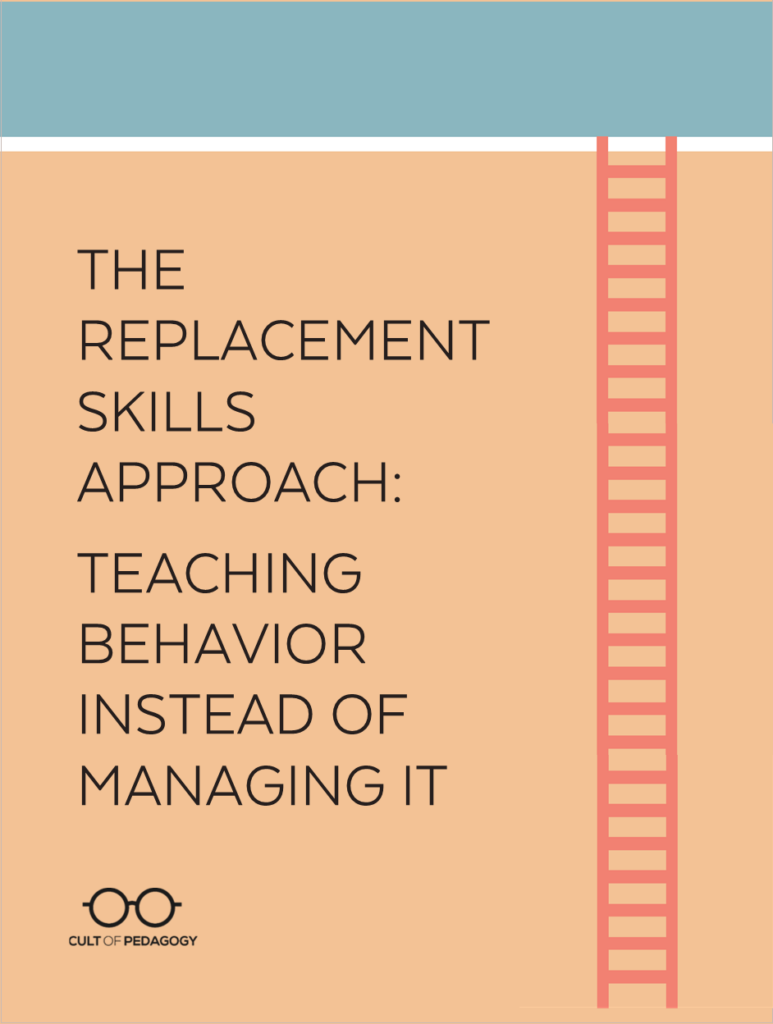
The core premise of the "replacement skills" model is simple but revolutionary: behavior is communication. When a student acts out—whether through verbal outbursts, defiance, or withdrawal—they are often signaling a lack of executive functioning or emotional regulation skills.
In traditional school systems, a student who shouts in class is met with a consequence: detention or removal. However, Maynard, author of The Science of Discipline, argues that this approach is akin to punishing a student for being unable to read. If a student lacks the phonics to decode words, we teach them to read. If a student lacks the impulse control to wait their turn, the "replacement skill" approach mandates that we teach them how to regulate that impulse.
The methodology centers on three pillars:
- Consistency: Building unified expectations across the entire school building.
- Accountability via Repair: Moving away from punitive isolation toward restorative actions.
- Skill Acquisition: Identifying the specific missing competency (e.g., time management, self-regulation) and providing direct instruction.
A Chronological Evolution of Behavioral Philosophy
To understand why this shift is necessary, one must look at the evolution of educational discipline over the last few decades.
- The Compliance Era (Late 20th Century): Schools operated on a "zero-tolerance" model. Behavior was viewed through a moral lens; "good" students followed rules, and "bad" students required swift correction. Success was measured by silence and order.
- The Transition Period: As neuroscience began to clarify the role of the prefrontal cortex in decision-making, educators began to realize that adolescent brains are inherently impulsive. However, this knowledge was often siloed in psychology departments, rarely reaching the classroom floor.
- The Systems-Based Approach (Present Day): Influenced by residential care models—where behavioral outcomes are tracked alongside academic ones—pioneers like Maynard began applying clinical, data-driven approaches to general education. This marks a departure from silos, where discipline is no longer the sole burden of a single teacher, but a shared responsibility supported by counselors and administrators.
Supporting Data: Why Punitive Measures Fail
The data regarding traditional punitive discipline—such as suspension and expulsion—is clear: it is largely ineffective at changing long-term behavior. Research consistently shows that exclusionary discipline is a significant predictor of "school-to-prison pipeline" trends, particularly among marginalized student populations.
In contrast, systems that prioritize skill-building demonstrate lower recidivism rates. When schools treat discipline as a "teachable moment," they foster a sense of belonging. According to the principles outlined in The Science of Discipline, schools that focus on intrinsic motivation rather than extrinsic threats see a marked increase in student engagement. By treating the classroom as an ecosystem, rather than a factory, teachers can reduce the cognitive load of constant policing, allowing more time for actual academic instruction.

Official Responses and Expert Perspectives
Educational experts are increasingly vocal about the necessity of "regulating before reasoning." Dr. Bruce Perry, a prominent figure in childhood trauma research, has famously noted, "A dysregulated adult can never regulate a dysregulated child."
This perspective has changed how school administrators approach professional development. Instead of simply providing teachers with "consequence menus," forward-thinking districts are now providing training on co-regulation—the process by which a calm adult helps a student return to a state of emotional stability.
Administrators are beginning to acknowledge that when a student is in a state of "fight or flight," their executive functioning is effectively offline. Attempting to lecture a student on school rules during a meltdown is a futile exercise. The consensus is shifting toward:
- Regulation: Establishing calm through presence or breathing techniques.
- Repair: Addressing the harm done to the community.
- Instruction: Teaching the specific skill required to prevent a recurrence.
Strategic Implementation: Scenarios in Practice
The strategy works because it replaces vague commands like "behave" with actionable steps.
The Student Who Cannot Stop Talking
Instead of public reprimands, which can trigger oppositional behavior, teachers are encouraged to use silent signals. By establishing a non-verbal cue, the teacher acknowledges the student’s presence without shaming them. Further, providing a "talking buddy" or a "designated share time" allows the student to satisfy their need for social interaction within a structured boundary.
The Student Who Shuts Down
Defiance is often mistaken for laziness. In reality, a student putting their head down is often experiencing "task paralysis." By teaching scaffolded communication—using sentence stems like "I need help with the section on…"—the teacher empowers the student to ask for support, turning a moment of withdrawal into a moment of self-advocacy.
The Student Who Is Violent
Violence is the ultimate indicator of a failure in self-regulation. The strategy here involves "teaching in the calm, not the chaos." By mapping the student’s behavioral cycle—identifying the Trigger, Cue, Coping Skill, Act, and Evaluate phases—the student learns to recognize their own physical warning signs before an escalation occurs.
The Student Who Is Chronically Tardy
Tardiness is often an executive function issue, not a lack of respect. By helping the student map their transition and implement a personal alarm system, the teacher treats the issue as a logistical problem to be solved rather than a moral failing to be punished.
Implications for the Future of Education
The implications of this approach extend far beyond the classroom walls. We are training the next generation of citizens. If we spend twelve years of a child’s life focusing on control and compliance, we are implicitly teaching them that their value is tied to their obedience.
Conversely, if we teach them how to regulate their emotions, communicate their needs, and repair the harm they cause, we are teaching them how to function in a democratic, collaborative society.
The transition to this model requires two major cultural shifts in our schools:
- Separating behavior from identity: We must stop labeling children as "disrespectful" or "defiant." These are not identities; they are descriptions of a behavior that is currently failing to meet a need.
- Prioritizing adult regulation: Schools must invest in the well-being of teachers. If the adult is constantly in a state of high stress, they lack the capacity to model the patience and regulation they are trying to teach.
In conclusion, the "science of discipline" is not a soft approach; it is a rigorous, evidence-based methodology that respects the developmental reality of the student. By replacing fear with instruction, schools can transform from sites of control into communities of belonging. As we look to the future of our society, we must ask ourselves: are we building systems that punish our children for their growing pains, or are we building systems that give them the tools to grow? The answer to that question will define the next generation of learners and leaders.