Beyond the Brand: Navigating the World of Magnetic Building Tiles

For parents and educators, the search for the perfect toy often concludes with the same recommendation: magnetic building tiles. They are a staple in modern playrooms, celebrated for their ability to transform from flat, two-dimensional shapes into intricate 3D architectural marvels. However, as families look to expand their collections to facilitate larger, more complex builds, they are often met with a significant financial hurdle. While Magna-Tiles have long been considered the industry gold standard, a growing market of high-quality, affordable alternatives is changing the landscape of STEM-focused play.
The Evolution of Magnetic Construction: A Brief Chronology
The history of magnetic tiles is relatively recent, yet their impact on early childhood development has been profound. The concept, which merges the spatial reasoning of traditional wooden blocks with the structural possibilities of magnetism, hit the mainstream in the late 1990s.
Magna-Tiles were the original pioneers, bringing these geometric shapes to the mass market. By patenting the design and establishing a rigorous safety protocol, the brand effectively created the "magnetic tile" category. For years, they enjoyed a virtual monopoly. However, as patents expired and the manufacturing of ABS plastic—the durable, non-toxic material used in these toys—became more accessible, new competitors entered the field.
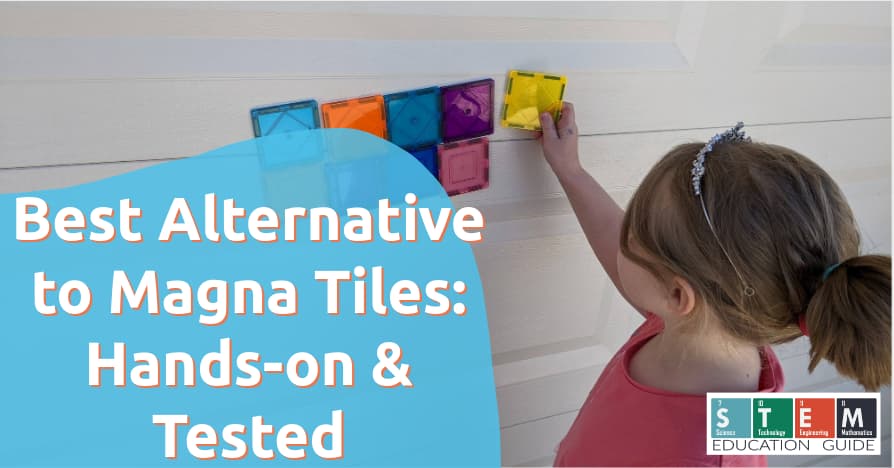
By the mid-2010s, brands like PicassoTiles, Cossy, and Connetix began to emerge. These companies recognized that while parents valued the safety and durability of the original, they were also sensitive to the high price point. This led to a "democratization of play," where families could purchase three or four times the number of tiles for the same investment as one name-brand set.
Why Magna-Tiles Command a Premium Price
To understand the market, one must first understand the economics of the original. When a consumer purchases a box of Magna-Tiles, they are paying for several factors:
- Brand Equity and R&D: As the first to market, the company invested heavily in the initial design, safety testing, and brand awareness that made the product a household name.
- Strict Safety Compliance: The toy industry is heavily regulated. Magna-Tiles maintain a reputation for exceeding federal safety standards, using high-quality ultrasonic welding to ensure that internal magnets do not become loose—a critical safety feature for children under the age of three.
- Manufacturing Rigidity: In various drop tests and stress tests conducted by independent toy labs, the original Magna-Tiles often display a higher degree of structural rigidity. The plastic is slightly thicker, and the connection points are reinforced, meaning they are less prone to cracking under high-impact play.
However, the Good Housekeeping Institute and other independent testing bodies have noted that while the original is a top-tier performer, it no longer holds a monopoly on safety or quality. Many modern competitors now meet the same ASTM (American Society for Testing and Materials) standards, utilizing the same non-toxic, food-grade ABS plastic.
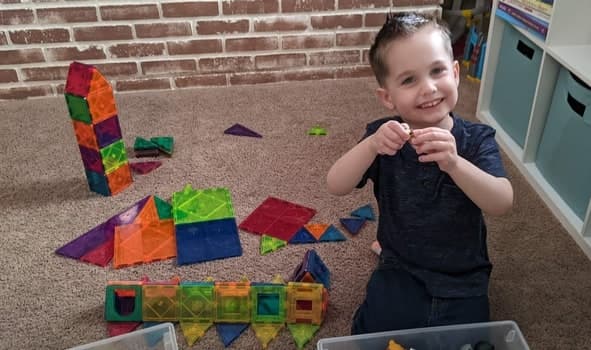
Supporting Data: Are Alternatives Really Just as Good?
The core question for parents is: Do these cheaper alternatives offer the same utility? The answer is a resounding yes, though with minor caveats regarding specific construction needs.
The Durability Factor
In comparative studies, the primary difference observed between premium and budget tiles is the "click" sound and the strength of the magnetic attraction. Premium brands often use slightly stronger, larger magnets, which allow for taller, more gravity-defying structures. Budget alternatives, while perfectly functional for 90% of play scenarios, may show a slight "sag" if a child attempts to build a tower that reaches the ceiling.
Compatibility
One of the most important metrics for consumers is cross-brand compatibility. Because most magnetic tiles rely on standard geometric ratios (the small square is the base unit), almost all major brands on the market today are physically compatible. This means a family can start with a small, high-quality "starter set" from one brand and fill out their collection with larger, more budget-friendly packs from another.
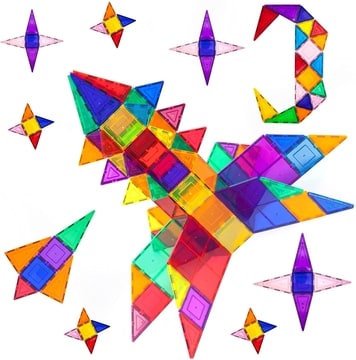
Top Contenders in the Magnetic Tile Market
For those looking to expand their STEM resources without breaking the bank, the following brands have earned a reputation for reliability and value.
1. PicassoTiles: The Industry Challenger
PicassoTiles has become the primary rival to the market leader. Their success stems from their commitment to variety. Beyond standard tiles, they offer specialized sets including marble runs, car bases, and Ferris wheels. They mirror the dimensions of the original tiles almost perfectly, making them the most popular choice for parents looking to build "neighborhoods" of structures.
2. Cossy Kids: The Aesthetics Choice
Cossy has gained traction by focusing on visual clarity. Their tiles feature a high degree of transparency and vibrant, saturated colors that catch the light beautifully. For parents, the advantage here is clarity; these tiles are often praised for being slightly less prone to surface scratching than other budget brands, keeping them looking "new" for longer periods.
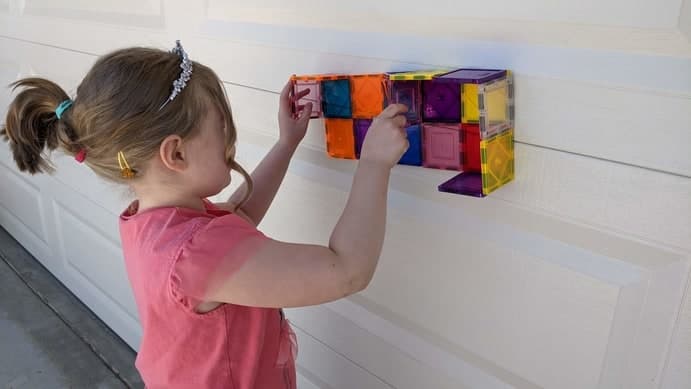
3. Shapemags: Literacy-Focused Play
Shapemags differentiates itself by integrating educational "add-ons." Their inclusion of "Stile Mags"—small magnetic overlays featuring letters, numbers, and images—transforms a basic building toy into a tool for literacy and numeracy. It is an ideal middle ground for parents who want to emphasize STEM and language development simultaneously.
4. Magblock: The Architectural Specialist
Magblock sets are designed for children who move past simple towers and into complex architectural design. Their sets frequently include windows, archways, and door frames, allowing children to build functional "houses" for their toys. This adds a layer of depth to the play that often requires purchasing expensive, separate accessories from other brands.
Official Industry Responses and Safety Standards
The surge in "off-brand" popularity has not gone unnoticed by the original manufacturers. Many industry leaders emphasize that while generic brands may look similar, the consistency of the magnetic polarity is what sets them apart. A "low-end" generic tile might have a magnet that is slightly rotated, which can cause the pieces to repel each other instead of attracting.
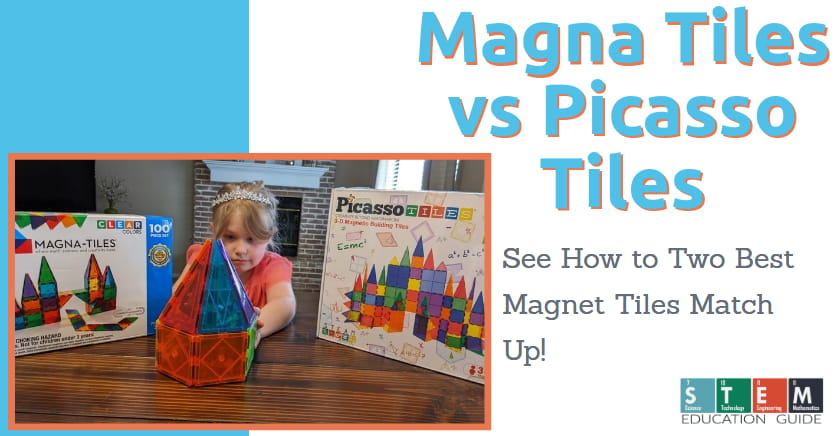
However, the "official" response from safety advocacy groups is that parents should always look for the ASTM F963 certification on the packaging. This code ensures the product has been tested for lead content, small parts, and structural integrity. Whether a brand is a household name or a newer entrant, if they carry this certification, they are deemed safe for use.
Implications for Modern Education and Play
The rise of affordable magnetic tiles has broad implications for both home and classroom learning.
The Financial Barrier
Historically, the high cost of high-quality magnetic sets meant that children from lower-income families had less access to the spatial-reasoning benefits these toys provide. As the price of entry has dropped, these tools have become more prevalent in public schools and community centers.
The Shift to Open-Ended Play
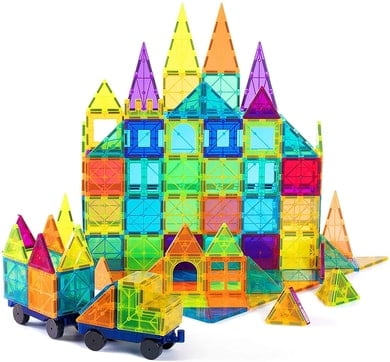
These toys represent the pinnacle of "open-ended play." Unlike a model kit that results in a single, predetermined object, magnetic tiles encourage iterative design. A child can build a bridge, realize it is unstable, adjust the geometry, and try again. This process is the foundational bedrock of engineering and physics.
Pedagogical Tips for Parents
To get the most out of these sets—regardless of the brand—parents are encouraged to act as facilitators rather than directors.
- The "Weight and Balance" Experiment: Ask children to test the strength of their structures by placing light objects on top of their tiles.
- The "Light and Shadow" Challenge: Because many tiles are transparent, they are excellent for exploring color theory and light refraction by using them near windows or with a flashlight in a dark room.
- Documentation: Encourage children to draw their intended structure before building it. This bridges the gap between abstract thought and physical creation.
Conclusion: Investing in Creativity
While the allure of the "name brand" is understandable, the reality of the market is that the magic of magnetic play is no longer exclusive to a single company. Whether you choose the structural rigidity of the original or the expansive, feature-rich sets of brands like PicassoTiles or Magblock, the outcome remains the same: a child engaged in the work of creating, testing, and dreaming.
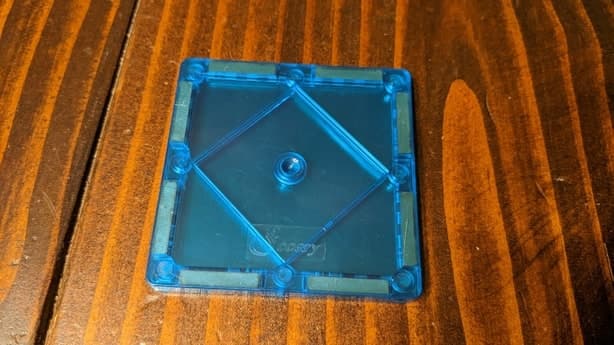
By diversifying your collection with high-quality, budget-friendly alternatives, you are not sacrificing quality; you are expanding the possibilities for your child’s imagination. In the end, the best toy is the one that gets used the most, and with the variety available today, there is no reason for any child’s architectural ambitions to be limited by their budget.