
Beyond the Buzzwords: Decoding the Reality of Norm-Referenced and Criterion-Referenced Assessments

In the complex ecosystem of modern education, few topics generate as much persistent confusion as the distinction between "norm-referenced" and "criterion-referenced" assessments. These terms are frequently brandished in board meetings, curriculum planning sessions, and policy debates, often leading to a fundamental misunderstanding of what a test actually is.
At the heart of the matter is a quest for clarity. For educators, administrators, and stakeholders, an assessment should provide more than just a raw score; it should offer actionable truth. When NWEA experts discuss the future of student growth, they emphasize that without a clear, accurate picture of a student’s current standing, the pedagogical path forward becomes a game of guesswork. To refine the tools we use, we must first dispel the myths surrounding how these assessments are categorized.
The Myth of the "Type"
The most critical takeaway for any educator is this: There is no such thing as a "norm-referenced test," nor is there a "criterion-referenced test." These terms are not labels for the assessments themselves, but rather descriptors of how the resulting data is interpreted.
"Principled assessment design starts with the questions we want to answer about students," explains Adam Withycombe, principal assessment connections content designer at NWEA. "The assessment isn’t ‘norm’ or ‘criterion’ referenced; those distinctions come from the claims we make and the reference points we use to interpret results."
To understand this, one must view the assessment as a neutral instrument. The "referencing" happens only after the data is collected, depending on the lens through which a school leader or teacher views that data.

Understanding the Reference Points
To move beyond the terminology, we must look at what these two concepts actually measure:
- Norm-Referenced Comparisons: This approach evaluates a student’s performance in relation to their peers. It asks, "How does this student’s achievement stack up against a national or demographic cohort?" This is vital for understanding relative standing and identifying students who may be significantly ahead or behind the typical developmental curve.
- Criterion-Referenced Comparisons: This approach gauges a student’s performance against a fixed set of expectations—typically grade-level proficiency standards. It asks, "Does this student know the specific material required for their current grade level?"
In practice, almost every high-quality, comprehensive assessment in the modern market utilizes both. A student may take an assessment—such as NWEA’s MAP® Growth™—and receive a score that reveals both their mastery of specific state standards (criterion) and their percentile ranking compared to millions of other students nationwide (norm).
The Evolution of Assessment Design: A Chronology
The history of educational testing has seen a gradual shift from "one-size-fits-all" metrics toward integrated, adaptive systems.
- The Early Era (Pre-1970s): Testing was largely static. Assessments were often rigid, paper-based, and focused exclusively on comparative ranking, leaving little room for teachers to identify specific skill gaps.
- The Rise of Standards (1980s–2000s): The educational landscape shifted toward accountability. The focus moved heavily toward "criterion-referenced" models to ensure students met state-mandated benchmarks, often resulting in "teaching to the test."
- The Integrated Era (2010s–Present): With the advent of computer-adaptive testing, the dichotomy between norm- and criterion-referencing began to dissolve. Modern platforms, like MAP Growth, allow for a multidimensional analysis. Today, the focus is on the utility of the data—ensuring that the assessment serves as a bridge between a student’s current ability and their next instructional milestone.
Supporting Data: The Case for Precision
When evaluating the utility of an assessment, the debate should not be about its classification, but about its reliability. Data integrity is the cornerstone of effective instruction.
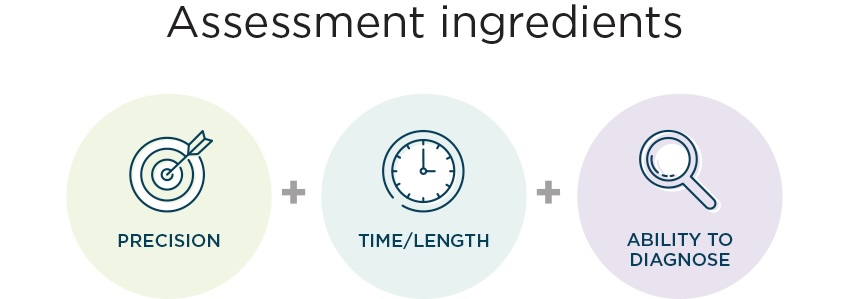
MAP Growth, for instance, is built on a foundation of precision. By balancing the length of the assessment (typically 43 questions) with diagnostic depth, NWEA has created a model that respects the time constraints of the classroom while maintaining a high degree of statistical reliability.

The "trust factor" in an assessment is often found in its standard error of measurement. For instance, if a student were to take the MAP Growth assessment on consecutive days, their score would typically fluctuate by no more than three points on the RIT (Rasch UnIT) scale. In contrast, less precise assessments may see fluctuations of 9–10 points—a variance significant enough to lead to the misplacement of a student into an inappropriate intervention program. Accuracy is not just a technical metric; it is a matter of equity.
Official Responses and Strategic Implications
As NWEA continues to provide data to school districts worldwide, the organization has consistently pivoted toward "instructional connections." The goal is to ensure that the data captured during the assessment phase is not merely recorded, but utilized.
The implications for school leadership are clear:
- Prioritize Actionable Data: If an assessment provides a score but offers no path toward instruction, it is a static measurement. Look for assessments that integrate with learning management systems and instructional tools.
- Embrace Flexibility: Modern assessments should provide the user with options. For example, the ability to transfer student performance data seamlessly to instructional providers allows teachers to personalize content for every learner, regardless of where they fall on the achievement spectrum.
- Ignore the Distractions: Educators should stop asking if an assessment is "norm-referenced" and start asking, "Is this tool reliable? Does it measure what my students are required to know? And can it help me improve instruction tomorrow?"
A Call to Action for Educators
The true value of any assessment lies in its ability to support the "next great adventure" of the student. Whether it is a small rural school district in Colorado or a large, diverse urban district in California, the success stories share a common thread: they use data to personalize the learning experience.
We are currently witnessing a shift where the "test" is no longer the destination, but the starting line. By moving past the outdated labels of norm- versus criterion-referenced testing, educators can focus on the qualities that truly matter:
- Reliability: Can you trust the data to make high-stakes decisions?
- Actionability: Does the data point to a specific, effective instructional next step?
- Equity: Does the assessment provide an accurate view of all students, regardless of their starting point?
The goal of assessment is to provide a mirror that reflects the reality of the student’s learning journey. When we focus on clarity, we stop guessing. When we stop guessing, we start teaching with purpose. As you look toward the upcoming school year, remember that the most important question is not how we label our assessments, but how we use the information they provide to move every student forward.
In the end, clarity is not just a professional goal—it is a moral imperative in the pursuit of student success. By setting the record straight on the terminology that has clouded this field for decades, we can finally begin to prioritize the only thing that truly matters: the growth and achievement of every learner.