
Beyond the Cell Walls: How the Pell Grant Restoration is Reshaping Higher Education in Prisons
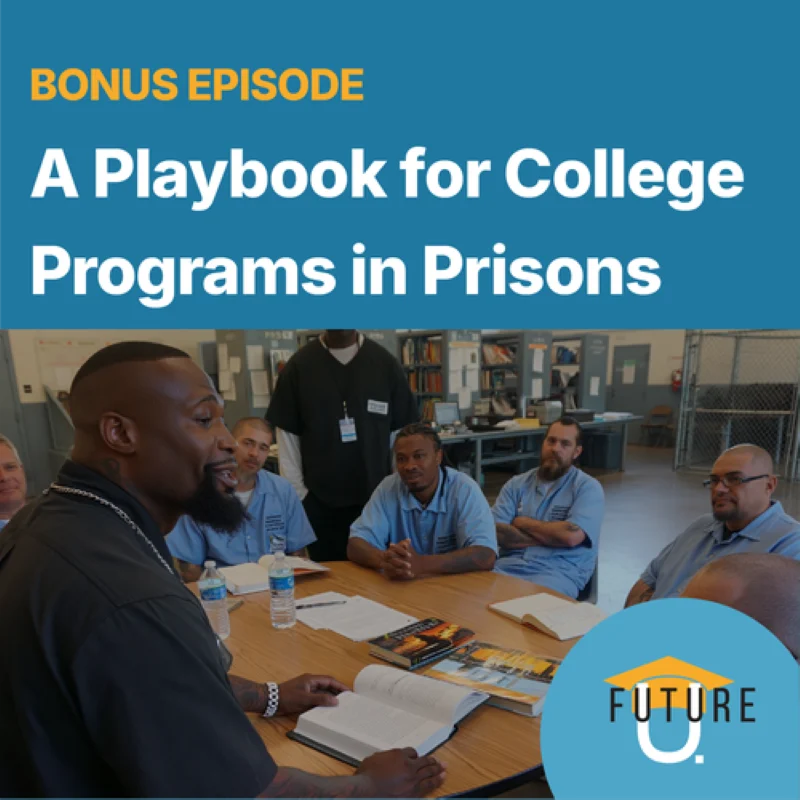
In July 2023, a seismic shift occurred in the American correctional landscape. After nearly three decades of exclusion, incarcerated individuals once again became eligible for federal Pell Grants, unlocking a pathway to higher education that had been effectively shuttered since the 1994 Crime Bill. As colleges and universities across the nation scramble to establish or expand programs within correctional facilities, the critical question has shifted from "Can we provide these courses?" to "How do we build a sustainable, transformative collegiate experience?"
The latest episode of the FutureU podcast, hosted by Michael Horn and Jeff Selingo, tackles this challenge head-on. By spotlighting the Minnesota Consortium for Higher Education in Prison (MCHEP), the episode serves as a vital case study on the logistics, philosophy, and future of prison education in a post-Pell era.
Main Facts: The New Frontier of Correctional Education
The reinstatement of Pell Grant eligibility is not merely a policy tweak; it is a fundamental reconfiguration of the relationship between the academy and the carceral state. For decades, the 1994 ban created a "knowledge desert" inside prisons, where only a handful of privately funded or volunteer-led programs existed.
The MCHEP model, featured in the FutureU discussion, represents the "gold standard" for the current era. It is a statewide coalition designed to harmonize the fragmented efforts of individual colleges. By creating a unified front, MCHEP aims to:
- Standardize Logistics: Navigating the security protocols of a Department of Corrections (DOC) is a significant hurdle for any college. MCHEP acts as a bridge, streamlining the bureaucratic interplay between academia and the prison system.
- Share Best Practices: Rather than each college reinventing the wheel, MCHEP fosters a community of practice, sharing lessons on curriculum delivery, student advising, and reentry support.
- Reduce Administrative Burdens: By centralizing communication and policy advocacy, the coalition allows institutions to focus their resources on pedagogy rather than paperwork.
Chronology: A Long Road to Reinstatement
To understand the weight of the current moment, one must look at the timeline of higher education in American prisons.
- 1965-1994: The Golden Era of Access. Pell Grants were widely available to incarcerated students, leading to a flourishing ecosystem of degree programs. During this time, research consistently showed that prison education programs drastically reduced recidivism rates.
- 1994: The Legislative Shutout. As part of the Violent Crime Control and Law Enforcement Act, Congress explicitly banned incarcerated individuals from receiving Pell Grants. The result was immediate: almost every college-in-prison program in the country collapsed within years.
- 2015: The Second Chance Pell Experiment. Under the Obama administration, the Department of Education launched a pilot program, allowing a select number of institutions to provide Pell-funded education to incarcerated students. This served as the essential proof-of-concept that eventually convinced lawmakers to lift the ban.
- 2023: Full Restoration. The ban was officially lifted in July 2023, marking a historic return to the pre-1994 status quo, albeit with modern digital-age challenges and opportunities.
Supporting Data: Why Prison Education Works
The argument for prison education has never been purely altruistic; it is rooted in empirical data. The FutureU podcast underscores the transformative potential of these programs through several lenses:
- Recidivism Reduction: According to the RAND Corporation, individuals who participate in correctional education programs are 43% less likely to recidivate than those who do not.
- Economic Impact: Every dollar invested in prison education yields an estimated four to five dollars in savings on future incarceration costs.
- Workforce Readiness: In an era of labor shortages, preparing incarcerated individuals for the modern workforce is a national economic imperative. Graduates of these programs often leave prison with the credentials, soft skills, and professional networks necessary to secure gainful employment.
- Institutional Stability: Prisons that host active collegiate programs report lower levels of violence and better behavioral outcomes, as students prioritize their academic progress over disruptive activities.
Official Responses: Moving Beyond the "Classroom"
A central theme of the FutureU conversation is the distinction between "offering a class" and "building a college." Michael Valesano, Executive Director of MCHEP, emphasizes that the goal is not just the transfer of knowledge, but the creation of an environment.
"And so that’s what we’re looking to bring inside of prison," Valesano notes. "Not just classes, full colleges, full college experiences, and full student cultures."
This sentiment is echoed by Andre Anderson, a former incarcerated student turned reentry coordinator. Anderson provides the essential "student voice," highlighting that the success of these programs hinges on the support ecosystem surrounding the classroom. For a student behind bars, the identity of "student" acts as a powerful counter-narrative to the identity of "inmate." When colleges invest in student governments, peer tutoring, and extracurricular clubs within the facility, they reinforce the reality that education is not an exception, but a permanent, expected part of the student’s life.
The Role of Reentry Coordinators
The importance of the reentry coordinator cannot be overstated. As Anderson highlights, the transition from prison to the free world is a high-risk period. Effective programs do not end at the prison gate. They provide a "warm handoff," ensuring that students can continue their degree programs at a satellite campus or an partner institution upon release. This continuity is the difference between a successful reentry and a return to prison.
Implications: Building a Sustainable Future
As colleges rush to apply for Pell-approved programs, there is a legitimate concern regarding the "commodification" of prison education. If institutions view incarcerated students solely as a revenue stream for their Pell Grants, the quality of education will inevitably suffer.
The Risk of "Degree Mills"
The FutureU episode serves as a cautionary tale: simply providing an online portal for self-paced modules is not the same as a college experience. True higher education requires:
- In-Person Faculty Interaction: The nuances of intellectual debate and mentorship require human presence.
- Robust Advising: Incarcerated students face unique academic and emotional hurdles that require dedicated staff.
- Accreditation and Standards: The degrees offered inside must be identical to those offered on campus. Anything less is a disservice to the students and an insult to the rigor of higher education.
The Cultural Shift
The ultimate implication of the MCHEP model is a cultural shift within both the university and the Department of Corrections. Colleges must move away from viewing prisons as "satellite locations" and begin treating them as full-fledged campuses. Conversely, correctional systems must view their residents as students first, which requires a change in security philosophy—shifting from a model of total containment to one of "rehabilitation through education."
Conclusion: The Path Ahead
The reinstatement of Pell Grants is a triumph for educational justice, but it is merely the starting line. As MCHEP demonstrates, the real work lies in the messy, labor-intensive process of institutional building. By prioritizing the "full college experience," institutions can ensure that the education provided behind bars is a genuine vehicle for transformation.
As Michael Horn and Jeff Selingo suggest, the future of higher education in prison depends on our ability to replicate these regional coalitions. By banding together, colleges can share the heavy lifting, navigate the complex regulations, and provide a standard of education that prepares incarcerated individuals not just for jobs, but for meaningful participation in civil society.
In the final analysis, the success of these programs will be measured by more than just the number of degrees awarded. It will be measured by the strength of the communities these individuals return to, the stability of their lives post-release, and the fundamental belief that education is a right, not a privilege, regardless of one’s address—even if that address is a correctional facility.
For those interested in the logistical "playbook" for starting a college-in-prison program, the full episode of FutureU is available at futureupodcast.com.