Beyond the Classroom: Seven Washington Districts Spearhead a New Era of AI-Driven Administrative Efficiency
In an era where the national conversation surrounding artificial intelligence (AI) in education is almost exclusively fixated on generative chatbots, essay-writing assistance, and personalized learning software, a quiet revolution is taking place in the state of Washington.
The Center on Reinventing Public Education (CRPE), in a strategic partnership with Education First and StrategicEDU, has announced the selection of seven Washington school districts for the second phase of the "Washington K-12 Innovation with AI Community of Practice." This initiative seeks to move beyond the superficial application of AI in classrooms, focusing instead on the complex, systemic administrative "plumbing" that keeps school districts functional—and often, unfortunately, fragmented.
The selected districts—Ferndale, Highline Public Schools, Impact Public Schools, Kalama, Sequim, Summit Public Schools, and Yakima—are set to receive innovation grants of up to $45,000 each. This funding is designed to empower these districts to pilot AI-enabled solutions that address critical data-system and operational bottlenecks, ultimately creating a more cohesive, responsive, and secure digital infrastructure for Washington’s students.
The Strategic Shift: Moving from Classroom Tools to Operational Excellence
For years, K-12 education has struggled with the "silo effect." Data concerning student achievement, attendance, behavioral patterns, and mental health well-being are frequently housed in disconnected, proprietary software systems that do not "talk" to one another. This fragmentation forces administrators to manually cross-reference spreadsheets, leading to delayed interventions and missed opportunities to support students before they fall behind.
"Most conversations about AI in K-12 schools focus on what’s happening in the classroom and the tools and programs that students and teachers interact with directly," the project leads noted in a statement. "But AI’s promise extends to the less visible work of untangling siloed systems, improving interoperability, and connecting scattered data."
By applying AI to these backend operational challenges, these seven districts aim to empower educators and administrators to make more informed, data-driven instructional decisions. The goal is not merely to digitize paperwork but to synthesize vast quantities of disparate data into actionable insights, all while maintaining the highest standards of student privacy and cybersecurity.
Chronology: From Readiness to Pilot Implementation
The trajectory of this initiative reflects a deliberate, phased approach to technological adoption that avoids the "move fast and break things" mentality often associated with Silicon Valley.
- Phase I: The Readiness Work (Early 2024): The initial phase focused on district self-assessment. Participating districts mapped their existing data infrastructure, identified pain points in their administrative workflows, and developed internal governance frameworks for ethical AI usage.
- The Selection Process: Following the success of the readiness phase, the CRPE, Education First, and StrategicEDU vetted applicants based on their capacity for innovation, their commitment to data equity, and their technical readiness to integrate AI-enabled tools.
- Phase II: The Pilot Year (2024–2025): The current phase, which kicks off this school year, involves the actual deployment of AI-enabled solutions. Districts will receive customized coaching from experts at Education First and StrategicEDU to navigate the technical and organizational hurdles of AI integration.
- Ongoing Evaluation: Throughout the next 12 months, the project will maintain a dual-track focus: district teams will implement their specific pilot programs, while the CRPE will conduct parallel research to document successes, failures, and the operational requirements for responsible AI adoption.
Supporting Data: Why Systemic Interoperability Matters
The urgency of this initiative is backed by the persistent challenges inherent in modern school administration. According to educational research, a typical medium-sized school district operates dozens of disparate software applications. The lack of interoperability—the ability for these systems to exchange and make use of information—creates significant "data lag."
By deploying AI to bridge these gaps, districts can potentially achieve:
- Early Warning Systems: Using predictive modeling to identify students at risk of chronic absenteeism or course failure weeks or months before a human observer might notice a pattern.
- Resource Allocation Efficiency: AI can assist in optimizing transportation routes, staffing ratios, and supply chain management, ensuring that resources are directed toward the classrooms with the greatest need.
- Enhanced Security: AI-driven monitoring systems can detect anomalous data access patterns, providing a robust layer of defense against the increasing threat of ransomware attacks on school districts.
The $45,000 grant provided to each district is designed to cover the costs of software procurement, pilot implementation, and the essential professional development required to ensure that the staff using these systems understands both the capabilities and the limitations of the technology.
Official Responses and Collaborative Frameworks
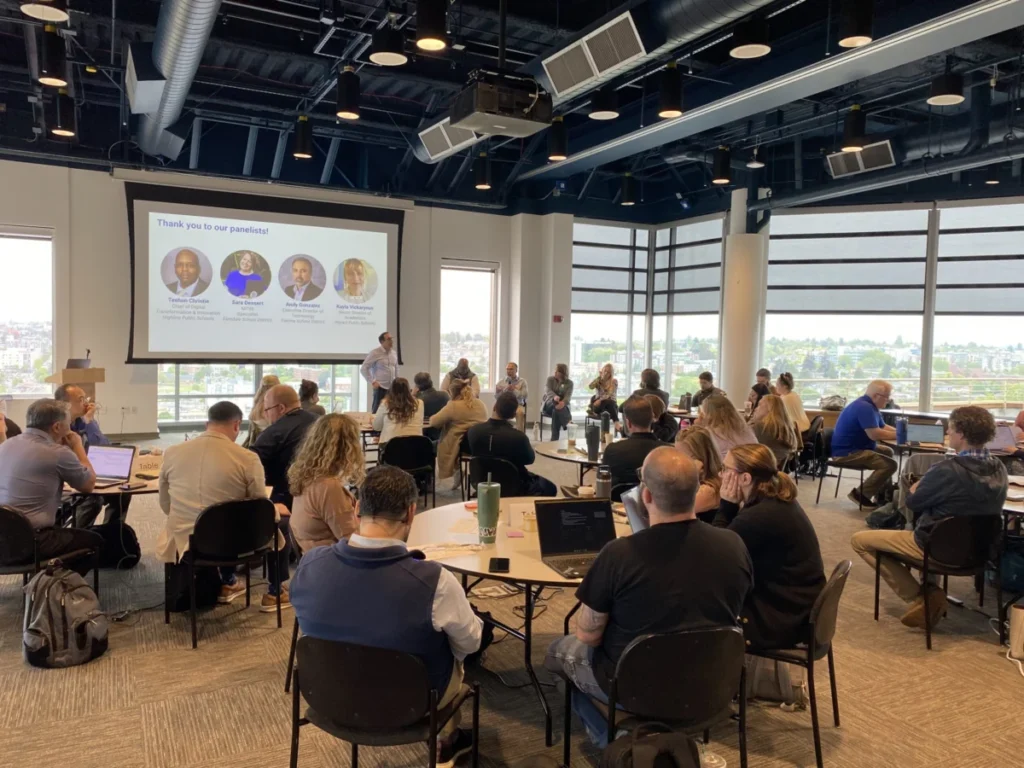
The partnership behind this initiative is arguably as important as the funding itself. By combining the research rigor of the Center on Reinventing Public Education (CRPE) with the implementation expertise of Education First and StrategicEDU, the initiative creates a "knowledge loop" that benefits the entire state.
"This work is not just about the seven districts involved; it is about surfacing challenges, indicators of success, and insights for the field," stated representatives from the collaborative team. The inclusion of the Gates Foundation as a primary benefactor underscores the high stakes of this initiative. The foundation’s support suggests a long-term interest in creating a scalable model for other states to emulate.
The collaborative nature of the Community of Practice—which includes peer-to-peer learning sessions—ensures that if the Yakima School District finds a solution to a specific data-silo issue, that knowledge is transferred to Ferndale or Sequim, preventing the "reinvention of the wheel" and accelerating progress across the board.
Implications: A Model for Future Policy and Investment
The findings from this initiative are expected to be foundational for Washington state policy. As the state legislature and the Office of Superintendent of Public Instruction (OSPI) consider how to regulate and invest in AI, they will look to the evidence generated by these seven districts.
Shaping Future Policy
The data collected over the next year will help define what constitutes "responsible AI" in a public school setting. This includes:
- Data Governance Standards: What guardrails must be in place before a district can link sensitive student data?
- Vendor Accountability: How should districts vet private AI companies to ensure that student information is never used for commercial profiling?
- Equity and Access: How can AI be deployed to ensure that underserved populations receive equitable attention rather than falling victim to algorithmic bias?
Building Sustainable Strategies
The pilot program is intentionally designed to outlive the initial grant funding. By building internal capacity—training existing staff to manage these systems and developing long-term partnerships—the districts are creating a "sustainable strategy." The aim is to shift from a cycle of temporary, grant-funded experimentation to a permanent state of technological maturity.
Conclusion: A Blueprint for the Nation
As we look toward the future, the work being performed in Washington’s seven selected districts serves as a vital blueprint. It demonstrates that the most meaningful impact of artificial intelligence in K-12 education may not be in how a student writes a paragraph, but in how an entire district understands, protects, and supports its students.
By tackling the invisible, systemic challenges that have long plagued school administration, these districts are laying the groundwork for a more efficient and equitable education system. For those interested in the early lessons learned, the CRPE is hosting a webinar on Friday, September 18th, to share insights from the first phase of this initiative.
The transition to an AI-augmented educational landscape is inevitable. However, through initiatives like this, Washington is proving that such a transition can be managed with caution, transparency, and a focus on the fundamental goal of every school district: providing every child with the support they need to succeed.
For those interested in learning more, registration for the upcoming webinar on September 18th is available here.