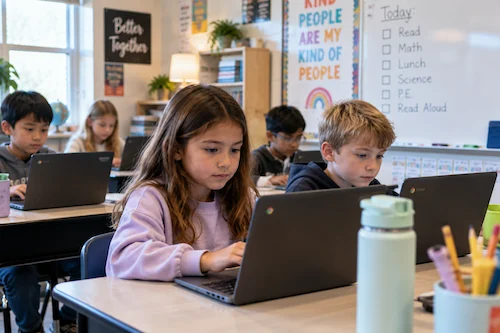
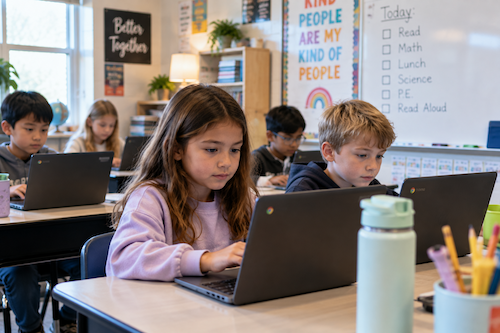
As students and educators settle into the routine of the 2026–27 academic year, K-12 leaders across the United States find themselves operating in a remarkably complex environment. The educational landscape is no longer defined by the emergency remote pivots of the early decade or the breathless, wide-eyed adoption of post-pandemic digital tools. Instead, school districts are navigating a sobering reality characterized by rapid technological advancement, persistent academic recovery challenges, tight budgets, and mounting pressure to demonstrate tangible returns on educational investments.
Artificial intelligence (AI), once viewed as an exciting and disruptive novelty, sits firmly at the center of ongoing instructional conversations. However, the core inquiry has fundamentally shifted. Rather than asking simply how to adopt AI, educational leaders are now demanding to know where it adds genuine, measurable value, how it can be deployed responsibly, and what scaffolding educators and students need to utilize it effectively.
Simultaneously, traditional educational priorities have taken on new urgency. School systems continue to grapple with persistent challenges, including chronic absenteeism, student engagement deficits, rising educator workloads, cybersecurity threats, and stubborn academic achievement gaps. At the same time, they are expanding their focus on digital equity, data privacy, career-connected learning, and the precise competencies students will require in an AI-influenced workforce.
According to top education experts, administrators, and EdTech leaders, the 2026–27 school year will not be defined by the arrival of the proverbial "next big thing." Rather, it will be marked by a concerted push toward sustainability—how districts can effectively integrate emerging technologies, leverage high-quality data, and apply the hard-learned lessons of the past several years into durable practices that empower educators and elevate student outcomes.
Main Facts: The Core Pillars of K-12 Education in 2027
To understand the trajectory of American K-12 education in the 2026–27 school year, one must examine the intersection of structural realities and technological evolution. Several major pillars define the current moment:
The Pragmatic Shift in Artificial Intelligence: AI is maturing from a flashy consumer-facing novelty into an embedded, daily administrative and instructional tool. The emphasis has shifted toward real-time learning personalization, targeted intervention, and ethical guardrails.
The Balance of Screens and "Actual" Classrooms: Spurred by growing concerns over digital fatigue and distraction, many districts are implementing screen-time limitations. Schools are emphasizing hands-on, project-based, and face-to-face learning models where technology acts as an amplifier of human teaching rather than a replacement.
Budgetary Pressures and Scalability: With federal relief funds fully depleted and enrollment declines impacting urban districts in particular, educational leaders are prioritizing scalable, cost-effective technologies that amplify the capacity of existing staff rather than demanding additional personnel.
Workforce Readiness and Career-Technical Education (CTE): Driven by critical labor shortages in engineering, agriculture, healthcare, and emerging green energy sectors, schools are rushing to bridge the workforce gap through robust CTE partnerships and hands-on STEM education.
Foundational Literacy Realities: Even as structured literacy programs gain widespread adoption, educators are realizing that early phonics instruction is only the first step. Second and third graders are facing reading plateaus, requiring sophisticated, continuous support to build true reading automaticity and comprehension.
Chronology: The Evolution Leading to the 2026–27 Landscape
The current state of K-12 education did not materialize overnight. It is the culmination of a multi-year evolutionary cycle shaped by global disruptions, policy shifts, and rapid technological innovations:
2020–2022: The Emergency Digital Pivot
The COVID-19 pandemic forced an unprecedented, overnight migration to remote and hybrid learning. Schools flooded classrooms with hardware, software licenses, and digital portals. While this emergency response kept learning alive, it also exposed deep digital divides and highlighted the limits of unvetted screen-based instruction.
2023–2024: The Generative AI Explosion and Recovery Struggles
The sudden public availability of generative AI tools in late 2022 sent shockwaves through K-12 education. Districts scrambled to draft hasty AI policies, swinging wildly between reactionary bans and unchecked adoption. Simultaneously, schools wrestled with historic drops in academic achievement, chronic absenteeism crises, and the emotional toll of the post-pandemic adjustment period.
2025–2026: The Reckoning with Sustainability and Equity
As federal pandemic relief funding sunsetted, districts faced stark fiscal cliffs. School boards and superintendents were forced to audit their massive portfolios of EdTech tools, retaining only those that demonstrated clear return on investment (ROI). At the same time, a national backlash against unfettered screen time sparked a counter-movement toward "distraction-free" classrooms, forcing EdTech developers to prove their pedagogical value.
2026–2027: The Maturation Era
Today, the education sector has entered a phase of deliberate consolidation and strategic maturity. Technology is no longer implemented for its own sake. Instead, school systems are methodically aligning digital investments with persistent instructional needs, workforce demands, and equity initiatives.
Supporting Data and Trends
The narrative of the 2026–27 school year is underscored by compelling macroeconomic and educational data points that shape district decision-making:
The STEM Job Growth Imperative: Industry projections indicate that jobs in Science, Technology, Engineering, and Math (STEM) fields will grow at more than double the rate of non-STEM occupations over the coming decade. This reality is driving massive investments in immersive learning technologies, virtual reality (VR), and augmented reality (AR) labs that lower the cost and safety barriers of hands-on science education.
The Clean Energy Boom: The exponential power demands of AI data centers and modern manufacturing have supercharged the renewable energy sector. Solar generation is predicted to expand by over 20% annually, while wind generation continues steady growth. This economic shift has created an urgent "clean energy workforce gap," pushing schools to integrate authentic environmental and energy engineering projects into standard STEM curricula.
The Enrollment and Absenteeism Crisis: Urban districts continue to face disproportionate challenges regarding declining student enrollment and chronic absenteeism. These demographic shifts are forcing school systems to reallocate funds toward community trust-building, attendance outreach, and culturally responsive student support systems.
Official Responses and Expert Perspectives
To gain a clearer picture of how these macro trends translate to the classroom, leading education executives, administrators, and academic specialists have shared their insights on the ground-level realities of the 2026–27 school year.
1. The Nuance of Literacy Development
While early childhood reading instruction has been revolutionized by the nationwide adoption of structured literacy, experts warn that phonics alone is insufficient.
"As the adoption of structured literacy continues to grow across states, we will see more students plateau in reading as they reach third grade," notes Dr. Carolyn Brown, chief academic officer and co-founder of Foundations in Learning, creator of WordFlight.
"While the implementation of phonics instruction in the early grades is important, it does not necessarily mean that all students are becoming automatic and fluent readers. Many students need systematic, structured, and varied practice to develop automaticity. Without structuring this practice correctly in second and third grade, students will continue to struggle to integrate the complex skills of decoding, fluency, vocabulary, and comprehension… Providing teachers with the right technology and support to deliver this type of practice—and to build their own capacity to deliver more effective reading instruction—will be essential."
2. Fiscal Discipline and Resource Allocation
With declining enrollments and tightening budgets becoming the permanent post-relief baseline, district leaders are forced to be exceptionally strategic.
"As declining enrollments and tighter funding become the new reality, districts will have to be more intentional about investing in initiatives and tools that can be sustained and scaled over time," explains Adam Geller, CEO of Edthena.
"Technology that can help districts extend the capacity of the teachers, coaches, and administrators they already have, rather than requiring more people or creating another layer of work, will be incredibly valuable. Choosing the right technology can help districts make limited resources go further without compromising quality."
3. Redefining Classroom Technology and "Distraction-Free" Environments
The pendulum is swinging away from passive screen time toward purposeful, active engagement.
"As more schools move toward distraction-free classrooms, we will see a shift from simply asking whether technology belongs in the classroom to asking whether it meaningfully contributes to learning," states Jill Hedrick, CEO of Vernier Science Education.
"Technology is an inescapable dimension to how we work and we are expected to use it proficiently in the modern world, and students need to learn how to apply technology with purpose. The key is choosing thoughtful, well-designed tools that help students do the work of learning and reasoning in developmentally appropriate ways."
4. AI as the Classroom "Sidekick"
Rather than viewing artificial intelligence as an existential threat to pedagogy, districts are finding practical ways to integrate AI into daily workflows.
"This school year marks the transition of AI from a fun novelty to a daily tool for personalizing how students learn," reports Tim Klan, administrator of information and instructional technology at Livonia Public Schools in Michigan.
"As safety standards improve, AI programs will help teachers quickly identify individual learning gaps and adapt lessons in real time to fit each student’s needs. Rather than replacing traditional teaching, AI will act as a sidekick, helping educators give every student the targeted support they need."
5. Returning to the "Actual" Classroom
The push for screen-time boundaries is reshaping how edtech vendors design products for modern schools.
"By 2027, K–12 classrooms will continue moving away from the ‘virtual’ and back toward the ‘actual’ as more districts implement screen-time mandates," observes Chris Klein, VP of North America at Photon Education.
"Educators will increasingly embrace face-to-face instruction, project-based learning, and experiences that allow students to learn by doing. AI use will continue to grow and will be considered most valuable when it supports teachers, not when it replaces meaningful instruction, human interaction, and authentic feedback."
6. Career and Technical Education (CTE) at the Forefront
Bridging the skills gap requires deep partnerships between schools, businesses, and policymakers.
"The nation continues to grapple with a critical shortage of skilled workers in fields like engineering, agriculture, technology, and healthcare," notes Dusty Moore, CEO of iCEV.
"In order to solve this shortage, school districts, communities, businesses and policymakers will need to come together to expand in-demand CTE programs. Whether the conversation is about greater investment in CTE programs, state policy changes, or strategic partnerships… CTE will continue to be center-stage in discussions on how to prepare students for the future."
7. Addressing Community Trust, Absenteeism, and Leadership
Urban districts face complex sociological and economic hurdles that require empathetic, community-centered leadership.
"Unfortunately, I believe we will continue to see an increase in absenteeism and enrollment declines, especially in urban school districts," warns Ulysses Navarrete, executive director of the Association of Latino Administrators and Superintendents (ALAS).
"Because of this I expect there will be a rising need for counseling, attendance outreach, and know-your-rights protocols. Districts will need to make greater investments in building trust with their communities, and in providing culturally responsive support for students. On a positive note, I believe that there will be a rise in Latino leadership across the country and this will lead to an increase in Latino student success."
8. Closing the Clean Energy Workforce Gap
Environmental realities are directly shaping modern STEM curricula.
"The demand for clean energy is expected to be a major focus in 2027 due to the growing electricity needs of AI data centers, manufacturing, and more," highlights Remy Pangle, executive director of KidWind.
"The demand for clean energy jobs will skyrocket, and this year we will see more schools working to close this ‘clean energy workforce gap’ by making clean energy education a more visible part of STEM education through hands-on projects."
9. Immersive Learning and Virtual Reality
Overcoming the financial and safety hurdles of physical laboratories is driving the adoption of extended reality (XR) tools.
"Immersive learning technology such as virtual reality will be a key part of this conversation because it enables teachers to provide access to hands-on learning without the cost or safety concerns of operating a laboratory," says Gillian Rhodes, chief marketing officer at Avantis Education (ClassVR).
"Students can virtually run chemistry experiments, complete dissections, and build and test their own robots and circuits—repeating an experiment as many times as they need… I expect we will see more schools adopting VR, AR, and XR technologies in the coming years."
Implications: What Lies Ahead for K-12 Education
The convergence of these trends points to several profound implications for the remainder of the 2026–27 school year and beyond:
The Death of the "Gimmick" EdTech Market: EdTech companies that rely on flashy presentations and superficial engagement metrics are finding few buyers among cash-strapped districts. Survival in the current market requires rigorous empirical evidence, seamless integration with existing district data systems, and proof that tools genuinely save teacher time or accelerate learning.
A Holistic Redefinition of Digital Literacy: As screen-time mandates and distraction-free classroom policies spread, digital literacy is no longer being defined as "the number of hours a student spends on a tablet." Instead, it is being reframed as the ability to use technology purposefully, critically, and ethically as a tool for human inquiry and creation.
The Rise of Cross-Sector Partnerships: School districts can no longer operate in isolation from the local economy. To solve chronic absenteeism, close workforce gaps in green energy and STEM fields, and provide viable career pathways, K-12 leaders must forge deep, operational partnerships with higher education institutions, local industries, and community organizations.
Centering Equity Through Targeted Support: With urban districts facing acute enrollment and attendance pressures, equity is moving beyond a buzzword into an operational necessity. Districts that survive and thrive will be those that invest heavily in culturally responsive pedagogy, robust mental health counseling, and authentic community trust-building.
Ultimately, the 2026–27 school year represents a period of profound professionalization within American K-12 education. By shedding the panicked reactivity of the pandemic era and the uncritical technological utopianism that followed, school leaders are charting a sustainable course. It is a path grounded in instructional rigor, fiscal common sense, and an unwavering commitment to human-centered teaching and learning.