
From Passive Compliance to Cognitive Independence: Zaretta Hammond’s Blueprint for Student Agency

The persistent challenge of student passivity in the classroom—often characterized by students who "do the work" but fail to "own the learning"—remains a primary source of frustration for educators globally. Despite the proliferation of progressive pedagogical frameworks like Project-Based Learning (PBL) and Universal Design for Learning (UDL), many students continue to struggle with the deep information processing required for long-term mastery.
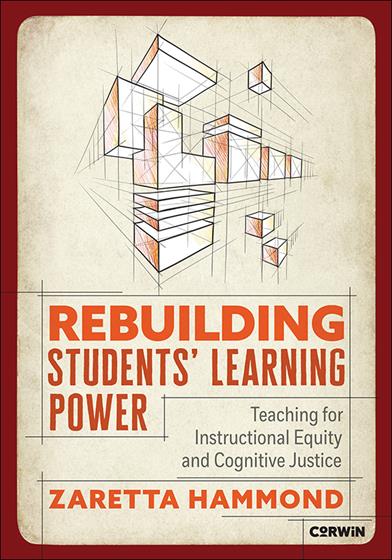
In her forthcoming work, Rebuilding Students’ Learning Power (Corwin, 2025), renowned education consultant and author Zaretta Hammond argues that the missing link is the explicit instruction of "learn-to-learn" skills. By shifting the focus from teacher delivery to student information processing, Hammond proposes a model for "instructional equity" that empowers students to become the architects of their own intellectual growth.
The Core Conflict: Why Teaching Does Not Always Equal Learning
The fundamental tension in modern education lies in the distinction between teaching and learning. As Hammond observes through her work with instructional rounds, a teacher can provide impeccable scaffolding, engaging activities, and a supportive environment, yet the students may still fail to internalize the content.
"We can teach our hearts out, but in the end, only the learner learns," Hammond asserts. This realization points to a biological reality: the teacher cannot compel the student’s brain to initiate the information processing cycle. Learning is an internal, cognitive event that requires the learner to move through phases of attention, elaboration, and consolidation. If a student lacks the specific tools to navigate these phases, the most well-designed lesson plan remains superficial.
Hammond identifies a "hidden curriculum" of learning—skills that high-performing students often intuitively possess but that are rarely taught explicitly to those caught in the opportunity gap. These "learn-to-learn" skills are distinct from executive function skills, such as organization or time management. While binders and planners help a student stay organized, they do not increase the student’s ability to carry a heavier cognitive load or process complex information.
The Five Moves: A Chronology of Information Processing
To bridge this gap, Hammond introduces a framework of five "moves." These are discrete, actionable techniques that, when mastered, form a broader skill set for deep learning. The sequence follows the natural path of information through the human brain.

1. Size It Up and Break It Down
The process begins with task analysis. Before diving into an assignment, students must be trained to "size up" the cognitive demands of the task. This involves asking: What is this task actually asking me to do? Is it asking for a summary, an analysis, or a creative application?
Once the task is understood, the student must "break it down" by crafting a plan of attack. This move shifts the student from a reactive stance (waiting for the next instruction) to a proactive stance (assessing which cognitive tools are required for the job).
2. Scan the Hard Drive
Neuroscience dictates that all new learning must be anchored to existing knowledge. In the "Scan the Hard Drive" move, students are prompted to search their "funds of knowledge"—their personal experiences, previous lessons, and cultural background—to find a "hook" for the new information. This move is essential during the attention phase of learning. By consciously activating schema, students prepare their neural pathways to receive and integrate new data.
3. Chew and Remix
This move corresponds with the elaboration phase of information processing. Hammond describes "chewing" as the active struggle to make sense of complex or conflicting information. It is the stage where students mix the "new with the known."
Without this step, learning remains at a surface level. "Chewing and remixing" requires students to operate in their Zone of Proximal Development (ZPD), engaging in the productive struggle necessary to move up Bloom’s Taxonomy. This is where meaning is constructed, and information is transformed into understanding.
4. Engage in Skillful Practice
While "chewing" focuses on meaning-making, "Skillful Practice" focuses on automaticity. This move is particularly critical in foundational subjects like mathematics and literacy. It involves deliberate practice—identifying specific, small weaknesses in execution and repeating them with refinement. This process myelinated neural pathways, making the skill faster and more efficient over time.

5. Make it Sticky
The final move addresses the brain’s natural pruning mechanism. If new learning is not revisited within 24 to 48 hours, the brain often deletes the "fragile dendrites" associated with that information. To "Make it Sticky," students must apply the new content in a different setting or revisit the information through active recall within a specific timeframe. This consolidation ensures that the learning moves from short-term working memory to long-term storage.
Supporting Data: The Science of the "Choke Point"
The necessity of these moves is supported by cognitive science, particularly the concept of the "choke point." The human brain’s working memory is a natural constraint; it can typically only hold three to five "chunks" of information at a time.
If a student does not have the skills to "chunk" information or connect it to existing schema, the working memory becomes overloaded, leading to cognitive shutdown. Furthermore, "pitfalls"—such as the common student belief that re-reading notes is an effective study strategy—actively sabotage the learning process. Hammond’s framework replaces these pitfalls with evidence-based "moves" that respect the biological limitations of the brain while maximizing its potential.
Official Perspectives: The Craftsmanship of Learning
Hammond’s approach draws on established theories of cognitive development. She references David Perkins of Harvard’s Project Zero, who describes the "game of learning," and Ron Berger of EL Education, who speaks of the "craftsmanship of learning."
The consensus among these experts is that learning is a trade that must be apprenticed. Hammond’s contribution is the formalization of this apprenticeship into a 4-to-6-week onboarding process. During this period, the teacher’s role shifts from a purveyor of content to a "cognitive coach."
"Just like in sports, the coach can demonstrate the move, but you have to be the one working the move," Hammond explains. This shift requires a revision of the "learner identity." Many underperforming students view themselves as "not a math person" or "not a good student." By mastering these moves, students receive immediate evidence of their own growing "learning power," which fundamentally alters their academic self-concept.
Implementation: The Three Pillars of Cognitive Apprenticeship
To successfully integrate these skills into the classroom, Hammond suggests three strategic pillars:
- The Initiation Period: Spend the first several weeks of a semester explicitly teaching the five moves. Treat the classroom as a laboratory where the primary objective is learning how to learn.
- Identity Revision: Create opportunities for students to reflect on their growth. When a student uses a "move" to overcome a confusion, they are not just solving a problem; they are proving their own capability.
- Structured Reflection: Move beyond simple "exit tickets." Integrate regular "instructional conversations" where students discuss their "choke points" and which moves they used to navigate them.
Implications for Instructional Equity
The broader implications of Hammond’s framework are centered on equity. For decades, the "achievement gap" has been addressed through increased scaffolding and simplified content, which often inadvertently "dumbs down" the curriculum and keeps marginalized students in a state of cognitive dependency.
Hammond argues that true instructional equity is not about making the work easier; it is about giving every student the "trade secrets" to handle harder work. By demystifying the information processing cycle, educators can provide students from all backgrounds with the tools to become independent, self-directed learners.
In an era where information is ubiquitous but deep understanding is increasingly rare, the ability to "learn how to learn" may be the most critical skill a student can acquire. As Hammond’s work suggests, the path to student agency does not lie in more engaging lessons, but in rebuilding the student’s internal power to process, retain, and apply knowledge.