
Illuminating the Universe: The Science, History, and Future of Light

Light is the fundamental fabric of our observable universe. It dictates the rhythm of life on Earth, fuels the complex processes of photosynthesis, and serves as the primary medium through which we perceive reality. As an electromagnetic phenomenon, light is not merely "brightness"—it is a sophisticated form of energy that behaves simultaneously as both a wave and a particle. From the microscopic interactions within a single photon to the vast, light-year-spanning distances of the cosmos, light remains the most essential subject in both classical physics and modern technological advancement.
The Fundamental Facts: What Is Light?
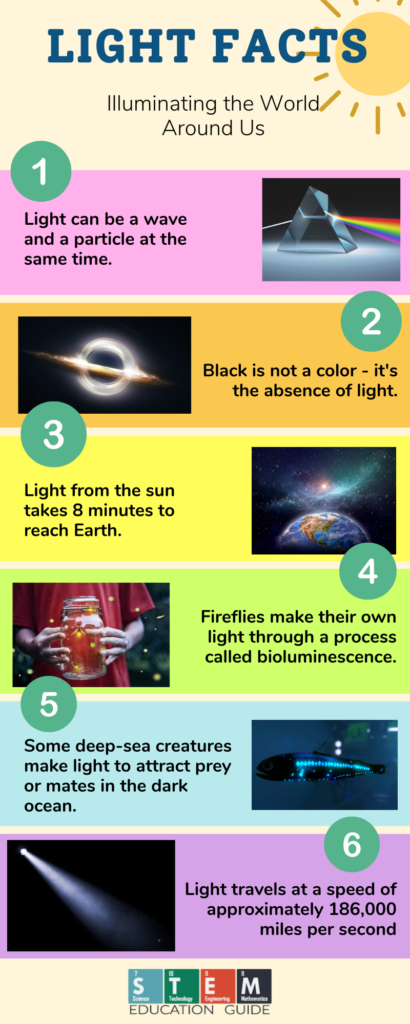
At its core, light is electromagnetic radiation that travels through the vacuum of space at the incredible constant speed of approximately 186,282 miles per second (299,792 kilometers per second). This energy propagates in waves, yet it consists of discrete packets of energy known as photons.
The journey of light is a cornerstone of our understanding of time and space. Because light has a finite speed, we never see the world as it is in the exact present moment; we see it as it was when the light left the source. For example, sunlight takes roughly eight minutes and twenty seconds to reach Earth. Consequently, when we look at the Sun, we are witnessing the star as it appeared over eight minutes ago.
The Visible Spectrum and Color Perception
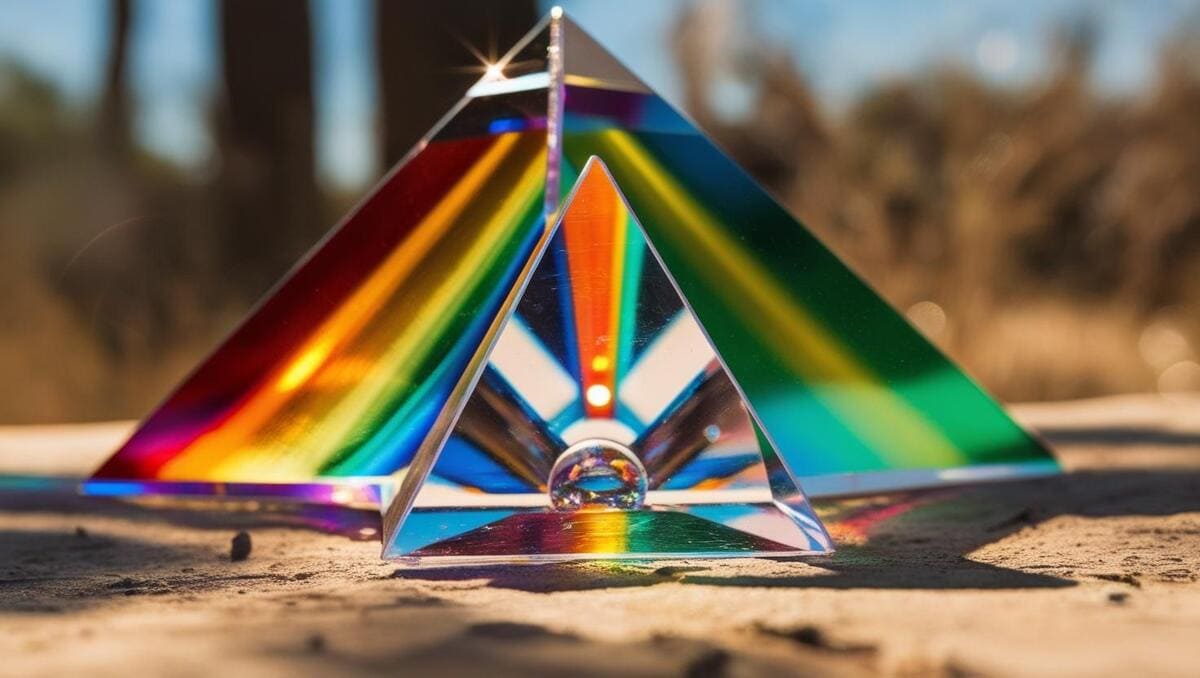
The "visible light" detectable by the human eye is merely a sliver of the broader electromagnetic spectrum. This range, spanning wavelengths from roughly 380 to 750 nanometers, manifests as the colors of the rainbow. When white light—a combination of all visible wavelengths—strikes an object, the object absorbs specific wavelengths and reflects others. A red apple, for instance, absorbs most colors of the spectrum but reflects red wavelengths back to our retinas, which our brains then interpret as the color red.
A Chronological Journey: Pioneers of Light Science
The human quest to understand light has evolved from ancient philosophical inquiry to precise quantum mechanics.
- 17th Century (The Wave vs. Particle Debate): Sir Isaac Newton famously proposed the "corpuscular" (particle) theory of light, using prisms to demonstrate that white light is composed of a spectrum of colors. Simultaneously, Christiaan Huygens argued for the wave theory, suggesting that light traveled through an invisible medium called the "luminiferous aether."
- 19th Century (The Electromagnetic Revolution): James Clerk Maxwell mathematically unified electricity and magnetism, proposing that light itself was an electromagnetic wave. This was a monumental breakthrough that laid the groundwork for modern electronics.
- 20th Century (The Quantum Dawn): Albert Einstein revolutionized the field by explaining the photoelectric effect. He proposed that light could behave as both a particle (photon) and a wave, a dual nature that remains a cornerstone of quantum mechanics today.
Supporting Data: The Physics of Interaction
Light does not merely travel in straight lines; its path is altered by the materials it encounters. Understanding these interactions is the basis of the field of optics.
| Phenomenon | Description | Common Example |
|---|---|---|
| Reflection | Light bouncing off a surface. | Mirrors and calm water surfaces. |
| Refraction | The bending of light as it passes between media. | A straw appearing "broken" in a glass of water. |
| Diffraction | Light spreading around corners or obstacles. | The iridescent colors on a CD/DVD surface. |
| Absorption | Energy being taken in by an object. | Black asphalt becoming hot in the sun. |
The refractive index of a material measures how much it slows down light compared to a vacuum. Water, for instance, has a higher refractive index than air, which explains why objects underwater often appear closer or distorted to the human observer.
Official Perspectives and Scientific Implications
In the scientific community, light is considered the "universal speed limit." According to Einstein’s Theory of Special Relativity, nothing in the universe can travel faster than the speed of light. This has profound implications for space exploration and telecommunications.
The Fiber Optic Revolution
One of the most significant applications of light science is the development of fiber optics. By using light pulses to transmit data through thin strands of glass, we have enabled the modern internet. Unlike copper wires, which are subject to electromagnetic interference, fiber optic cables can carry massive amounts of information over long distances at the speed of light, effectively shrinking the globe.

Bioluminescence and Natural Phenomena
Beyond human-made technology, nature has evolved its own sophisticated light-generation mechanisms. Bioluminescence—the chemical production of light by organisms like fireflies, deep-sea jellyfish, and certain fungi—is an efficient process involving the molecule luciferin. Scientists study these biological processes to develop sustainable, energy-efficient lighting solutions that mimic nature’s "cold light."
Advanced Concepts: Beyond the Human Eye
While we rely on visible light, the universe is teeming with invisible radiation that we have learned to harness for medical and industrial purposes:
- Ultraviolet (UV) Light: Known for its high energy, UV light is used for sterilization and, in nature, helps certain insects navigate toward nectar-rich flowers.
- Infrared (IR) Light: We feel this as heat. Modern thermal imaging cameras allow us to "see" heat signatures, which is vital for search and rescue operations and building energy audits.
- X-Rays and Gamma Rays: These high-frequency waves can penetrate soft tissue, allowing for medical diagnostics and the study of high-energy cosmic events, such as black hole mergers.
Future Horizons: The Next Frontier of Light
The future of light technology lies in Quantum Photonics. Researchers are currently working on:

- Quantum Computing: Using photons to perform calculations at speeds exponentially faster than current silicon-based computers.
- Invisibility Cloaking: By manipulating the way light waves bend around an object (using metamaterials), scientists are exploring ways to render objects invisible to specific wavelengths of light.
- Enhanced Solar Harvesting: Developing materials that can absorb a broader spectrum of light, including infrared, to dramatically increase the efficiency of solar panels.
Frequently Asked Questions
Q: Why do we use "light-years" to measure distance?
A: Space is unimaginably vast. A light-year is the distance light travels in one year, roughly 6 trillion miles. Using miles or kilometers would result in numbers too large to manage, so astronomers use light-years as a more practical unit of cosmic distance.
Q: How do LEDs differ from traditional light bulbs?
A: Traditional incandescent bulbs produce light by heating a filament, which wastes significant energy as heat. Light-Emitting Diodes (LEDs) produce light through electroluminescence—moving electrons through a semiconductor material. This process is far more efficient, durable, and cooler to the touch.
Q: Can we ever travel faster than light?
A: According to our current understanding of physics, no. As an object with mass approaches the speed of light, its energy requirements become infinite. However, our understanding of the universe continues to evolve, and theoretical models regarding "warp drives" or "wormholes" remain subjects of intense, albeit speculative, study.

Conclusion
Light is the silent messenger of the cosmos. It bridges the gap between the microscopic world of atoms and the macroscopic majesty of distant galaxies. Whether we are utilizing the refraction of light to correct vision through glasses, using lasers to perform delicate surgery, or simply watching the sunset, we are participating in an ancient and ongoing relationship with the most vital form of energy in existence. As we continue to probe the mysteries of photons and electromagnetic waves, we don’t just see the world more clearly—we gain the tools to fundamentally reshape our future.