Illuminating the Universe: The Science, History, and Future of Light
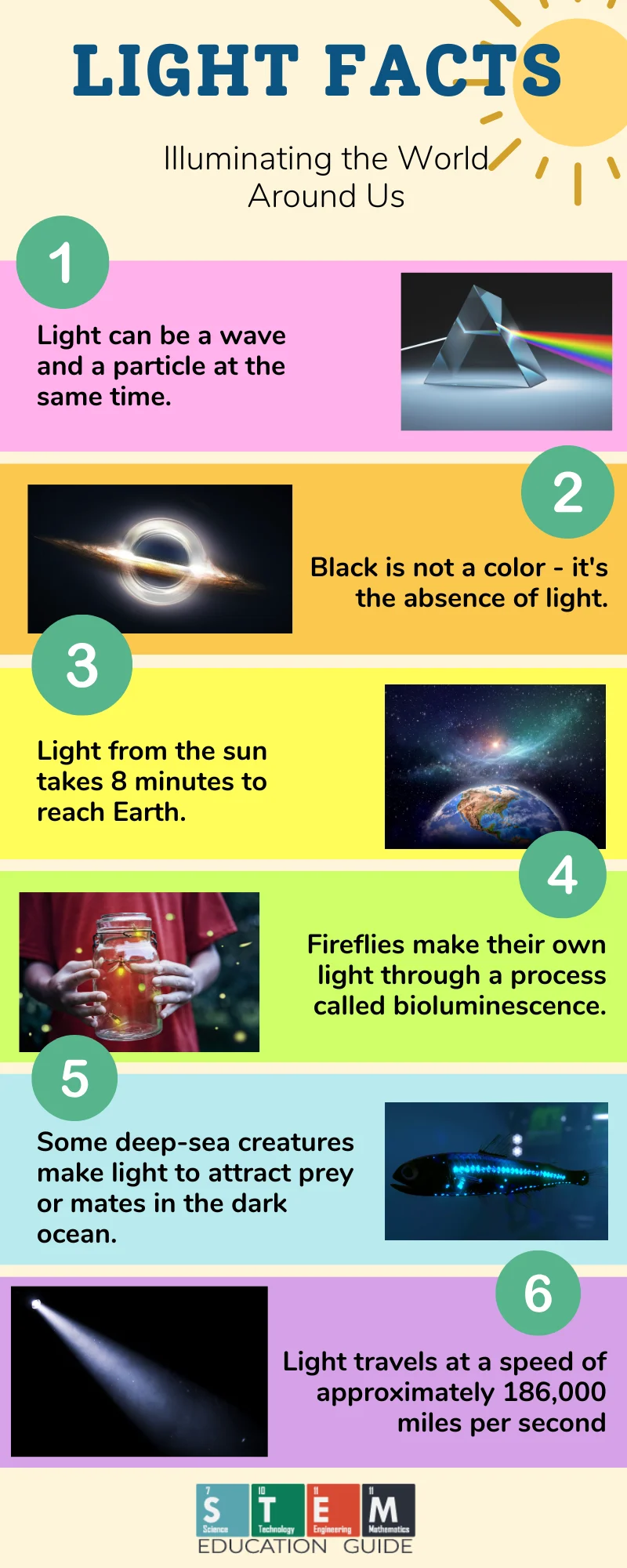
Light is the fundamental fabric of our observable universe. It is the silent messenger of the cosmos, the engine of biological survival on Earth, and the cornerstone of modern technological advancement. From the rhythmic pulses of a firefly to the high-speed data transmission powering the global internet, light governs the way we perceive, interact with, and understand the world around us.
Main Facts: Understanding the Nature of Light
At its core, light is a form of electromagnetic radiation—a duality of nature that scientists spent centuries debating. Light travels as both a wave and a stream of particles known as photons. These photons possess no mass, yet they carry energy across the vast, empty vacuum of space at a constant, blistering speed of approximately 186,000 miles per second (299,792 kilometers per second).
This speed is so immense that light can travel from the Sun to Earth in roughly 8 minutes and 20 seconds. Despite this velocity, the scale of the universe is so vast that we often measure distance in "light-years"—the total distance light travels in a single Earth year, amounting to nearly 6 trillion miles.
The Spectrum of Visibility
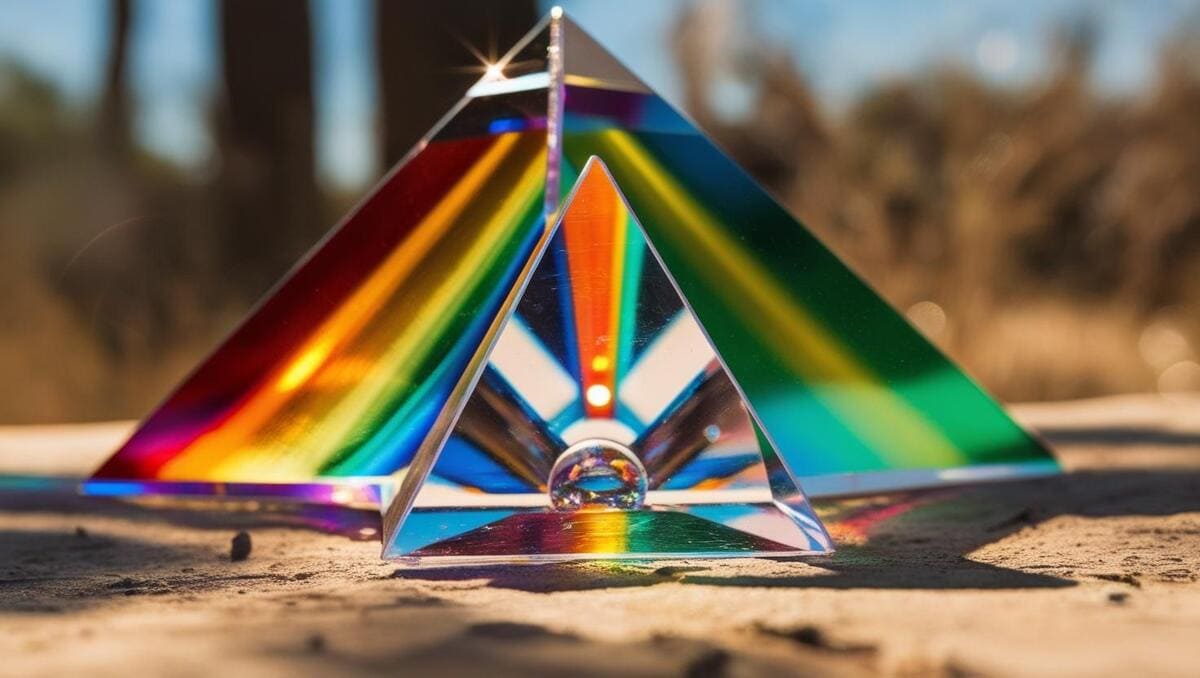
What we perceive as "white light" is actually a complex cocktail of all visible colors. When sunlight passes through a prism, it refracts, or bends, revealing the full spectrum of the rainbow: red, orange, yellow, green, blue, indigo, and violet. Each color corresponds to a specific wavelength; red light possesses the longest wavelengths, while violet light features the shortest.
Our eyes are biological sensors designed to capture these specific wavelengths, converting them into electrical signals that the brain translates into vision. However, the visible spectrum is merely a sliver of the electromagnetic scale. Beyond our perception lies a hidden world of ultraviolet (UV) rays, infrared heat, X-rays, and gamma rays, all of which are essential to modern medicine, astronomy, and climate science.
Chronology: A History of Optics
The scientific inquiry into light is a chronicle of human curiosity.
- 17th Century (The Wave vs. Particle Debate): Sir Isaac Newton famously proposed the corpuscular theory, suggesting light was made of particles. Simultaneously, Christiaan Huygens argued for the wave theory of light.
- 1860s (The Maxwell Breakthrough): James Clerk Maxwell revolutionized the field by mathematically proving that light is an electromagnetic wave, unifying electricity, magnetism, and light into a single theory.
- Early 20th Century (The Quantum Revolution): Albert Einstein reconciled the earlier debates by proposing the photoelectric effect, demonstrating that light acts as both a wave and a particle (the photon), earning him the Nobel Prize in Physics.
- Late 20th Century to Present: The invention of the laser and the subsequent development of fiber optics transformed global communication, shifting the reliance from copper cables to pulses of light traveling through glass threads.
Supporting Data: How Light Interacts with Matter
The physical world is defined by how light interacts with the objects it strikes. This interaction generally falls into three categories: reflection, absorption, and refraction.
- Reflection: When light hits a smooth, shiny surface like a mirror, it bounces off at the same angle it arrived. This predictable behavior allows us to see our own reflections and design sophisticated telescopes.
- Absorption: When light strikes a surface, some energy is soaked up. A red apple appears red because it absorbs all other wavelengths in the visible spectrum while reflecting only the red light into our eyes.
- Refraction: When light transitions from one medium to another—such as from air to water—it changes speed and bends. This is why a straw in a glass of water appears broken or "bent" at the surface.
Quantitative Analysis: The Refractive Index
Scientists use the "refractive index" to quantify how much light slows down when passing through a material. For instance, light travels slower in water than it does in air, which causes the path of the light to deviate. This principle is the foundation for corrective lenses, microscopes, and advanced camera systems.
Official Perspectives and Scientific Consensus
The scientific community views light as the ultimate diagnostic tool. In modern astrophysics, spectroscopy—the study of light spectra emitted or absorbed by objects—is the "gold standard" for determining the composition of stars and galaxies. By analyzing the specific "fingerprint" of light emitted by a distant star, astronomers can identify which elements, such as hydrogen or helium, are present, even if that star is billions of light-years away.

Furthermore, medical researchers utilize light-based technology to save lives. From laser surgery that corrects vision to the use of UV light for sterilization in hospitals, the controlled application of light energy is considered one of the safest and most precise surgical tools available today.
Implications: The Future of Light Technology
The implications of our mastery over light are profound. We are currently entering an era where light is not just something we observe, but something we manipulate to engineer the future.
The Quantum Frontier
"Quantum dots"—tiny semiconductor particles—are currently being developed to create displays that are more energy-efficient and vibrant than anything previously possible. These particles emit pure, specific colors when stimulated, which could lead to television and monitor technology with near-perfect color reproduction.

Beyond Fiber Optics
While fiber optics currently power our internet, the next step is "Free Space Optics," which involves transmitting data via lasers through the atmosphere or space. This could provide high-speed internet to remote regions of the world where laying physical cables is impossible.
The Quest for Invisibility
Researchers are also experimenting with "metamaterials"—man-made materials engineered to bend light around an object. While still in the experimental stages, the ability to "cloak" objects by guiding light around them holds massive implications for defense, medicine, and architectural design.
Sustainability and Bioluminescence
As we look to move away from energy-intensive artificial lighting, scientists are studying bioluminescence—the natural chemical light produced by fireflies, jellyfish, and deep-sea organisms. The goal is to bio-engineer sustainable, self-illuminating materials that could eventually provide ambient lighting for cities without the need for electricity.

Conclusion
Light is far more than a simple toggle switch for our daily activities. It is the language of the universe, a tool for discovery, and a medium for innovation. From the basic refraction that makes a pencil look bent in a glass of water to the complex laser arrays that transmit our global digital identity, light remains our most precious resource. As we continue to refine our understanding of this electromagnetic phenomenon, we move closer to unlocking secrets of the universe that were once thought to be permanently hidden in the dark. Whether through the lens of a telescope peering at the dawn of time or the microscopic focus of a lab experiment, our study of light is the story of our own advancement as a species.